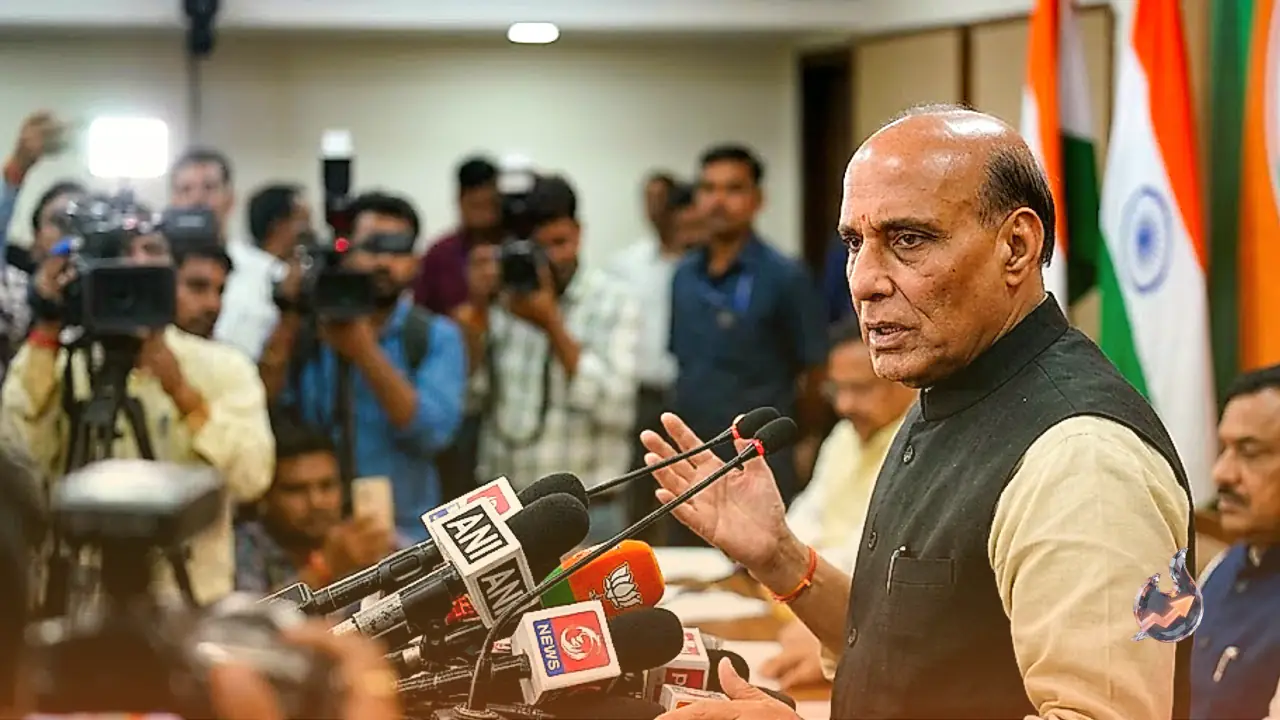



















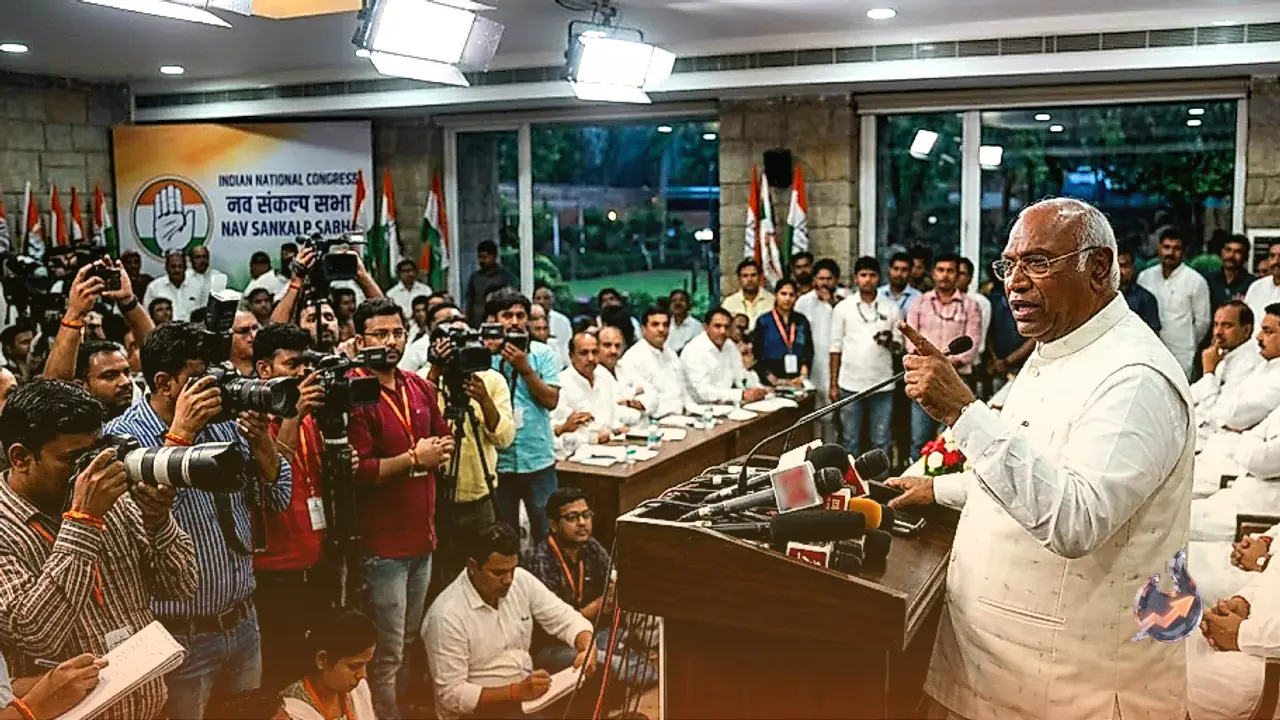

More than fifteen days have passed since the conclusion of the monsoon session of Parliament, yet a political controversy that erupted on its final day continues to gain momentum. On the closing day of the session, Congress President Mallikarjun Kharge launched a fierce attack on the Bharatiya Janata Party government in Uttarakhand. He alleged that after his public rally in Haldwani, the ruling state government arranged for a purification ritual. Mallikarjun Kharge claimed that this was done specifically because of his Dalit identity.
Initially, the Congress party appeared somewhat muted in its response to the incident. Immediately following the event, Mallikarjun Kharge and Sonia Gandhi visited the Chairman of the Rajya Sabha to file a formal complaint regarding the incident. However, the party's stance remained relatively subdued for the next few days, a sluggishness that reportedly drew internal friction within party ranks.
During a subsequent meeting of the Congress Working Committee, internal accounts indicate that Mallikarjun Kharge expressed strong dissatisfaction with the passive role played by his party leaders. He remarked that very few members of the organization took the issue seriously or raised it with adequate aggression. Roughly a week after this internal review, Rahul Gandhi held a press conference, prompting the broader Congress machinery to begin amplifying the issue aggressively.
Political observers note that the strategy of the Congress extends far beyond merely defending Mallikarjun Kharge. The party's sights are firmly set on the upcoming legislative assembly elections in Uttar Pradesh and Punjab, as well as the 2029 Lok Sabha elections. Strategic planners are well aware that Dalits account for approximately 16 percent of India's total population. Broken down by region, this figure rises to roughly 20 percent in Uttar Pradesh, while the Scheduled Caste population in Punjab stands at around 32 percent.
The political calculation of Rahul Gandhi stems from the perceived success of the 'Constitution is in danger' campaign during the 2024 general elections. Through that slogan, Congress and its allied factions successfully rallied a significant portion of Dalit voters. This impact was clearly reflected in the election results, which fell short of granting the Bharatiya Janata Party an outright majority on its own.
Now, the Congress is attempting to replicate that playbook by turning the Uttarakhand incident into a massive national political narrative. The objective is to establish a narrative centered on the idea that 'Dalits are in danger', mirroring the earlier messaging around the constitution. The ultimate goal of this strategy is to consolidate Dalit voters in upcoming state polls and leverage that momentum for the 2029 parliamentary elections.
Nevertheless, the biggest hurdle facing the Congress is that the Dalit vote bank is not unified under any single political banner. The demographic remains fiercely contested among multiple political formations. The Bahujan Samaj Party continues to maintain a significant presence in Dalit politics, while Chandra Shekhar Azad's party is also working aggressively to carve out a solid political base among marginalized communities.
Meanwhile, the Bharatiya Janata Party possesses its own counter-strategy to neutralize this narrative. The ruling party consistently projects the message that Dalits should not be viewed merely as an electoral vote bank. The party maintains that central government welfare schemes are directly benefiting marginalized and disadvantaged communities without discrimination.
At the same time, the electoral history of Punjab serves as a cautionary tale for the Congress. During the 2022 assembly elections, the party attempted to woo Dalit voters by naming Dalit leader Charanjit Singh Channi as its chief ministerial face. Despite that calculated move, the party failed to secure a victory at the polls.
Given these complex dynamics, while the 'Dalits are in danger' slogan may prove politically potent for the Congress, translating it into actual electoral support will be a formidable task. At present, Mallikarjun Kharge serves as the primary face of this campaign, using the Uttarakhand episode as a foundational stepping stone. Yet, the broader ambition of the party reaches much further, aiming to build a formidable political coalition across Uttar Pradesh and Punjab ahead of the 2029 general elections.