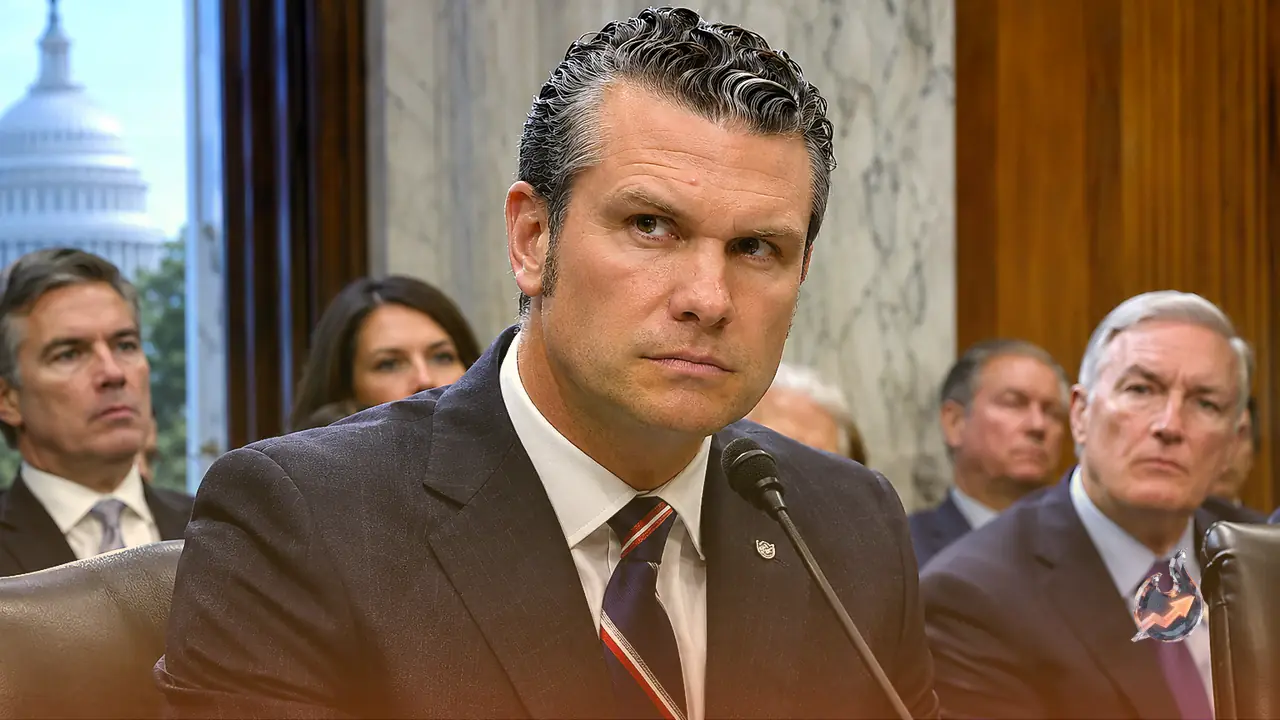

Defense Secretary Pete Hegseth is facing an increasingly precarious political future as lawmakers prepare for a bruising battle over his tenure. A source close to President Donald Trump remarked that Hegseth is now essentially a passenger in whatever comes next, adding that all potential outcomes carry significant damage. House Democratic aides indicate that the party is likely to pursue a formal impeachment inquiry against him, specifically narrowing the charges to issues that have drawn bipartisan complaints from Senate Republicans in order to build broader support.
Escalating Congressional Battles and Impeachment Strategy
Hegseth has spent his controversial tenure upending internal processes at the Defense Department, championing the costly and widely unpopular Iran war, dismissing generals, and blocking promotions using criteria that disproportionately affected women and people of color. His controversial actions also extend to his involvement in Signalgate and unauthorized military strikes against purported drug traffickers in the Caribbean and Pacific Ocean. Some of these very topics have previously drawn sharp criticism from Republican lawmakers, including Senate Armed Services Committee chair Roger Wicker, who once threatened to block a presidential nominee over withheld Pentagon documents.
House Republicans recently managed to table an impeachment effort brought by Representative Thomas Massie of Kentucky, who accused Hegseth of waging the Iran war without congressional approval and directing extrajudicial killings. Despite the initial setback, officials privately believe that an impeachment trial in the Senate next year is virtually inevitable. House Democratic leader Hakeem Jeffries indicated that he would consult with top party members on the next steps, noting that the effort would be spearheaded by lawmakers slated to lead key congressional committees, including Adam Smith at the Armed Services Committee and Jamie Raskin at the Judiciary Committee.
Shifting Senate Dynamics and Republican Retirements
While Trump officials initially doubted that Democrats could secure enough Republican votes to convict and remove Hegseth, they acknowledge that the administration cannot shield him from relentless media scrutiny during a full-scale trial. The articles of impeachment brought by Massie were initially viewed by some Republicans as overly broad, raising hopes that Senate Majority Leader John Thune could dismiss the charges through a straightforward vote. However, with Democrats projected to take control of the Senate, that procedural escape hatch is no longer available.
The political landscape is further complicated by upcoming congressional departures. Hegseth’s most prominent Republican detractors, including Senators Susan Collins, Thom Tillis, and Bill Cassidy, lost their reelection bids, while Senators Joni Ernst and Mitch McConnell are stepping down. Even with these critics leaving office, at least five other Republican senators have voiced strong dissatisfaction with Hegseth's performance, bringing Democrats closer to the 67 votes required for a conviction. Consequently, the upcoming Democratic impeachment inquiry must remain narrowly tailored to resonate with core Republican interests.
Defiant Stance Amid New Tech and National Security Inquiries
Despite mounting political pressure, Hegseth has shown no inclination to back down quietly. During a televised appearance at the Pentagon, he defended Vice President JD Vance against criticism over midterm losses linked to the Iran conflict, calling Vance a critical member of the team. Reaffirming the administration's stance, Hegseth stated that he fully agreed with the president's sentiment regarding whether they would repeat the military campaign if given the chance.
Meanwhile, House Republicans are preparing a separate investigation into Nvidia CEO Jensen Huang regarding his interactions with tech executive Alice Huang, who has been linked by intelligence officials to Chinese espionage. The unfolding inquiry threatens to trigger a direct conflict with President Trump, who has publicly defended the tech executive. Intelligence officials recently briefed congressional leaders on the matter, leaving lawmakers dissatisfied over unanswered questions regarding defensive briefings and travel exclusions, prompting threats of formal congressional subpoenas if voluntary cooperation is not secured.