















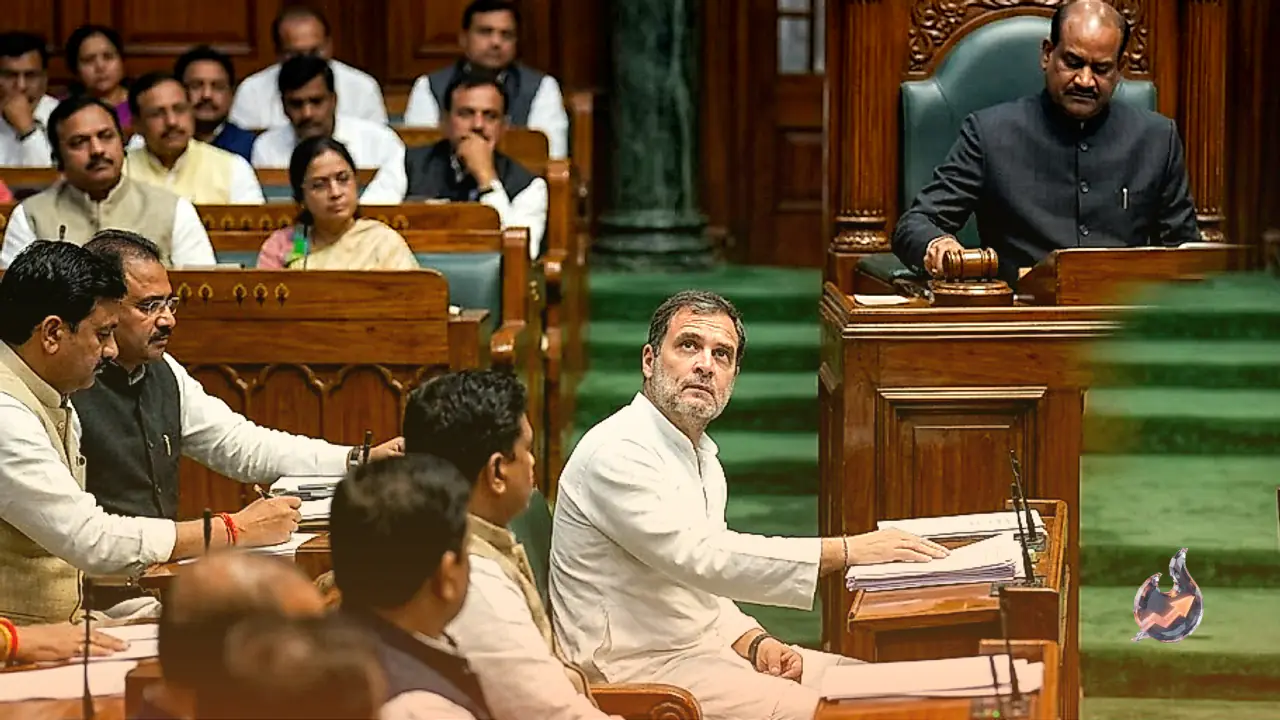

A contentious debate erupted in the Lok Sabha on July 29, 2026, during the consideration of a legislative bill addressing public examinations and paper leaks. The controversy flared when Leader of Opposition Rahul Gandhi addressed the House while expressing support for protesting students. In his speech, he categorized people into three distinct groups, using the terms Students, Idiots, and Andhbhakts. Members of the ruling benches immediately voiced strong objections to the usage of the latter two terms, asserting that such language breached the expected decorum of the legislative chamber.
The Parliamentary Clashes and the Speaker's Ruling
Intervening during the commotion, Union Minister of Parliamentary Affairs Kiren Rijiju argued that the language employed by Rahul Gandhi was entirely unparliamentary and demeaned the dignity of the House. Demanding an explicit apology from the Leader of Opposition, Kiren Rijiju requested the Chair to take formal note of the remarks. In response, Rahul Gandhi clarified that his terminology was not directed at any individual member of Parliament, but was instead chosen to illustrate the broader context of his argument. He further indicated a willingness to substitute alternative words if the Chair deemed the specific expressions inappropriate. Following the persistent uproar, Lok Sabha Speaker Om Birla directed that the words Idiot and Andhbhakt be officially expunged from the proceedings of the House.
Defining Unparliamentary Language Under House Rules
While members of Parliament enjoy broad freedom of speech within the legislature, this freedom remains subject to established procedural rules and boundaries. Under the governing framework of both the Lok Sabha and the Rajya Sabha, statements may be classified as unparliamentary if they are judged to be defamatory, indecent, offensive, obscene, or derogatory to individual dignity. The determination of whether a particular remark crosses these boundaries does not follow an automatic process. Instead, the ultimate decision rests entirely with the presiding officer, namely the Speaker in the Lok Sabha or the Chairman in the Rajya Sabha, who evaluates the context of the utterance before deciding whether it may remain part of the official transcript.
Dispelling the Misconception of a Permanent Ban List
A widespread belief suggests that Parliament maintains a fixed or permanent blacklist of forbidden words. In reality, no such absolute prohibition list exists. To assist members and presiding officers, the Lok Sabha Secretariat periodically compiles and publishes a comprehensive reference volume titled Unparliamentary Expressions. This reference text documents thousands of individual words and phrases that have been ordered to be expunged by presiding officers across various parliaments and state legislative assemblies over many decades. However, inclusion in this historical reference work does not mean a word is banned universally under all circumstances. An expression deemed unacceptable in one specific debate may be considered permissible in another, depending on context, tone, and the judgment of the presiding officer.
The Meaning and Impact of Expunging Parliamentary Remarks
When the Chair orders a word or phrase to be expunged, it triggers a formal administrative removal process. The targeted language is excised from the official Hansard records of Parliament, meaning it ceases to be recognized as part of the official proceedings. Despite this formal erasure from the written record, an expunged statement may still be witnessed by the public if it was broadcast live or reported by media outlets before the presiding officer issued the expungement order. Nevertheless, from a legal and parliamentary archive standpoint, the expunged portion is treated as if it were never spoken on the floor of the House.


