






















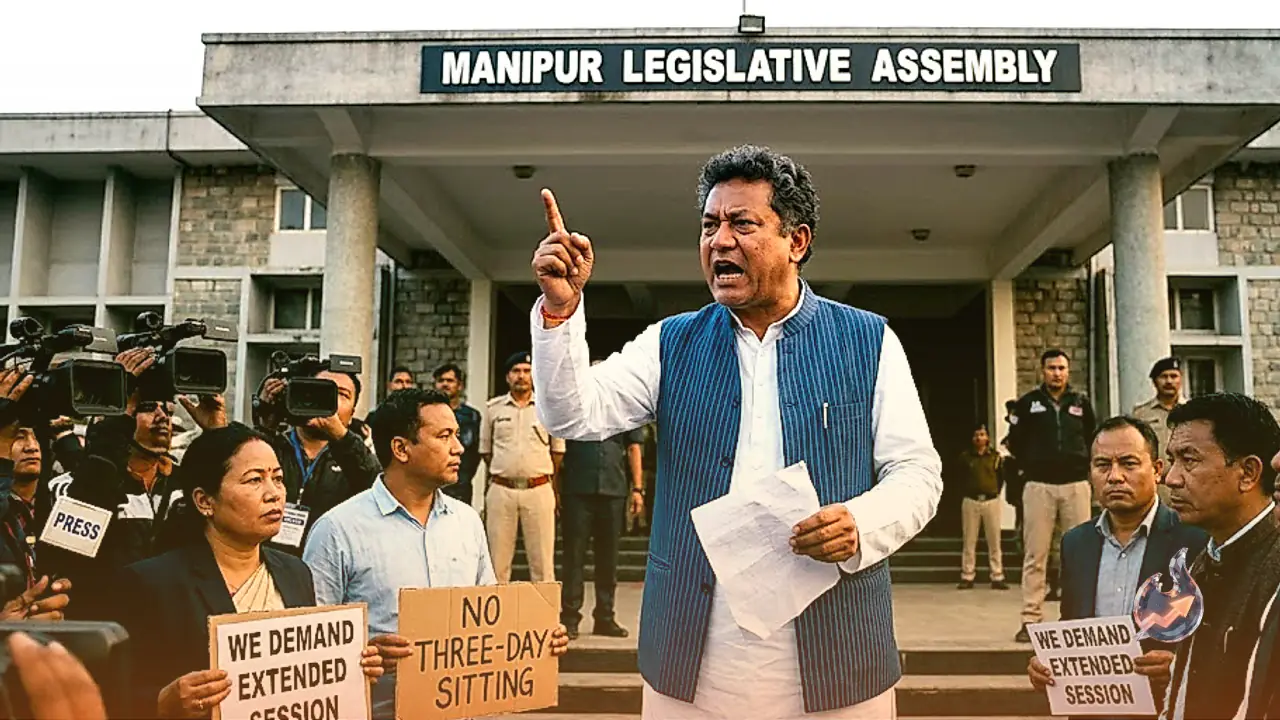

The Manipur Legislative Assembly is set to convene for a three-day session beginning September 2, 2026, following the release of the official legislative calendar in Imphal. However, the compressed schedule announced by parliamentary officials has triggered strong objections from the main opposition party, which contends that a brief three-day sitting is entirely inadequate to address the pressing governance, financial, and developmental issues facing the state.
Legislative Agenda for the Three Scheduled Sittings
According to the provisional business calendar issued by Manipur Legislative Assembly Secretary Rohit Sapam, the upcoming session will span three distinct sitting days distributed between September 2 and September 7, 2026. The parliamentary calendar outlines a series of key legislative procedures and financial matters slated for deliberation across these sittings.
The opening sitting on September 2 will commence with customary obituary references paying tribute to former members and prominent figures. Following these solemn references, the House will receive the official report presented by the Business Advisory Committee. Government business will then begin with the formal introduction of the First Batch of Demand for Supplementary Grants for the financial year 2026-27, alongside the introduction of several newly proposed government Bills.
The second sitting, scheduled for September 3, will open with an oral question-and-answer session allowing legislators to directly question administration ministers. This will be followed immediately by a general discussion among Assembly members regarding the financial proposals contained within the First Batch of Demand for Supplementary Grants for 2026-27.
After a recess, the third and final sitting will take place on September 7. Lawmakers will participate in a second question-and-answer session before moving into detailed discussion and voting on the specific demands under the supplementary grants. The legislative agenda for the final day also includes the formal introduction of the Appropriation Bill, as well as the consideration and passage of pending government Bills prior to the adjournment of the House.
Opposition Registers Protest via Dissent Note
The decision to restrict the Assembly session to just three sitting days has met with resolute resistance from the opposition Congress Legislature Party (CLP). Expressing firm disapproval of the truncated timeline, CLP leader Keisham Meghachandra Singh confirmed that the party formally submitted a dissent note during a crucial meeting of the Business Advisory Committee.
In a public statement posted on X, Meghachandra underscored that the opposition actively contested the committee's decision to compress parliamentary business into such a short timeframe. He argued that squeezing complex fiscal proposals and legislative oversight into three sittings undermines democratic scrutiny and leaves little room for meaningful public representation.
Demands for Sustained Legislative Oversight
Expanding on the opposition's stance, Meghachandra emphasized that effective governance requires robust parliamentary debate rather than brief procedural gatherings. He voiced serious concerns that a short session deprives lawmakers of the opportunity to raise critical public grievances and hold executive authorities accountable.
"The people of Manipur deserve a meaningful and substantive Assembly session where their concerns are discussed openly," Meghachandra stated. He maintained that a healthy democratic framework relies on a functioning, deliberative legislature capable of detailed legislative work, warning that short sittings risk reducing Assembly proceedings to a mere formality.