
























Opposition parties never find any flaw in the functioning of the Election Commission in states where they manage to win elections. If the Election Commission were actually working at the behest of the ruling Bharatiya Janata Party or actively manipulating election outcomes, as the opposition frequently alleges, how did non-BJP governments come to power in states like Himachal Pradesh, Karnataka, Kerala, and Jharkhand? Furthermore, in the 2019 general elections, the Bharatiya Janata Party secured 303 seats on its own, whereas in the 2024 Lok Sabha elections, the party's tally dropped by 32 seats below the majority mark, resting at 240 seats. If the electoral machinery were entirely controlled or partisan, why would the ruling party face such a decline in the lower house of parliament?
Facing continuous defeats and political decline from the national parliament down to various state assembly elections, anti-BJP parties are now shifting the blame entirely onto the Election Commission. For this opposition strategy, these parties previously blamed electronic voting machines and continuously questioned their reliability. Over time, the entire election commission and especially the Chief Election Commissioner have become prime targets for these groups. Ever since the election commission initiated the intensive voter list revision exercise across the country, the Congress party's aggressive stance against the top election official has grown much sharper. Along with the Congress, all constituent parties of the anti-BJP opposition alliance appear fully united on this single issue.
This wave of protests has now also drawn in a virtual political formation known as the Cockroach Janata Party with full vigor. This new political entity prides itself on its perceived strength because it claims to represent Gen Z. Right from its initial digital and physical debut, its primary claimed achievement was reportedly pressuring Prime Minister Narendra Modi into securing the resignation of senior cabinet colleague Dharmendra Prasad. Now, while the Congress party has launched a nationwide campaign demanding the resignation of the Chief Election Commissioner, this new group has gone a step further by issuing a 48-hour ultimatum for the top official to step down. Interestingly, on the very same day of September 24, 2026, both the Congress party and this group issued warnings to the Chief Election Commissioner.
The Politics of Vote Theft Allegations and Voter Revision
Senior Congress leader and Leader of the Opposition in the Lok Sabha Rahul Gandhi views the intensive voter revision process directly as a vehicle for vote theft. When this special exercise was initiated in Bihar, Rahul Gandhi launched a widespread voter awareness tour in opposition to it. Accompanied by leaders of various opposition parties, he toured different districts of Bihar for roughly 15 days. However, this extensive campaign produced no positive impact on the election results, and the opposition suffered a crushing defeat. Sometime later in West Bengal, Trinamool Congress supremo and Chief Minister Mamata Banerjee also raised severe allegations of vote theft through the revision process and strongly protested against it. The electoral results in West Bengal also went entirely against her expectations.
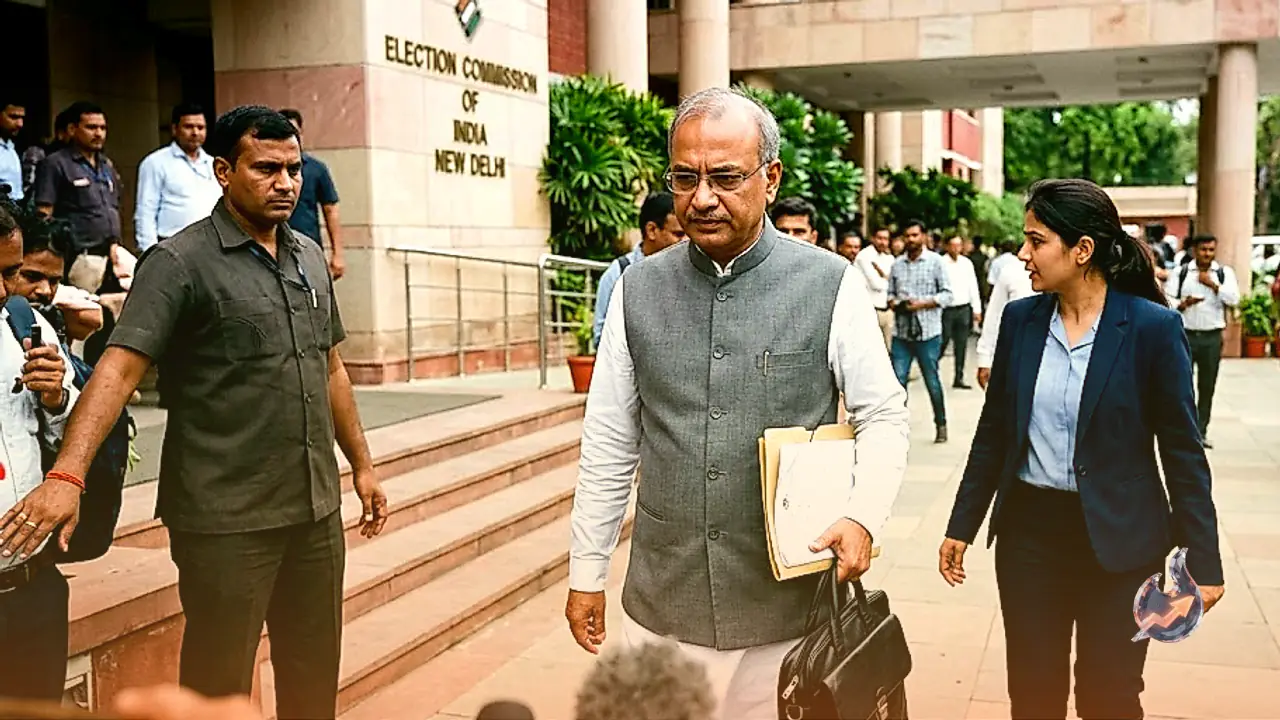
A major twist in this entire sequence of events emerged when a prominent newspaper report revealed that the Chief Election Commissioner takes unilateral decisions while ignoring the objections and dissent of other election commissioners. Immediately following this media disclosure, Rahul Gandhi held a major press conference on September 24, 2026. During this address, he launched scathing political attacks on the central government and the Chief Election Commissioner regarding the Election Commission of India and the intensive voter list revision process. Rahul Gandhi leveled direct and serious allegations of vote theft against Chief Election Commissioner Gyanesh Kumar, claiming that severe tampering with the nation's democracy and electoral process is underway. He alleged that Chief Election Commissioner Gyanesh Kumar has stolen votes during elections and that massive rigging has been orchestrated in all polls held since 2023.
Opposition Mobilization and Hardening Stances
Following that newspaper report and these sensational allegations by Rahul Gandhi, West Bengal Chief Minister Mamata Banerjee alongside Rashtriya Janata Dal leader Tejashwi Yadav demanded the complete annulment of the elections held in both states. Amidst this political flurry, the Cockroach Janata Party joined hands with the Congress to reiterate demands for the immediate resignation of Chief Election Commissioner Gyanesh Kumar. This group had already issued a stern 48-hour ultimatum to Gyanesh Kumar on September 24, 2026 itself. The organization warned that if resignation did not happen within the stipulated timeframe, it would launch a nationwide movement akin to the historic Jantar Mantar protests. Other opposition parties are also gearing up for agitations at their respective levels.
Backing the Congress, supporters of the Rashtriya Janata Dal held protests across various districts in Bihar on September 25. Amidst these protests and mounting political pressure, Chief Election Commissioner Gyanesh Kumar was forced to cancel his scheduled interactive programs with Gen Z. The Congress party is now preparing to besiege the main office of the Election Commission of India, and other opposition groups are converging on this contentious issue. Ever since the Bharatiya Janata Party came to power at the center in 2014, electronic voting machines had remained the primary target of the opposition. During that era, the main opposition allegation was that the BJP stole opposition votes by tampering with these machines, although no conclusive proof has ever been established that votes can be stolen through voting machines.
From Voting Machines to Voter Revision Exercises
This entire matter can also be understood through the fact that the conduct of elections through electronic voting machines was initiated during the tenure of the Congress party itself. Even during the widely contested 2014 general elections, the United Progressive Alliance government led by the Congress was in power at the center. If there had been even a slight margin for tampering within those machines, how could the Bharatiya Janata Party have secured such a massive and sweeping mandate in that election? However, opposition parties have now largely stopped complaining about voting machines and have instead started finding flaws in the intensive voter list revision process initiated through the special initiative of Chief Election Commissioner Gyanesh Kumar.
The core objective of this entire exercise was essentially to purge voter lists of deceased individuals, migrated citizens, or fraudulent voters. Despite extensive awareness campaigns by Rahul Gandhi in Bihar, no concrete complaints regarding procedural flaws emerged during this exercise. The greatest paradox is that wherever opposition parties secure victories themselves, they never spot any vote theft by the election commission. If the election commission were genuinely engaged in stealing votes or working explicitly for the BJP as the opposition consistently alleges, how could non-BJP governments ever form in states like Himachal Pradesh, Karnataka, Kerala, and Jharkhand? This clearly demonstrates that the opposition leverages the vote theft allegation conveniently whenever it suits them. Looking at this entire political landscape, one can easily deduce that if large-scale vote theft were actually occurring, why would the BJP experience a decline in seat numbers compared to its previous victory in the general elections?