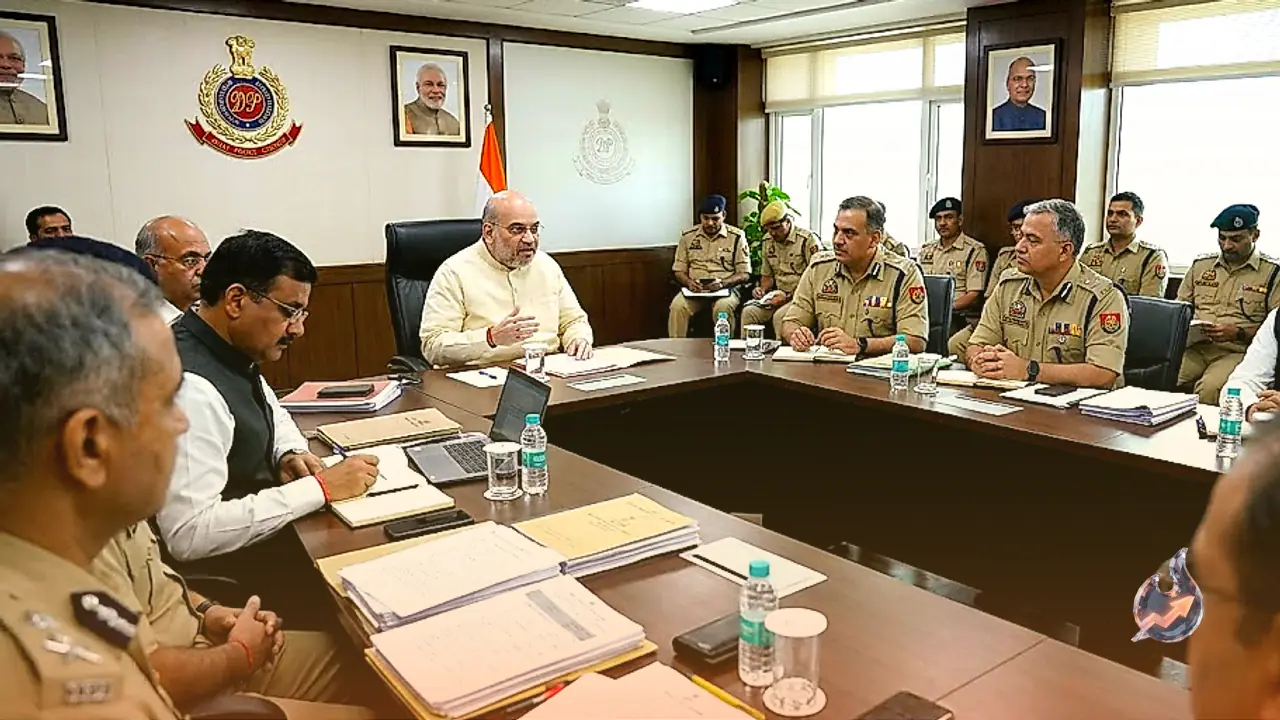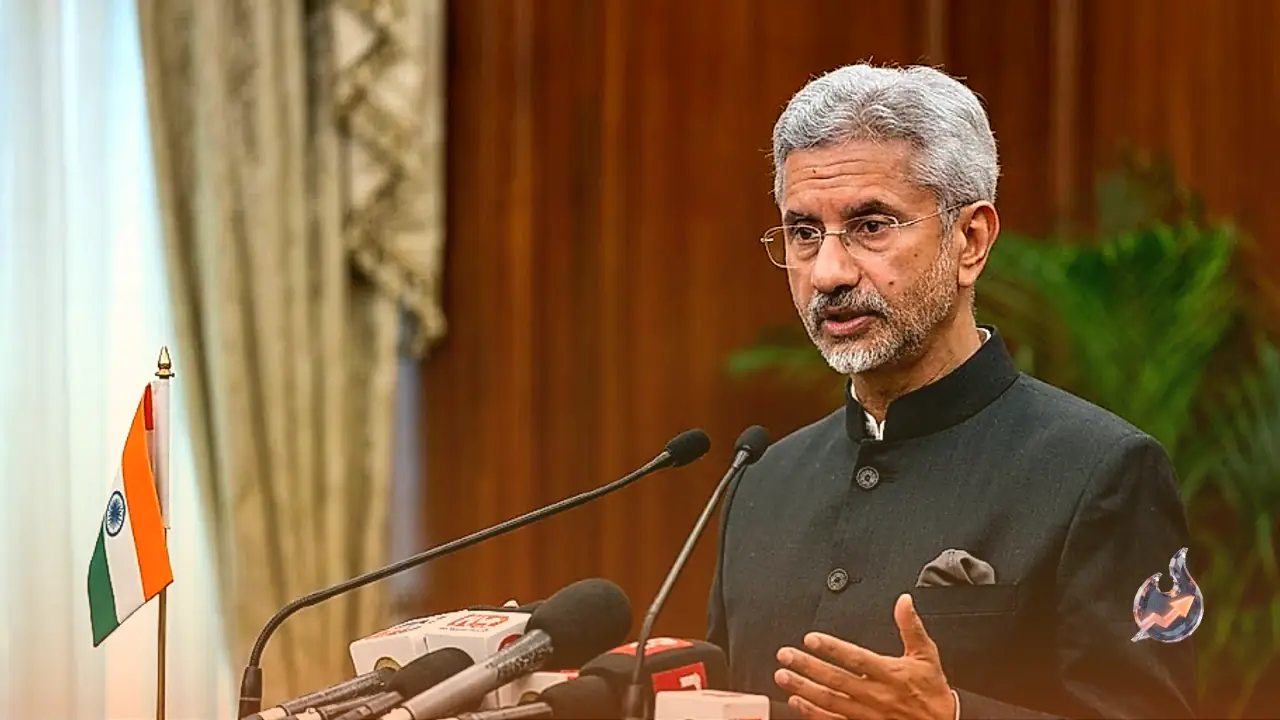














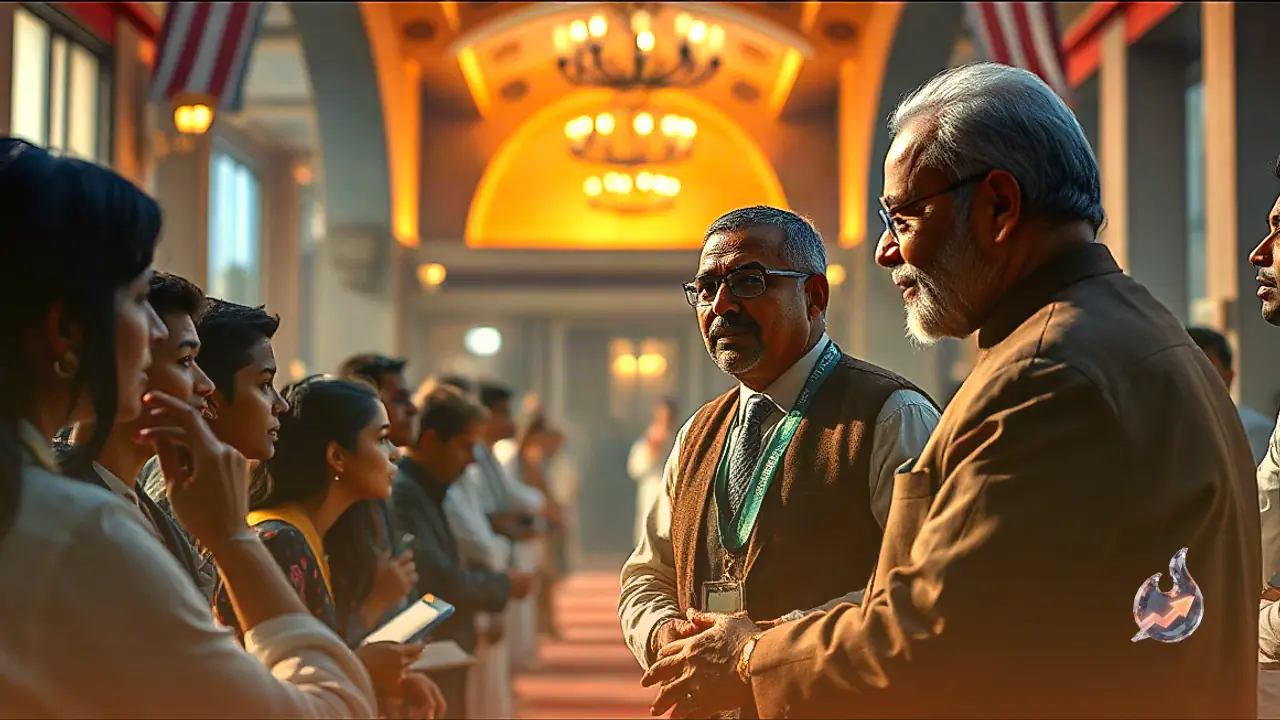

Prime Minister Narendra Modi’s arrival at Shri Ram College of Commerce, popularly known as SRCC in Delhi University, created an electric atmosphere that dominated both the campus and social media platforms. Addressing the grand centenary celebrations of the prestigious institution, the Prime Minister chose to ditch conventional political rhetoric and instead connected with the youth in a distinctly contemporary style. From calling college alumni the real original gangsters to labeling those who obstruct national development as grumpy uncles, his remarks quickly went viral across the internet. When he delivered a sharp jibe comparing intellectual nexalites to homeopathic doses, the entire auditorium erupted in applause. Tracing the journey from the fragile five economy of 2013 to today's Make in India success and dreams of an indigenous space station, the Prime Minister's impactful speech highlighted ten major takeaways about India's phenomenal transformation.
Celebrating the True Alumni and Academic Legacy
Speaking to the Gen-Z students and youth at the prestigious Shri Ram College of Commerce centenary event, Prime Minister Narendra Modi engaged with them in their own element. The Prime Minister described the college's former students as the original OGs, noting that SRCC alumni have carved out a distinctive identity across various sectors worldwide and brought immense glory to India. Reminiscing about the past, the Prime Minister shared that he had the privilege of working closely with several of these distinguished stalwarts, most notably the former finance minister, the late Arun Jaitley. By acknowledging the monumental contributions of past students, he connected the institution's glorious history with the aspirations of the current generation, encouraging them to carry forward the rich legacy of excellence built over decades.
Calling Out Obstructionists and Critics
In a sharp critique aimed at individuals who persistently throw wrenches into national development projects, the Prime Minister used the colorful analogy of a perpetually dissatisfied relative to describe obstructionists. He remarked that whenever major national endeavors are launched, such as the Statue of Unity, the new Parliament building, high-speed trains, UPI digital payments, or the national war memorial for brave soldiers, these critics invariably raise the same tired objection asking what the necessity was. However, India has given a resounding counter to all such skeptics through tangible progress. The Prime Minister emphasized that despite constant resistance from naysakers, the nation has marched forward resolutely, proving the immense value of transformative infrastructure and modern governance reforms.
The Homeopathic Dose Analogy for Intellectual Nexalites
Recalling his earlier Independence Day address, the Prime Minister touched upon the ideological critics whom he famously termed as intellectual nexalites, prescribing a homeopathic dose for them. He explained that much like a homeopathic medicine which initially aggravates symptoms before curing the underlying ailment, this specific remark caused all closeted ideological critics to expose themselves automatically in public view. Consequently, the general public is now thoroughly witnessing their true colors and real agenda. This witty comparison struck a chord with the audience, drawing widespread laughter and appreciation from the young scholars and faculty members gathered at the college auditorium for the historic milestone.
Perspective on the Glass Half Full
Reflecting on his previous visit to SRCC back in the year 2013, the Prime Minister described how an overarching atmosphere of despair and hopelessness prevailed across the country at that time. Using the classic philosophical example of a drinking glass, he noted that while cynical observers view a glass as either half full or half empty, he has always chosen to see it as completely full—half with water and half with air. The Prime Minister pointed out that even during the gloomy economic climate of 2013, he maintained immense faith in the latent potential and resilience of the Indian population. This optimistic outlook, he noted, has been thoroughly vindicated by the subsequent turnaround and the soaring ambitions of a resurgent nation.
Recalling the Dark Days and Scandals of 2013
Transporting the audience back to the headlines of yesteryear, the Prime Minister reminded young students of the distressing reality that characterized the nation in 2013. Newspapers during that period were consistently dominated by depressing news items, including the martyrdom of soldiers at the borders, runaway inflation touching double digits, steep downward revisions of GDP growth rates by institutions like the World Bank, rampant bribery scandals in VVIP helicopter deals, and devastating bomb blasts in cities like Hyderabad. The Indian economy was famously trapped among the fragile five nations, with foreign investors losing confidence and domestic growth stagnating under the weight of severe policy paralysis and widespread corruption scandals.
The Triumph of Make in India and Export Surge
Highlighting the phenomenal success of the Make in India initiative, the Prime Minister pointed out that when the program was initially launched, a specific political and ideological ecosystem scoffed at the idea and persistently ridiculed it. He noted that critics continue to mock the national initiative even today, completely ignoring the reality that Made in India smartphones have taken the global market by storm. Citing a stark comparison, the Prime Minister stated that while India heavily imported mobile phones in 2014, the nation today exports mobile phones valued at over 2.5 lakh crore rupees to countries across the globe, establishing its credentials as a trusted manufacturing hub.
Historic Leap in Domestic Defense Manufacturing
Focusing on the critical sector of military modernization and strategic self-reliance, the Prime Minister noted that earlier, the armed forces had to rely overwhelmingly on foreign nations even for basic weaponry and equipment. To alter this precarious dependence, the government systematically formulated a negative import list for defense items and empowered domestic manufacturing companies. As a direct consequence of these visionary policy reforms, India's domestic defense production has skyrocketed to 2 lakh crore rupees, while defense exports have witnessed a monumental surge from a meager 600 to 700 crore rupees to an impressive 40,000 crore rupees.
The Restrained Conduct of the Opposition Leader in 2013
Recalling his visit to the very same institution in 2013, the Prime Minister noted that at that time, he was a vocal critic of the ruling central administration and served as a prominent leader of the principal opposition party. While many political observers anticipated a scathing and aggressive political attack against the government of the day from the podium, he consciously chose to uphold the dignity and high traditions of the academic institution. Instead of launching partisan political tirades, he presented a constructive and positive vision for India's economic future, demonstrating that institutional decorum must always transcend petty political rivalries.
Robust 7.8 Percent GDP Growth Amid Global Headwinds
Emphasizing the inherent resilience of the domestic economy despite severe global challenges, including ongoing conflicts in West Asia and widespread disruptions in international supply chains, the Prime Minister highlighted India's impressive economic performance. He pointed out that India's robust 7.8 percent GDP growth rate stands as a shining testament to the country's immense economic strength and administrative capability. Providing ground-level indicators, the Prime Minister noted substantial surges in automobile sales, soaring electricity consumption, and increased utilization of steel and cement, all of which provide undeniable proof that industrial activity, consumer demand, and employment generation are expanding rapidly across the nation.
Grand Ambitions for Space Stations and Olympic Games
Challenging the youth to think beyond conventional boundaries and aim for extraordinary milestones, the Prime Minister declared that he is not a leader given to settling for modest or incremental targets. Unveiling a grand futuristic vision for the nation, he asserted that in the coming years, India will undoubtedly emerge as a global superpower in advanced scientific research, high-tech manufacturing, and agricultural exports. In a major forward-looking announcement, the Prime Minister proclaimed that India will soon have its own dedicated space station and will eventually host Olympic games of such magnificent scale that the entire world will watch in awe.