


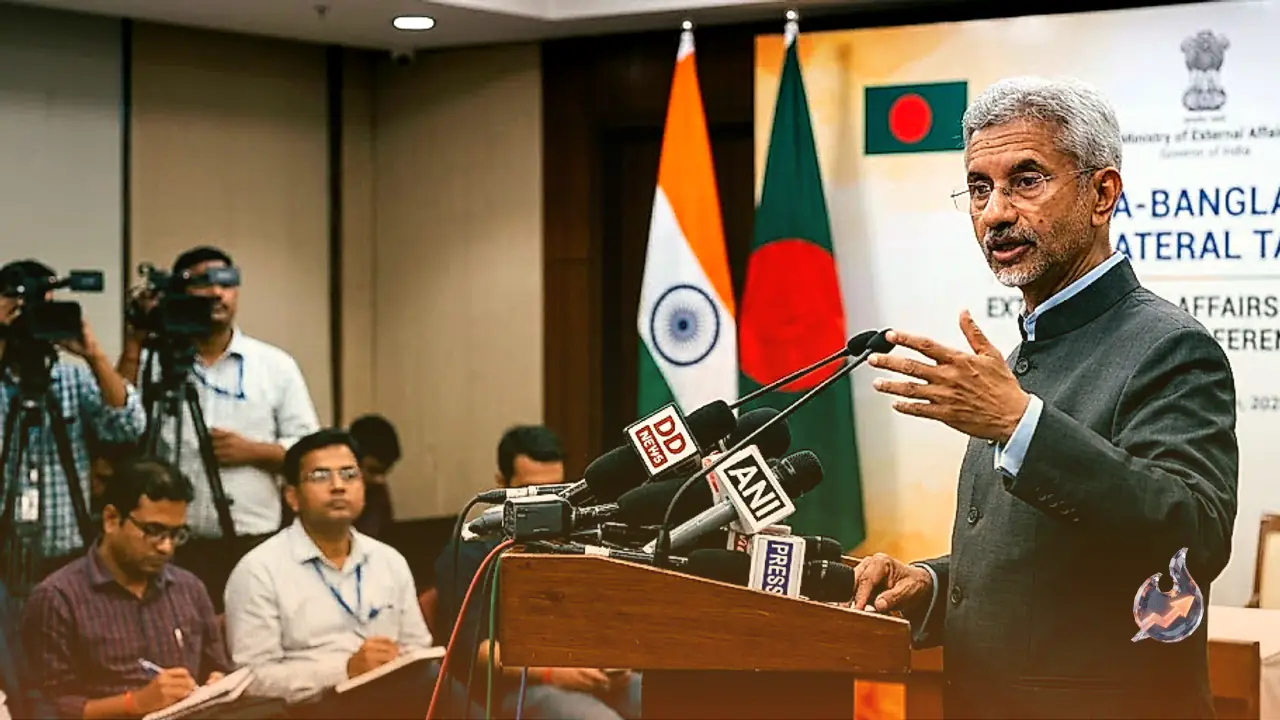















Bilateral equations between India and Bangladesh have witnessed significant shifts following the political transition under the Sheikh Hasina administration, introducing friction into ties with New Delhi. Decisions made by interim government figures and subsequently by Prime Tariq Rahman have added complexity, notably when Rahman opted to visit China rather than India upon taking office, breaking established tradition. As discussions around his potential participation in the upcoming BRICS summit unfold alongside demands from Dhaka regarding the extradition of Sheikh Hasina, India has reiterated the fundamental principles required to sustain healthy regional relationships. External Affairs Minister S Jaishankar has clearly articulated that successful partnerships must be rooted firmly in mutual interests.
The Test of Mutual Interests
Speaking at the ET World Leaders Forum, Jaishankar noted that any relationship succeeds only when it aligns with the shared interests of both nations. This perspective gains particular relevance amid uncertainty surrounding the proposed visit of Bangladesh Prime Tariq Rahman to India. He explained that India does not expect neighbors to function strictly according to its unilateral desires, but rather emphasizes establishing a common ground where both sides benefit. When a solid foundation of mutual consensus is established, partnerships progress smoothly. While the Ministry of External Affairs has already extended an invitation to Tariq Rahman for a bilateral trip, official confirmation regarding the dates remains pending.
Addressing Pakistan, the Foreign Minister reaffirmed the government stance that terrorism and talks cannot proceed simultaneously, making it clear that New Delhi will not compromise on matters of security. He added that no administration can afford to ignore domestic public sentiment when formulating foreign policy.
Economic Engagement and Border Stability with China
Regarding relations with Beijing, Jaishankar highlighted that both nations share a common stake in maintaining bilateral stability. Prime Minister Narendra Modi is anticipated to meet Chinese President Xi Jinping next month on the sidelines of the Shanghai Cooperation Organisation and BRICS summits. The BRICS summit is provisionally slated for September 12-13 in India, pending formal announcements, which would mark Xi Jinping's first visit to the country since 2019. Jaishankar explained that economic engagement with China aims to modernize the domestic economy and build capacity, noting that trade remains a critical component.
India remains in communication with China, actively raising concerns over delays in issuing business visas to Indian citizens. Reflecting on the tense period between 2020 and 2024, he underscored that conditions along the border will dictate the trajectory of bilateral ties. If border stability is maintained and cooperative pathways are pursued, vast potential exists for economic collaboration between the two major markets.