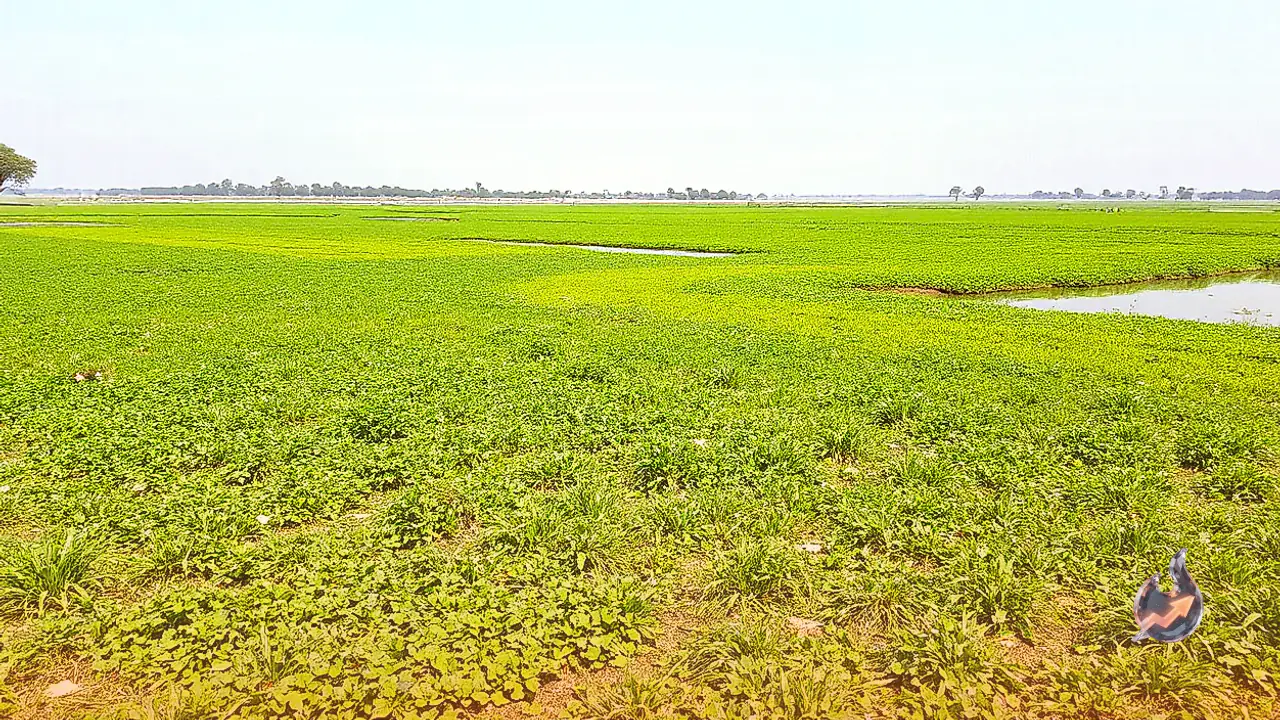

The globally renowned Kevaladeo National Park located in Bharatpur, Rajasthan, presents a remarkably charming natural spectacle during the winter season. Across the sprawling wetlands and water bodies within the sanctuary, the water surface becomes coated with a floating green layer known as Azola grass. Packed with essential vitamins and vital nutrients, this aquatic vegetation draws massive flocks of both local and overseas birds to the protected grounds. When the cold months set in, this natural greenery transforms into a crucial dietary staple for the winged visitors dropping by the reserve.
Green Carpets Across Ponds and Aquatic Feeding Grounds
Spreading widely across the upper water level, this unique plant thrives particularly near shaded tree lines and across tranquil water pockets inside the park. Migratory and native birds frequently wade into the shallows to feast on the lush green weed with great enthusiasm. For avian species with herbivorous and omnivorous feeding habits, this aquatic flora proves exceptionally beneficial, supplying the necessary winter energy to keep them active during the chilly months.
A Preferred Haven for Overseas Avian Visitors
The arrival of winter transforms the climate and atmosphere of Kevaladeo National Park into an ideal habitat for wildlife. Throughout this period, countless winged travelers journey from distant international territories alongside birds originating from various corners of the country. The abundant presence of small fish, aquatic insects, local vegetation, and patches of Azola weed guarantees a plentiful food supply for the entire flock. This reliable sustenance explains why the sanctuary remains a top winter destination for traveling birds.
Seasonal Shifts and the Eco-Balance of the Park
During the colder months, Azola weed remains prominently visible on the water surface as a nutrient-dense food source heavily favored by the birds. As weather patterns shift later in the year, this vegetation naturally sinks beneath the water, reducing its visible presence on the surface. The continuous cycle of Azola growth highlights the balanced ecosystem of the park and the reliable availability of nourishment for the resident and visiting fauna. Nature enthusiasts and wildlife watchers routinely flock to the reserve in high spirits to witness this seasonal landscape and the lively activity of the birds.