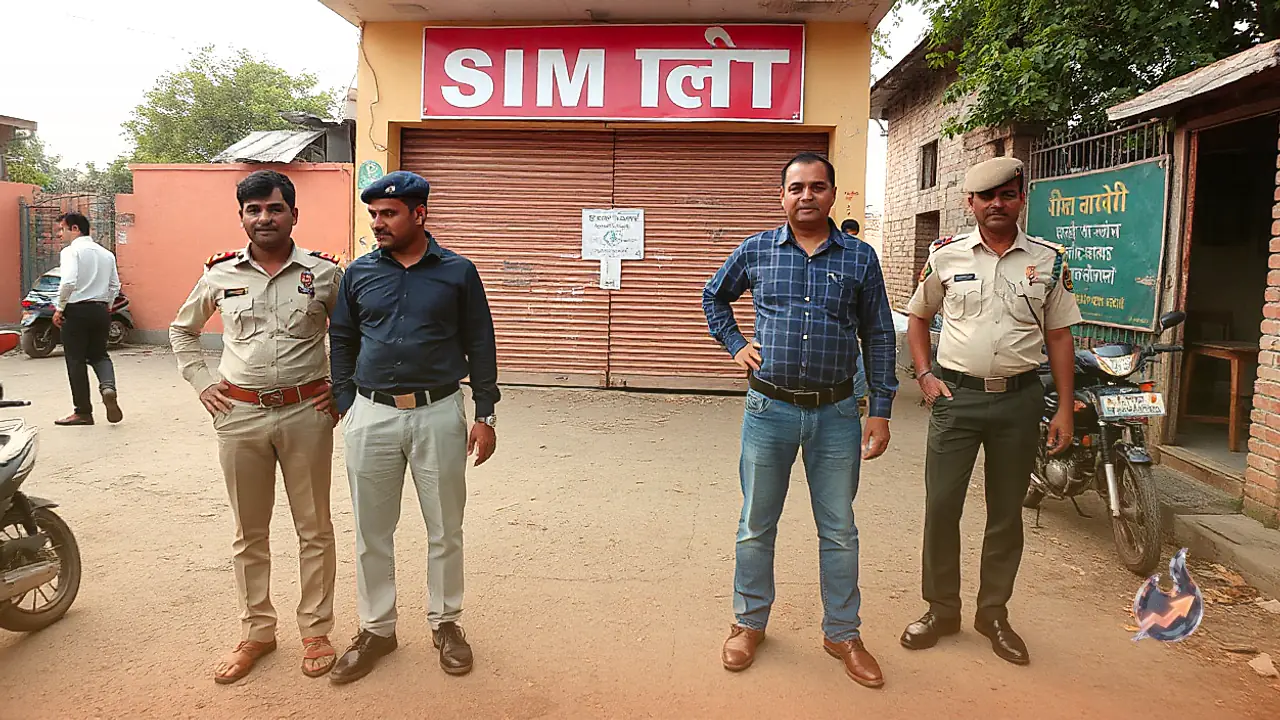

Democratic elections are built on the premise of competition, where victory and defeat shape the political landscape, yet certain post-poll episodes routinely expose the fragile nature of administrative promises and local governance. A striking controversy has erupted in the Piplu area of Tonk district, drawing sharp reactions from local residents and political observers alike. Within merely three hours of the declaration of panchayat committee election results in a local ward, authorities removed approximately fifty street lights from electricity poles. This swift and unexpected action has plunged the previously illuminated lanes back into pitch darkness, leaving the local population bewildered and voicing strong resentment over what they perceive as a vindictive political reaction.
The Connection Between the Candidate and the Installation
The epicenter of this controversy lies in ward number 2 of the Piplu panchayat committee, where Priyanka Sharma contested the election as a candidate. Priyanka Sharma is the wife of Alok Sharma, who serves as the personal assistant to Niwai-Piplu MLA Ramsahai Verma. During the election campaign, nearly fifty street lights were installed across the lanes of this ward, a move that initially brought considerable relief and visible brightness to the neighborhood. While local whispers strongly suggested that these fixtures were put up at the behest of the local legislator, there had been no official confirmation regarding who precisely ordered or authorized their placement when they were first erected.
Rapid Disassembly Following the Defeat
The political dynamic shifted dramatically once the votes were tallied and the final panchayat election results were announced, revealing that Priyanka Sharma had lost the contest. Almost immediately after the outcome became official, a team from the electricity department mobilized and arrived at the location to dismantle the newly set up infrastructure. Within a span of just three hours following the defeat, workers systematically removed all fifty street lights from the poles. The sheer speed of this operation stunned residents, who struggled to comprehend the urgency behind stripping the neighborhood of its newly acquired lighting fixtures immediately after the election results dashed the candidate's electoral hopes.
Public Outrage and Questions Over Basic Amenities
The removal of the lights has once again left the residential alleys enveloped in darkness, sparking widespread anger among the villagers. Local residents allege that these facilities were deployed purely as a temporary tactic to influence voters during the electoral campaign, and once the candidate failed to secure a victory, those perks were promptly rolled back. Community members argue that basic development and civic amenities should never be conditional upon the electoral success or failure of any individual candidate. Voting is a fundamental right of the citizens, but access to essential infrastructure like street lighting should remain independent of electoral politics.
Unanswered Questions Regarding Administrative Accountability
This entire episode has cast serious doubts on the functioning and neutrality of the local electricity department. Crucial questions remain unanswered regarding who originally authorized the installation of the fifty street lights and who subsequently issued the directive to pull them down so hastily. Public queries persist over whether proper regulatory procedures were followed during both the mounting and the dismantling phases. As things stand, the vacant electricity poles in ward number 2 of Piplu serve as stark symbols of the friction between electoral politics, political patronage, and the delivery of basic public welfare.