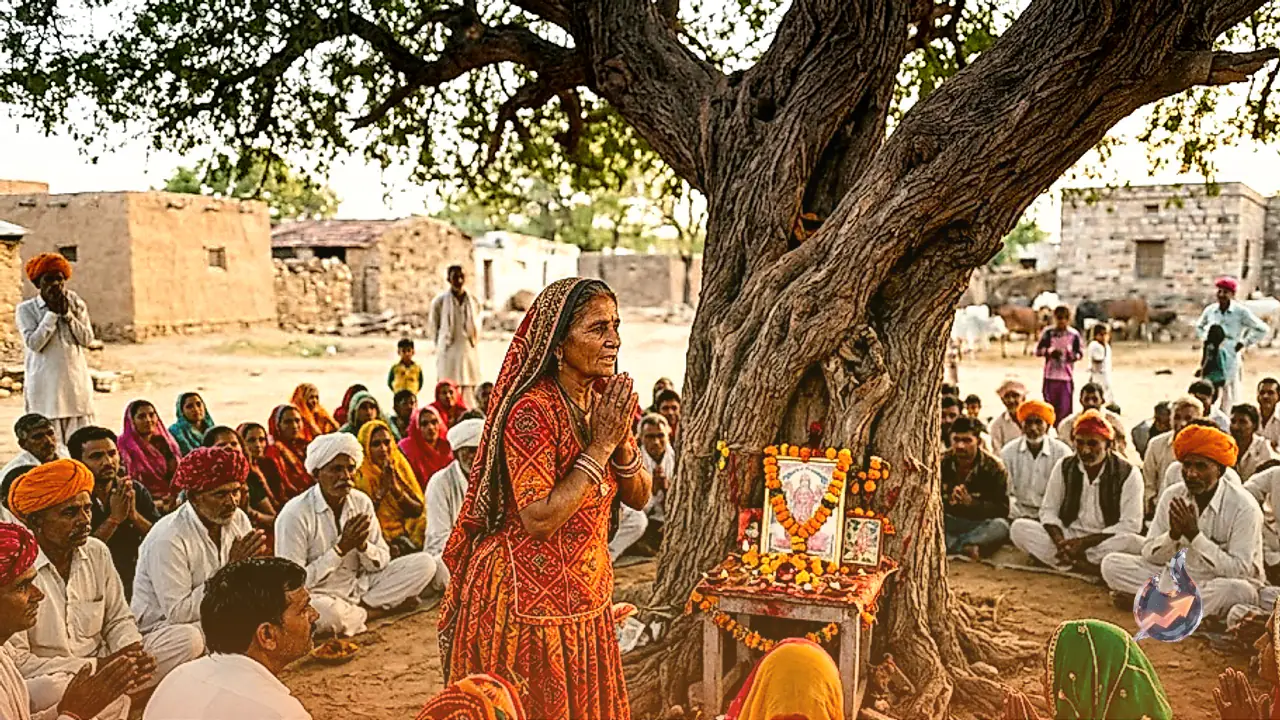



















In the scorching heat and arid sands of the Thar Desert, where growing trees is a monumental challenge, the women artisans of Barmer, Rajasthan, have accomplished something extraordinary by bringing lush greenery to life on plain fabric. Using nothing more than simple needles and vibrant threads, these craftswomen embroider realistic trees onto cloth, leaving observers spellbound. The fame of this unique, intricate embroidery has transcended domestic borders, traveling all the way from the remote desert of Barmer to Japan, where the demand for these handcrafted masterpieces is rapidly rising.
Breathing Life into Fabric with Needle and Thread
These skilled female artisans transform ordinary pieces of cloth into lively canvases of natural beauty. The embroidery process is a fascinating journey of patience and precision, where colorful threads are woven using fine needles. The artwork begins from the bottom of the fabric, where the roots of the tree are first carefully stitched. From there, the trunk gradually rises upward, branching out into delicate limbs, green leaves, and blooming flowers. To enhance the natural feel of the design, the artisans also depict chirping birds perched on the branches. Amidst the dry and barren landscape of the Thar Desert, this textile greenery creates a stunning visual illusion, making it look as though a vibrant forest has suddenly sprouted from the parched earth.
Savina Handicrafts Explores International Frontiers
The credit for elevating this local art form to the global stage goes largely to the Savina Handicrafts Institute. The female artisans associated with this institution have seen their creations travel far beyond the boundaries of Barmer and Rajasthan. Kevalaram Meghwal, the Director of the Savina Handicrafts Institute, shared insights regarding this global expansion. He stated that these hand-embroidered products have successfully established a niche in foreign markets, with Japan emerging as a major hub for their demand. The artisans meticulously craft entire ecosystems of flora and fauna on items such as bedsheets, bed covers, sarees, dupattas, and pillowcases. Every single leaf, flower, branch, and bird is given a distinct shape and texture using delicate, manual stitching techniques.
A Labor of Love: Timeframe and Premium Pricing
The creation of this highly refined handicraft requires immense dedication, effort, and time. Anita, one of the leading female artisans engaged in this craft, explained the intricate details and the timeline required for these creations. According to Anita, it takes approximately one month of continuous labor to complete just a single bedsheet. Because every single leaf, flower, branch, and bird must be embroidered by hand with absolute precision, the process demands unwavering focus. Given the intense labor and the extensive time invested in making each piece, these high-quality items command premium prices. A single hand-embroidered bedsheet of this style easily sells for anywhere between 5,000 rupees and 10,000 rupees. While natural greenery may be scarce in the desert of Barmer, the colorful threads woven by these local women are telling a flourishing story of art and empowerment across continents.