



















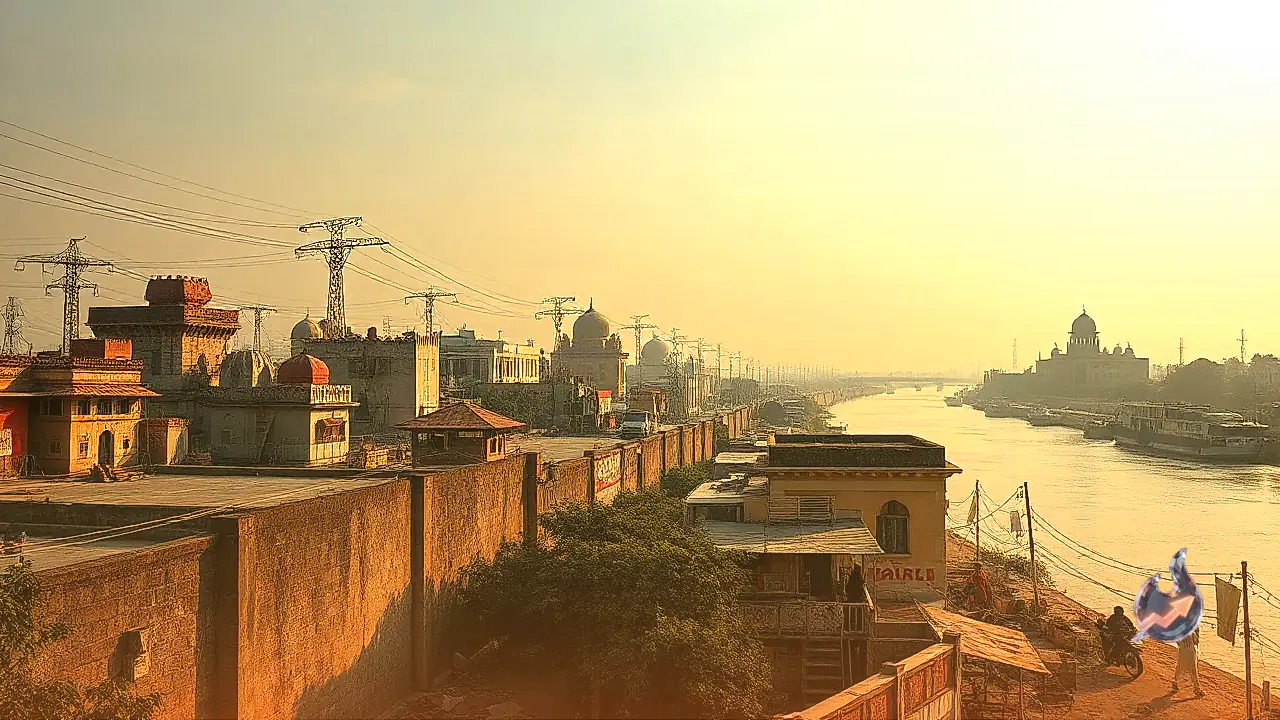

The Delhi-Agra irrigation canal, which snakes through Faridabad on its way to Uttar Pradesh, has transformed from a vital agricultural resource into a deeply troubling hazard for the local community. Originally engineered to support farming across several districts, this water channel is now witnessing a critical surge in suicide cases. Over the past few years, the frequency of such tragic incidents in Faridabad has escalated sharply. Even minor domestic disputes, trivial arguments within families, or brief moments of emotional vulnerability drive individuals to rush to the canal banks and jump into the fast-flowing water, resulting in untimely deaths. The local community has been left shocked by the regular occurrence of these incidents, leading to an urgent call for systemic preventive measures.
The Canal's Route and the Rising Toll of Tragedy
Explaining the geography and scale of the issue, local resident Bablu Hooda shared details about the canal's path. Starting from Kalindi Kunj in Delhi, the Agra Canal flows through Haryana up to the Karman border, after which it enters the state of Uttar Pradesh before finally reaching Agra. Hooda pointed out that looking at the local data from Faridabad over just the last six months, hundreds of individuals have lost their lives by suicide in this canal. He emphasized that the growing burden of mental stress in modern life plays a significant role in these actions. Even minor conflicts at home lead people to take this extreme step without fully grasping the consequences, turning a simple irrigation canal into a major threat to public life.
Residents Call for 15-Foot High Protective Fencing
To stop these recurring tragedies, residents are calling on the local administration to take immediate and comprehensive security measures along the canal. Bablu Hooda has urged the government to seal the canal's edges using 15-foot-high wire mesh fencing, comparing the required security level to that of an international border. The fencing must be constructed without any foothold to prevent anyone from climbing over it. Supporting this demand, another resident named Vikas explained that the absence of a proper boundary wall makes it extremely easy for individuals to access the canal during a crisis. He insisted that a 15-foot boundary wall is essential to deter suicide attempts. Shubham, another local, agreed that the continuous string of suicides can only be halted if the government builds robust physical barriers along the entire stretch of the canal.
From an Agricultural Lifeline to a Deadly Waterway
Highlighting the environmental degradation and law-and-order issues around the canal, Akash lamented that this water body, once a source of life for farmers, has effectively turned into a "bloody canal" and a prominent suicide hotspot. He noted that the frequency of tragic incidents has escalated severely over the last two to three years. According to local elders, the canal water was once so clean that people used to drink it. Today, the water has become highly toxic, making it unfit even for crop irrigation. In the villages situated along its path, there have been rising concerns over severe health issues, including reports of cancer linked to the contaminated water. Furthermore, the dark and isolated stretches of the canal are increasingly being utilized by criminals and robbers who exploit the lack of surveillance to carry out thefts and escape easily. This combination of rising suicides and criminal activity has made the vicinity highly unsafe for local residents, especially after sunset. Akash concluded that installing a highly durable wire fence along both sides of the canal is the only practical way to safeguard human lives, restore peace to the community, and secure the area from anti-social elements.