





















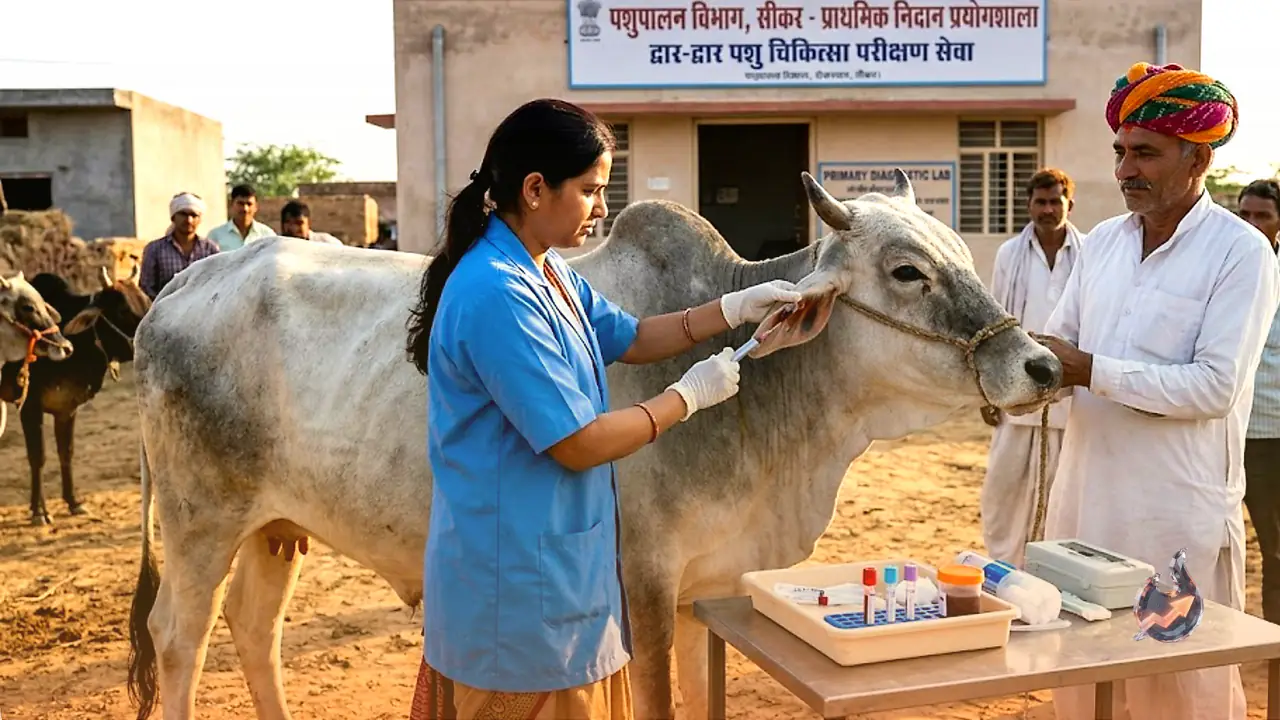

Cattle owners in Sikar district have reason to cheer, as they will no longer need to make long trips to the district headquarters just to get routine health checkups and tests done for their animals. This modern facility is now reaching them right in their own villages and towns. To strengthen animal health infrastructure in rural areas, the animal husbandry department has launched primary diagnostic labs across 12 panchayat samitis in Sikar district. The initiative means early testing of livestock can now happen easily at the local level itself, allowing diseases to be caught in time and cutting down both the delay and the cost involved in treatment.
New Labs Open Across Twelve Panchayat Samitis
The animal husbandry department has set up these modern laboratories at the headquarters of twelve panchayat samitis, Ajeetgarh, Dantaramgarh, Dhod, Fatehpur, Laxmangarh, Khandela, Neechwa, Neemkathana, Palsana, Patan, Pipraali and Shrimadhopur. To run each lab smoothly, a trained lab technician has been appointed at every centre. These technicians will accurately test blood, dung and other necessary samples from animals and hand over reports on time. With this step, rural cattle owners will no longer need to run from place to place for the correct treatment of their sick animals, since all the required testing facilities will now be available right in their own area.
From Blood Work To Mastitis, Every Test Now Available Locally
These newly built laboratories will carry out detailed blood tests on animals, which will help detect protozoa and other dangerous parasitic infections right away. Besides that, testing of dung, accurate identification of mastitis in milk producing animals, skin related parasitic infections, and checks for ketone bodies and urea will also now be possible at the local level. These advanced testing facilities will make it much easier to catch serious diseases in animals at an early stage, helping protect livestock in time.
Dr Virendra Sharma Says Early Detection Will Save Animals' Lives
Dr Virendra Sharma, the district in-charge of the disease diagnostic laboratory in Sikar, said that if a disease in animals is caught early, the chances of a severe infection drop significantly. Based on the initial test results, animals can be given quick and accurate treatment right away, which will bring down the mortality rate sharply. Along with this, treating the disease before it worsens will also prevent the heavy financial losses cattle owners often face, while improving the overall health and productivity of livestock in the region.
Not Just Sikar, The Facility Is Reaching 352 Panchayat Samitis Across Rajasthan
Dr Sharma further said that this initiative is not limited to Sikar district alone. Under the state government's wider plan, similar primary diagnostic labs are being set up in 352 panchayat samitis across Rajasthan. The purpose of this forward looking step is to make veterinary services more accessible, effective and modern in rural and remote areas, so that cattle owners living in far flung villages can also get quality health facilities and timely treatment for their animals close to home.
Equipment, Chemicals And Training Now In Place At Every Lab
Dr Virendra Sharma said that all the panchayat samiti level laboratories in the district have been made fully active and put into operation. Every one of these centres has been supplied with adequate quantities of the latest equipment, chemicals, testing material and other necessary resources. Alongside this, all the lab technicians posted at these centres have also been given special hands on training in modern testing procedures and new techniques, so that the testing work done at the rural level meets high quality, accuracy and the standards set by the medical department.
Cattle Owners Set To Save On Time, Labour And Money
With these advanced testing facilities now available close to the villages, cattle owners will see a direct saving in the time, labour and heavy transport costs they used to bear. Earlier, villagers had to travel miles to the district headquarters even for minor and routine checkups of their animals, which often meant reports took long to arrive and treatment got delayed. Now, with quick testing and early disease detection possible right near the villages, animals can be treated accurately and on time. This corrective step by the animal husbandry department will not only save the lives of these voiceless animals but will also give unprecedented strength to the livestock rearing business, widely seen as the backbone of the rural economy.