



















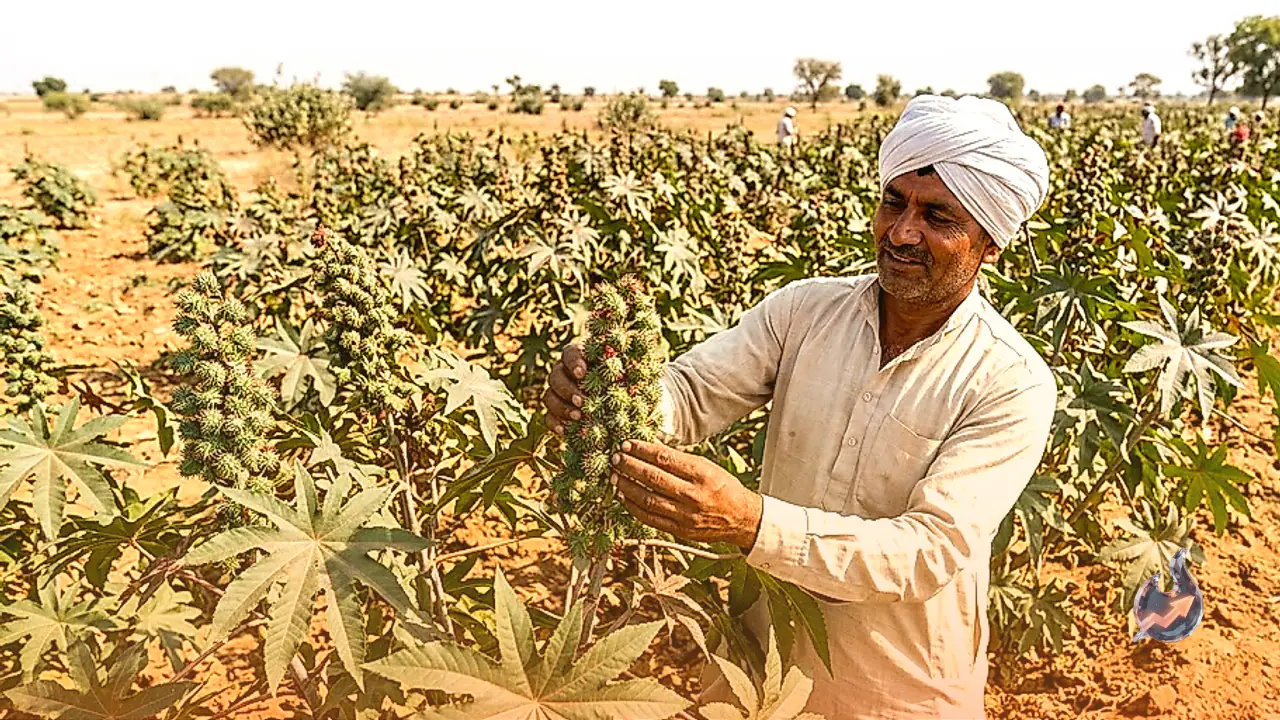

In the arid landscape of Jalore district in western Rajasthan, deficient monsoon precipitation has posed significant hurdles for traditional agriculture this year. As dry weather tightens its grip, castor cultivation has stepped into the spotlight as a resilient lifeline for agrarian families. Farmers spanning various pockets of the district are leaning heavily into this hardy cash crop, confident that it can deliver a bountiful harvest despite severely limited water reserves and reduced irrigation frequencies.
Deep Root Networks Maximize Subsoil Moisture Retention
The primary advantage driving the success of the castor plant in water-scarce regions lies beneath the soil surface. Castor develops an extensive, deep-penetrating taproot system capable of anchoring deep underground. This structural adaptation allows the plant to tap into retained subsoil moisture and nutrients that shallower crops simply cannot reach. Consequently, agrarian belts characterized by scant rainfall and erratic canal supplies find castor an ideal crop that resists prolonged dry spells without succumbing to water stress.
Balancing Crucial Irrigation Windows Against Waterlogging Hazards
While castor boasts remarkable drought tolerance, it still requires targeted moisture management to fulfill its yield potential. Adequate hydration remains vital during key developmental phases, most notably during vegetative branch expansion and seed setting inside the capsules. At the same time, excess moisture presents a serious hazard. Prolonged standing water or saturated soil can rapidly suffocate roots and damage the stand, requiring cultivators to maintain disciplined field drainage alongside measured watering schedules.
Booming Industrial Applications Ensure Sustained Market Demand
Beyond its botanical hardiness, castor commands strong interest because of its robust commercial profile. The oil pressed from castor seeds serves as an essential raw ingredient in a diverse range of secondary manufacturing sectors. It functions as a foundational component in soaps, high-grade cosmetics, industrial lubricants, and specialty coatings. This relentless industrial appetite ensures lively domestic market demand, enabling growers in Jalore to hedge against drought-induced crop losses by locking in viable commodity returns.