























In the rural expanses of Rajasthan's Bharatpur district, an age-old tradition of preserving animal fodder using natural structures remains vibrant despite the widespread availability of modern storage materials. Local farmers construct specialized circular structures known as Koop, made entirely from mud and straw, around their homes and agricultural fields. These indigenous storage units allow dry fodder to stay fresh and usable for several months without degrading. This zero-cost technique stands as a prime illustration of traditional rural wisdom, exceptional craftsmanship, and the clever utilization of limited natural resources.
Indigenous Agricultural Science in Animal Husbandry
For livestock owners in Bharatpur, safeguarding fodder against seasonal degradation has always been a vital task. Long before synthetic covers, metal sheds, and plastic tarpaulins were introduced, farmers developed this eco-friendly storage model using locally sourced clay and dry grass. Fodder stored inside these traditional mud structures maintains its freshness and nutritive quality over extended periods. Because the system requires no heavy machinery or external purchases, it offers an economical solution that strengthens the rural agricultural economy.
Step-by-Step Construction Method of a Mud Koop
Building a traditional Koop follows a precise, sequential process. Farmers first harvest and dry the fodder thoroughly under intense sunlight until all internal moisture evaporates. Eliminating moisture is crucial because it completely removes the risk of fungal growth and mold inside the storage unit. Once the fodder is ready, farmers select an elevated patch of land near their fields or homes where rainwater does not accumulate or stagnate.
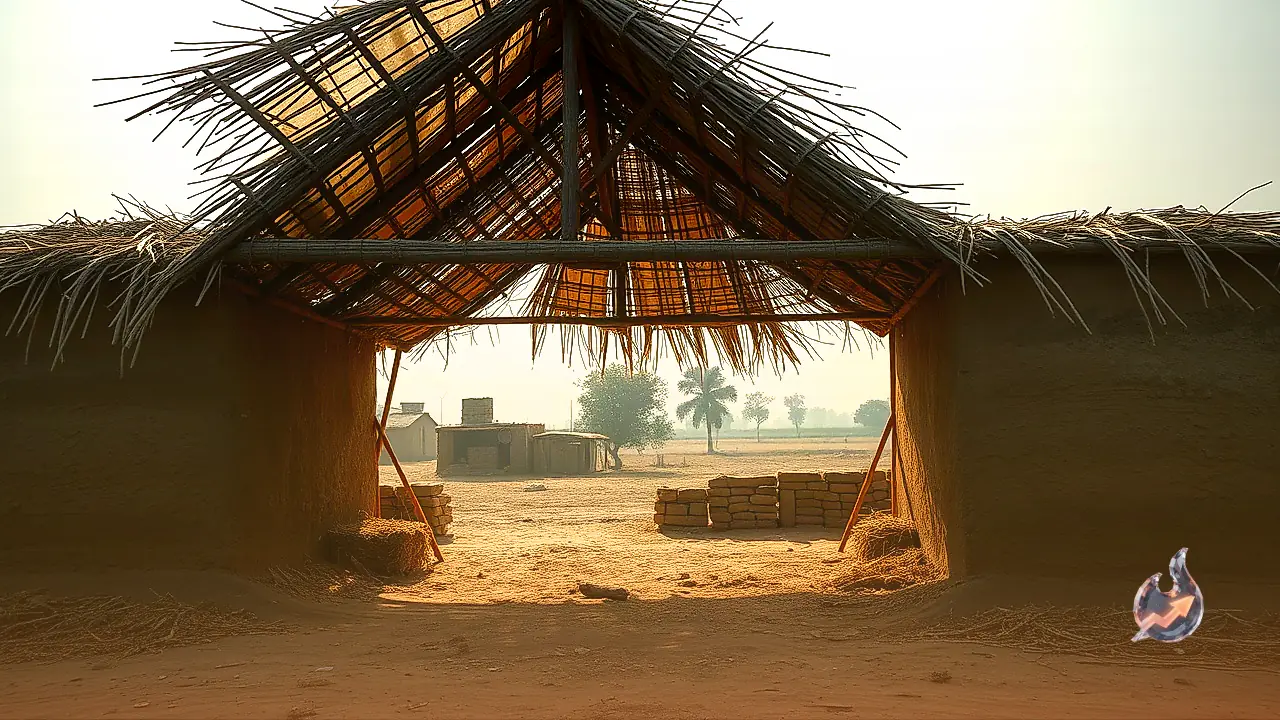
At the selected site, a mixture of wet soil and straw is kneaded together to form a heavy, binding plaster. This material is used to raise sturdy circular walls that serve as the outer shell of the Koop. After the foundational frame takes shape, workers pack the dried fodder tightly inside, layer upon layer, minimizing air pockets. Once filled to capacity, the apex of the structure is completely sealed with a thick coat of mud and straw, preventing any entry of ambient air or moisture.
Protection Against Extreme Weather and Pests
According to local villagers, the primary advantage of these mud and thatch enclosures is their ability to shield fodder from extreme weather shifts. The thick earthen walls provide natural insulation, keeping the inner chamber protected during severe summer heat, cold winter spells, and heavy rains. Furthermore, because the structure is fully enclosed, insects and rodents cannot penetrate the interior. Whenever livestock feed is needed, farmers carefully open a small section of the seal, extract the required quantity, and immediately reseal the opening with mud.
Modernization and the Shift Toward Plastic Tarpaulins
Over recent years, changing lifestyles and the accessibility of synthetic products have influenced this traditional storage practice. To save time and manual labor involved in crafting clay structures, many farmers have turned to plastic sheets, tarpaulins, and temporary metal sheds. These modern options allow livestock owners to cover their fodder quickly with minimal physical effort.
Elderly residents in Bharatpur recall that almost every household and farmland in the region once featured these iconic mud Koops. Although their numbers have declined gradually over time, several farming families continue to rely on this natural heritage method. The enduring practice demonstrates how traditional rural communities created efficient, sustainable solutions for animal husbandry using experience and locally available natural materials.