

















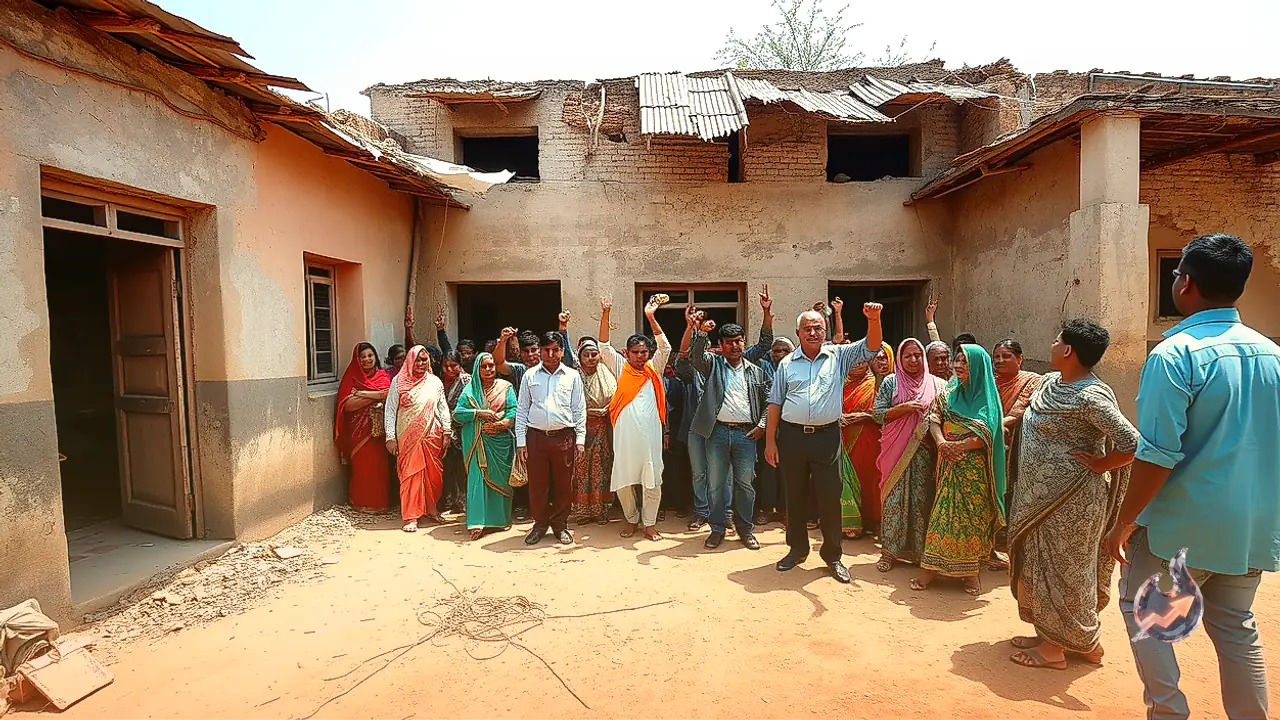

A remarkable story of community-driven development has emerged from Narsana village in Rajasthan's Jalore district, where locals transformed a neglected government school without waiting for state assistance. Previously, the institution struggled to accommodate more than 450 students, forcing children to study in corridors and open spaces due to a severe lack of infrastructure. Today, that struggling school has been replaced by a modern, two-story facility built entirely through public donations, alumni contributions, and the collective efforts of local businessmen.
The Spark That Started the Movement
The ambitious transformation began under the leadership of Jaswant Singh, a retired Panchayati Raj service officer, former student, and sarpanch representative. Recognizing the abysmal condition of the school, he appealed to villagers and alumni to unite and rewrite the future of their alma mater. His call to action resonated deeply across the community, sparking a localized fundraising campaign centered around the symbolic message of contributing one brick from every household in the village.
Overwhelming Support From Locals and Migrant Businessmen
The fundraising drive quickly expanded beyond the village borders, drawing enthusiastic participation from Narsana natives running businesses in other states. Contributions poured in at various levels, with individuals donating 51,000 rupees, others contributing 7 lakh rupees, and prominent philanthropists giving as much as 21 lakh rupees toward the construction fund. Through nearly four and a half years of dedicated effort and community fundraising, a staggering total of roughly 4.50 crore rupees was successfully collected.
State-of-the-Art Facilities in the New Building
The newly constructed two-story school building features a wide array of amenities designed to foster comprehensive student development. The complex houses 21 spacious rooms and two large halls, permanently resolving the seating shortage that once plagued the institution. To encourage scientific curiosity and physical fitness among students, the campus now includes a dedicated science laboratory and an underground indoor stadium.
Water Conservation and a Lasting Legacy
Addressing long-term sustainability, the school grounds have also been equipped with a 10,000-liter capacity water harvesting system to capture rainwater and ensure a reliable water supply. The completed building stands as more than just physical infrastructure; it represents a powerful testament to the unbreakable bond between villagers and their roots, proving that collective grassroots action can achieve monumental educational milestones.