














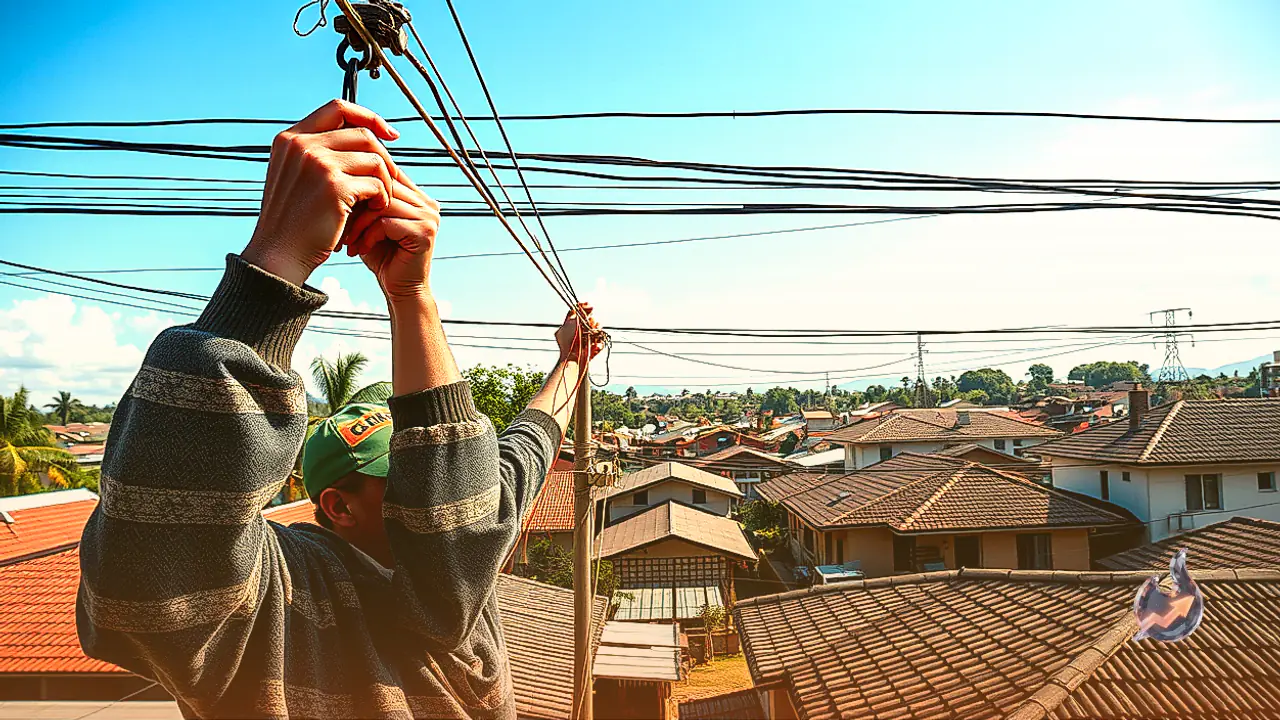

In Uttar Pradesh's Mau district, high-tension electrical cables running precariously close to residential quarters, agricultural plots, and educational institutions have turned into a persistent and lethal threat for local citizens. Residents express strong frustration that fatalities caused by coming into direct contact with these exposed wires have become an alarming occurrence across the district, yet the administrative machinery has failed to implement a lasting preventive solution. Dangling just a short distance above domestic rooftops, these heavy-duty lines continually jeopardize everyday life, leaving families terrified of even setting foot on their own terraces.
Dangerous Proximity Across Rural and Urban Rooftops
Addressing the issue, former assembly candidate Dr. Dharam Singh Gautam pointed out that high-tension cables strung over residential houses cause numerous difficulties and severe anxiety for the local population. He noted that alongside high-tension lines, low-tension (LT) wires also pass unnervingly close to rooftops across rural settlements as well as urban neighborhoods. Due to this minimal clearance, villagers live under continuous fear that any inadvertent contact could trigger a catastrophic incident, especially given that multiple individuals have already lost their lives after coming into contact with these energized lines.
This persistent hazard is widely seen as an operational lapse on the part of the electricity department. Local voices maintain that if officials acted proactively to properly organize cabling systems, implement aerial bunched wiring, or establish secure distribution corridors, these tragedies could be averted entirely. The threat extends far beyond dwelling units into agricultural land as well, where electrical cables sag merely a short distance above the ground. Farmers encounter immense hurdles while plowing, planting, and maintaining their crops under these live wires, directly harming their agricultural operations. Community representatives are urging the power department to actively inspect, repair, and systematically realign all dangling infrastructure to prevent accidental contact.
Escalating Alarm After Fatal Incidents and Systemic Gaps
Echoing these concerns, former district panchayat member candidate Rajendra Yadav emphasized that administrative carelessness in power management leads to recurring tragedies. The sense of panic deepened sharply across Mau after a recent incident in which three young men lost their lives on a rooftop upon coming into contact with a high-tension cable. Since that disaster, families living beneath high-tension corridors have been gripped by fear, constantly worried about an accidental disaster, particularly during the wet monsoon months when damp surroundings drastically heighten electrical conductivity.
Residents further highlighted the glaring contradiction that despite the energy and urban development minister hailing from this very district, on-ground electrical safety remains critically compromised. They pointed out that while paperwork frequently reflects cable replacement and modernization works, physical progress at ground level remains absent, only multiplying the existing peril. Citizens are demanding that the department officially identify all vulnerable residential stretches where power lines hover directly over private dwellings and permanently shift them away, allowing people to access their roofs without fear of electrocution.
Primary School Operates Under Shadow of Live Wires
The safety crisis reaches into the classroom as well, casting a shadow over young students. At the primary and upper primary school in Ghalibpur, a high-tension power line runs directly over the educational premises. School headmaster Arvind explained that these sagging wires suspend a climate of constant terror among both teaching staff and students. Despite sending multiple formal written petitions to the department requesting the removal or realignment of the cables, no concrete corrective action has been initiated to date.
The hazard becomes especially acute during rainy weather, when school routines are severely disrupted. Because everyone entering or leaving the campus must walk directly beneath these overhead lines, teachers and pupils remain on edge over the constant possibility of a snapped cable or electrical discharge. Both school authorities and parents have petitioned the administration and power department to fix the infrastructure immediately so that classroom learning can proceed safely without threatening young lives.
Departmental Stance on Construction and Clearances
Responding to the grievances, power department official Ashish stated that notices will be formally served to property owners who have newly constructed residences underneath previously established electrical lines. He further added that the electricity department will ensure that no fresh power cables are laid directly over existing residential buildings moving forward.