





















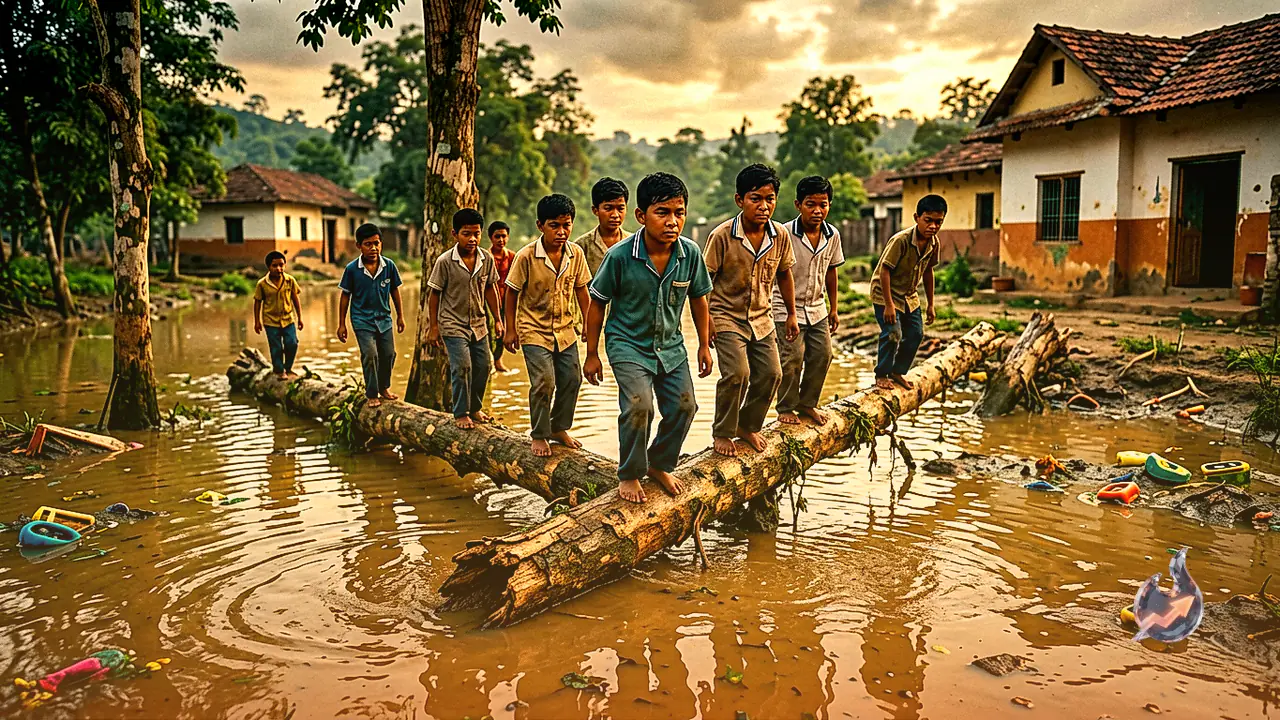

A distressing glimpse of rural neglect has emerged from the Arnod sub-division of Pratapgarh district in Rajasthan, where lack of basic infrastructure forces school children to risk their lives daily. In the area between Chikli and Udiya Khedi villages, heavy seasonal waterlogging has rendered a crucial pathway completely submerged during the rains. With no bridge or proper road available, young students have no option but to use a fallen tree trunk as a makeshift bridge to cross the water-filled expanse. Visuals from the area show children carrying heavy school bags and holding books tightly while carefully balancing their steps one after another along the slippery log.
Navigating Danger on a Tree Trunk
Reaching school becomes an extreme test of survival for these children whenever heavy rains flood the pathway. The water beneath the wooden log makes every single step perilous, and even a minor loss of balance could plunge a child directly into the water, leading to severe injuries or worse. This daily commute is especially terrifying for the younger kids who lack the physical stability required to cross such obstacles safely. Local residents point out that the constant threat of slipping into the deep water looms over the children throughout their journey to and from the classroom, turning a routine education into a hazardous daily ordeal.
Impact on Local Residents
The blocked and flooded pathway does not just affect the students; it disrupts the daily lives of all local inhabitants in the region. Reports indicate that around twenty to twenty-five households populate the area between Chikli and Udiya Khedi, relying on this exact route for their routine movement. When the monsoon waters engulf the path, normal commuting comes to a grinding halt for everyone, leaving parents in constant anxiety for the safety of their children. Villagers have long demanded a permanent engineering solution, such as an elevated culvert or a proper paved road, to ensure year-round safe transit.
Calls for Action Ignored by Leaders
Frustrated residents state that they have repeatedly raised grievances regarding this dangerous route with local representatives and officials. According to the villagers, the alarming situation has been brought to the attention of Ramlal मीणा and हेमंत मीणा, yet no concrete steps have been taken on the ground to resolve the crisis. The community is now urging the district administration and concerned public works departments to inspect the site urgently and begin construction work. They emphasize that children's safety must remain an absolute priority rather than being sidelined by bureaucratic delays.
While official announcements frequently highlight rural development and infrastructure expansion across the country, realities like the Pratapgarh tree-trunk crossing expose a stark contrast. The situation raises serious questions about the actual implementation of rural development schemes designed to provide all-weather connectivity. Residents remain hopeful that authorities will finally take strict notice of these hardships, intervene swiftly, and build a safe passage to protect both the school children and the local community from ongoing danger.