





















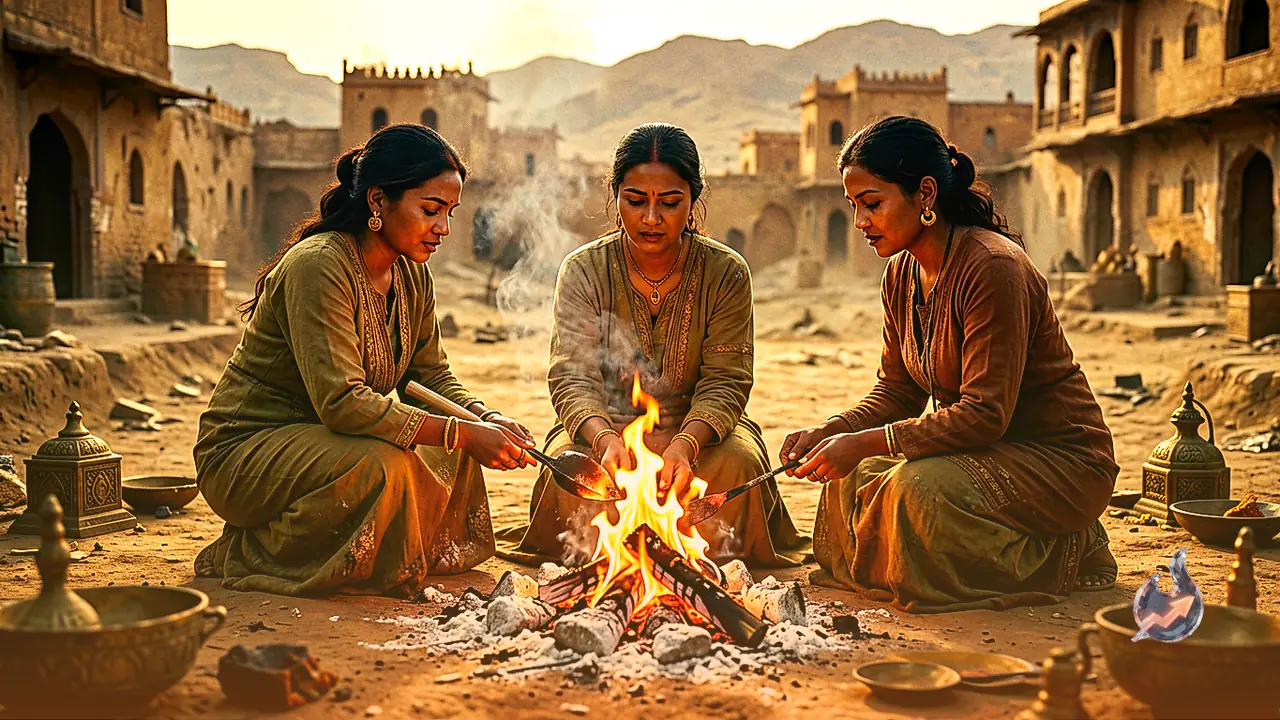

The holy pilgrimage town of Pushkar recently witnessed a deeply emotional and progressive event that challenged long-standing societal norms. Even in today's modern era, where patriarchal mindsets regarding sons and daughters still linger, three sisters from Pushkar broke away from conservative traditions to set a powerful example. At the Moksha Dham located in Badi Basti, onlookers were moved to tears as three biological sisters, Kadambari Baisa, Krishna Baisa, and Jayantika Baisa, tearfully lit the funeral pyre of their late mother, Ushakavar Ranawat, and personally fulfilled all traditional religious rites associated with the cremation.
Family Background and Breaking Generations of Tradition
According to details shared by the family, 55-year-old Ushakavar Ranawat's life and background were connected to multiple regions. Her nephew, Dakshyarajsingh, explained that Ushakavar did not have any sons. In traditional societal settings, when such a situation arises, a male relative or nephew is typically called upon to perform funeral rites. However, this family chose to leave behind archaic customs and entrusted all ceremonial duties and rights directly to the three daughters. The sisters stepped forward without hesitation, performed the cremation rituals, and proved that daughters are fully capable of fulfilling every filial duty toward their parents just as sons would.
Medical Treatment and Funeral in the Holy Town
Shedding light on the tragic circumstances, social worker Shankarsingh Bhaval noted that Ushakavar Ranawat's marital home was near Manpura Macheri close to Jaipur, while her parental home was in Karohi village near Bhilwara. She had been unwell for some time due to failing health and was undergoing medical treatment at Kshetrapal Hospital. During the course of treatment, she passed away at the age of 55, plunging her entire family and relatives into deep grief. Given the immense religious and spiritual significance of Pushkar, the family mutually decided to conduct her final rites at the local cremation ground in the holy city itself.
A Strong Message for a Changing Society
At a time when daughters across the country are shining in fields ranging from defense and science to sports and administration, they are equally stepping up to shoulder familial and social responsibilities on par with men. The incident in Pushkar is not merely an isolated funeral but a resounding response to those who continue to undervalue daughters compared to sons. By bidding a final farewell to their mother through these rituals, the three sisters delivered a clear message that core values, devotion, and duty are defined by genuine emotion and dedication rather than gender.