
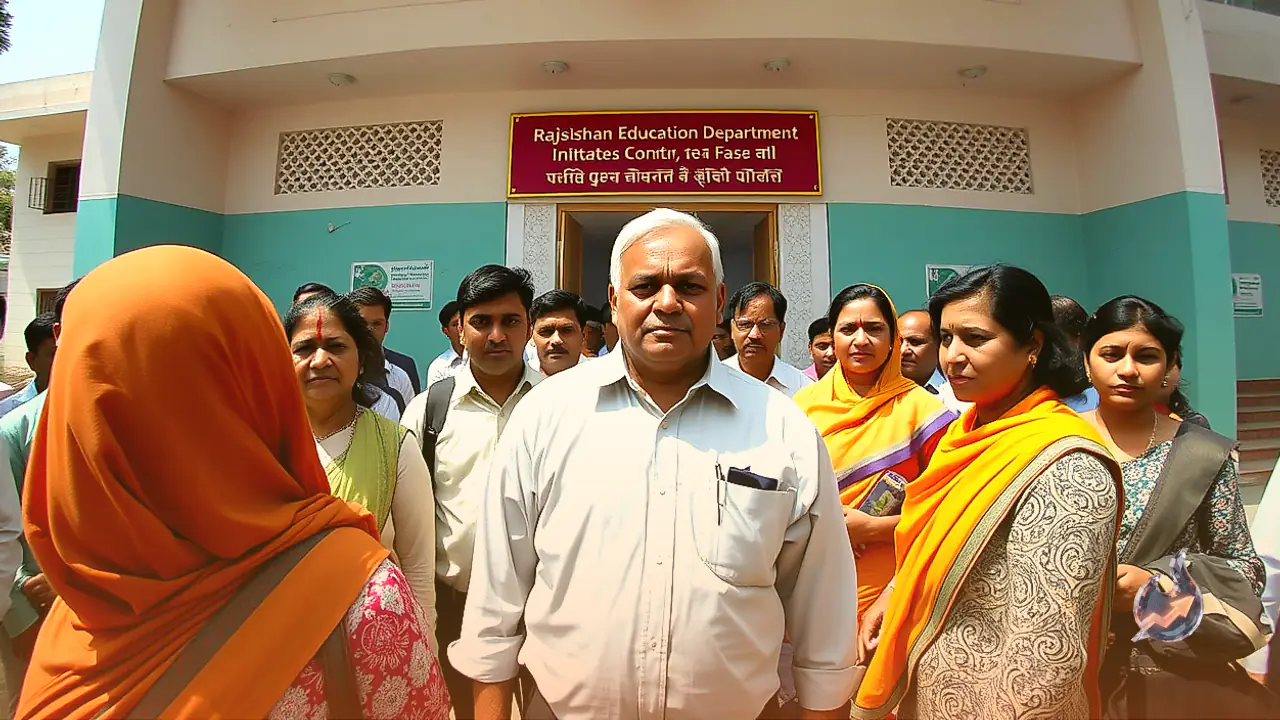
























Law enforcement authorities in the Churu district of Rajasthan have cracked down on a syndicate engaged in opening digital bank accounts in the names of villagers under false pretenses and selling them to cybercriminals. Posing as social workers and bank representatives, the conspirators promised substantial welfare subsidies to obtain personal identification files from unsuspecting residents. Special investigators have taken three key suspects into custody, while pursuit of a fourth named associate continues.
Luring Villagers Under the Pretext of Government Subsidies
The perpetrators operated across remote settlements using a structured deception strategy. They visited rural households presenting themselves as representatives of an active non-governmental organisation. To gain the confidence of community members, they spoke about various official development initiatives related to solar energy installation, dairy projects, and goat farming, convincing residents that large financial grants were being made available by the state.
Claiming that official assistance could only be disbursed through freshly created digital channels, they urged residents to permit the launch of new accounts. Trusting the promises, local citizens handed over their identity documentation and photographs. The gang then utilized these Know Your Customer papers to activate online current accounts with Airtel Payments Bank on the victims' behalf.
Impersonation of Bank Executives
To dismiss any lingering skepticism, members of the group routinely introduced themselves as the manager and assistant manager of Airtel Payments Bank. This assumed official stature allowed them to quickly dispel any suspicion among the villagers. Acting on evidence, investigators apprehended Jitendra Kumar Jain from Sujangarh, Ankit Jat of Udansar village in Fatehpur, and Kartik Jat from Mandela. A formal case also names Sethi Bhat of Chhapar, who remains at large and is currently being tracked by search teams.
Retention of Banking Credentials to Facilitate Financial Crimes
Once the online current accounts were operational, the operatives deliberately withheld passbooks, automated teller cards, and critical digital credentials from the nominal holders. By retaining absolute control over every access mechanism, the syndicate promptly handed these functional accounts over to distant cyber fraud networks. Online swindlers relied on these channels to route extortion money and launder illicit revenue, ensuring that if police tracked any suspicious trail, innocent village residents would appear as the primary suspects.
Police Investigation and Rapid Apprehensions
Superintendent of Police Nischay Prasad M stated that a resident named Megharam Luhar from Devani village approached authorities on September 29 after discovering the irregularity. Acting on the complaint, Churu Cyber Police Station registered a formal first information report on September 30, 2026, invoking sections of the Bharatiya Nyaya Sanhita alongside the Information Technology Act. A specialized team headed by Deputy Superintendent of Police Vijay Kumar Meena was assigned to track digital clues, culminating in the apprehension of the three suspects.
Police personnel Kamal Kumar, Sunil Kumar, and Rakesh Kumar played pivotal roles in tracking and detaining the trio. Initial interrogation revealed that the syndicate had facilitated the opening of hundreds of similar accounts spanning Chhapar, Fatehpur, Sujangarh, and neighboring villages. Investigators are presently focused on identifying the downstream cybercriminals who purchased these accounts and tracking down the absconding suspect.