


















While modern fashion design typically demands degrees from elite academies and proficiency with expensive computer-aided design tools, a quiet revolution of traditional craftsmanship thrives just 15 kilometres outside Kota in Rajasthan. In the historic town of Kaithun, rural women who have never attended a fashion institute or earned a design credential are handcrafting exquisite Kota Doria sarees that find buyers not only across Indian metros but also in international markets. Their mastery stems entirely from practical experience, generational knowledge, and endless hours spent at the wooden loom.
Master Designers Without Academic Credentials
The journey of Kaithun's women weavers is defined by extraordinary patience and intense manual labour. Several of these master craftswomen have never attended school in their lives, while others completed only primary schooling up to class 5. Nevertheless, their intuitive grasp of colour theory, thread tension, and geometric patterns rivals that of trained textile designers.
Among the prominent artisans in Kaithun are Tayra Bano, Ajijan, Naseem, and Shabana. At 60 years of age, Tayra Bano has never had formal schooling, yet she brings an astounding 45 years of practical experience to the pit loom. Her sophisticated understanding of dye palettes and intricate motifs is the product of four and a half decades of hands-on work. Similarly, Ajijan never learned to read or write, but she has spent the last 25 years weaving; for her, the loom has served as her classroom and the threads as her books. Meanwhile, 40-year-old Naseem studied up to the fifth standard and has dedicated 15 years to designing and weaving sarees. Shabana, who also studied up to class 5, carries 25 years of weaving expertise. None of these artisans attended formal design programmes; they honed their craft through daily work, observation, and continuous practice on traditional looms.
Thirty Days of Labour Versus Market Realities
Daily life for these artisans involves rigorous discipline and extended working hours. A weaver typically spends around 12 hours each day seated at the loom, with only a single day off per week. Under these demanding conditions, completing a single standard saree takes approximately 30 days of focused labour.
For an entire month of continuous effort, a woman weaver receives about Rs 10,000 per saree. Broken down into a daily wage, this works out to roughly Rs 380 per day, which amounts to approximately Rs 32 per working hour. In stark contrast, exclusive Kota Doria pieces sell in premier retail markets for as much as Rs 3 lakh. The very garment that requires an entire month of a rural artisan's time can command substantial prices depending on the intricacy of the pattern, the purity of the raw materials, and the sophistication of the woven details.
A Centuries-Old Weaving Heritage Rooted in Mysore
The weaving tradition in Kaithun carries a rich lineage spanning more than a century. Historical accounts indicate that migrant artisan families from Mysore originally introduced this distinct weaving technique to the region. The craft subsequently received royal patronage from the Kota royal family, which helped establish its wider prestige and commercial viability.
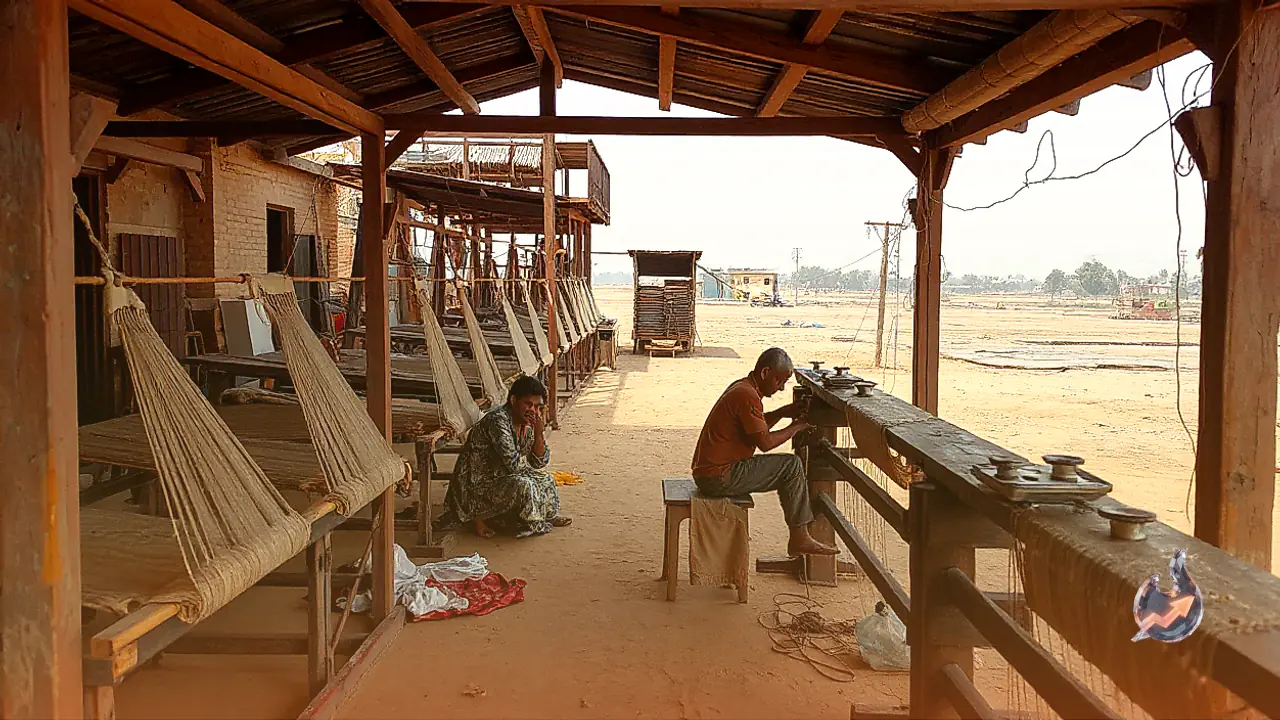
Over the decades, handloom weaving evolved into the signature identity of Kaithun, passed down diligently from one generation to the next. The hallmark of an authentic Kota Doria saree is its feather-light feel and its signature square-checkered translucent structure, locally known as 'khat'. The fabric is woven using a balanced combination of fine cotton and natural silk yarns. Avoiding modern power looms, the weavers work exclusively on manual wooden handlooms, guiding each yarn by hand. This deliberate manual execution explains why every piece demands immense time and focused effort.
Strengthening Threads with Rice and Onion Paste
The fabrication of a Kota Doria saree begins long before the weaver sits down to operate the loom. Raw yarns must first be carefully processed and mounted onto the warp frame. To ensure the delicate threads gain adequate tensile strength and do not snap during weaving, artisans apply an age-old organic paste made from boiled rice and onions.
Once the warp threads are properly conditioned, they are aligned on the handloom according to the selected colour scheme and structural design. Then begins the most meticulous phase of production, where the weaver interlaces each individual thread to form the square grid patterns. The turnaround time varies significantly based on the style and complexity of the piece
- A standard Kota Doria saree takes around 15 to 20 days to complete.
- An intricate designer saree requires between 20 and 25 days of dedicated weaving.
- A high-end traditional Zariya saree, decorated with genuine gold and silver metallic threads, takes roughly three months of meticulous work.
- Crafting a Zariya saree demands a coordinated team of three to four weavers working together, often supported by other family members.
Economic Lifeline for Thousands of Rural Families
The Kota Doria handloom ecosystem in Kaithun represents far more than an artistic legacy; it forms the economic backbone of the local community. Across Kaithun and 12 neighbouring villages, approximately 3,000 traditional handlooms remain operational, providing a direct livelihood to nearly 6,000 individuals.
The cluster produces between 400 and 500 finished sarees every single day. Numerous households rely entirely on weaving revenues for their day-to-day survival. By managing household responsibilities while contributing hours of skilled weaving at the loom, rural women play a central role in generating indispensable household income.
Sustained Appeal Across Domestic and Global Markets
The appetite for genuine Kota Doria sarees extends well beyond Rajasthan and metropolitan centres in India. Non-resident Indians and collectors living abroad regularly place direct orders through family networks in India to source authentic pieces from Kaithun.
Retail pricing accommodates a wide spectrum of consumers depending on craftsmanship and raw materials. Everyday entry-level cotton-silk sarees start at around Rs 1,000, while regal Zariya collector pieces made with authentic gold and silver threads can reach up to Rs 3 lakh. Thanks to its lightweight comfort and timeless aesthetic, the craft of Kaithun continues to sustain strong international demand.