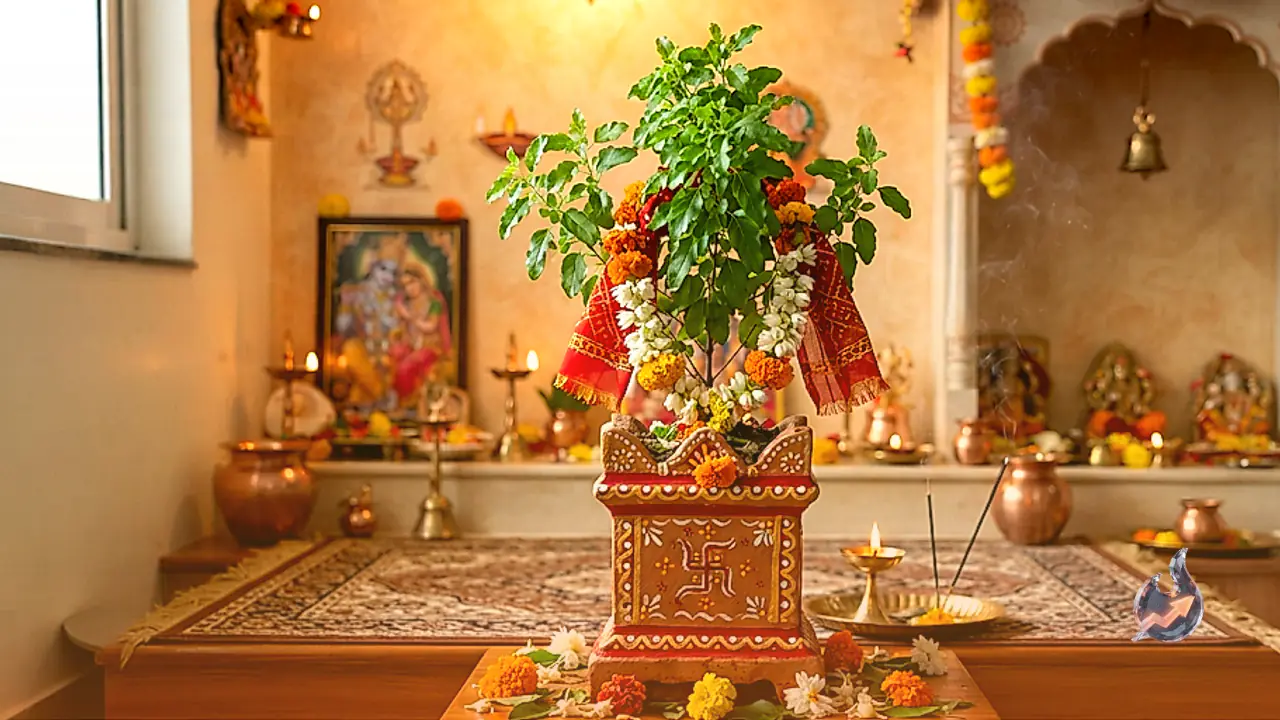

In Hindu tradition, the Tulsi plant holds profound spiritual and religious significance, which multiplies manifold during the holy month of Kartik. The period starting from Devuthani Ekadashi, when Lord Vishnu awakens from his slumber, up to Kartik Purnima is regarded as an exceptionally auspicious window for offering prayers to mother Tulsi. While many people organize Tulsi Vivah on Dvadashi, others celebrate it on the Purnima day. According to traditional beliefs, dedicated worship during this time invites the special grace of Lord Vishnu and Goddess Lakshmi alongside mother Tulsi. To reap the complete spiritual benefits of these rituals, devotees must chant specific powerful mantras during the worship and marriage ceremonies.
Key Mantras for Tulsi Vivah and Worship
Reciting specific mantras during the Tulsi marriage ceremony is considered highly meritorious. One primary prayer is the Mahaprasad Janani chant, which honors the sacred plant as the generator of all fortune and the remover of physical and mental afflictions. Devotees also chant the sacred Vishnu mantra Om Namo Bhagavate Vasudevaya continuously throughout the rituals. Additionally, specific worship verses are recited to invoke divine devotion and secure a place in the supreme abode of the Lord, acknowledging Tulsi as the beloved companion of the divine.
Complete Stuti of Mother Tulsi
Reciting the traditional stuti dedicated to mother Tulsi is considered immensely rewarding during the festive rituals. The verses describe her as the vanquisher of sins, the giver of spiritual merits, and the dearest to Lord Narayan. The hymns beautifully state that the roots of Tulsi harbor all sacred pilgrimage sites, her middle section houses all deities, and her upper branches contain the essence of all sacred Vedas. Praying through this stuti protects devotees from all kinds of calamities and blesses them with enduring health, wealth, and peace of mind.
Tulsi Namashtak and Eight Holy Names
Remembering the eight sacred names of mother Tulsi is believed to bestow merits equivalent to performing grand Vedic sacrifices. These eight names include Vrinda, Vrindavani, Vishvapujita, Vishvapavani, Pushpasara, Nandini, Tulsi, and Krishna Jivani. Chanting the Namashtak fills the household with positive energy. Furthermore, reciting the individual mantra forms dedicated to each of these names helps remove life obstacles and establishes lasting harmony and prosperity within the family.