























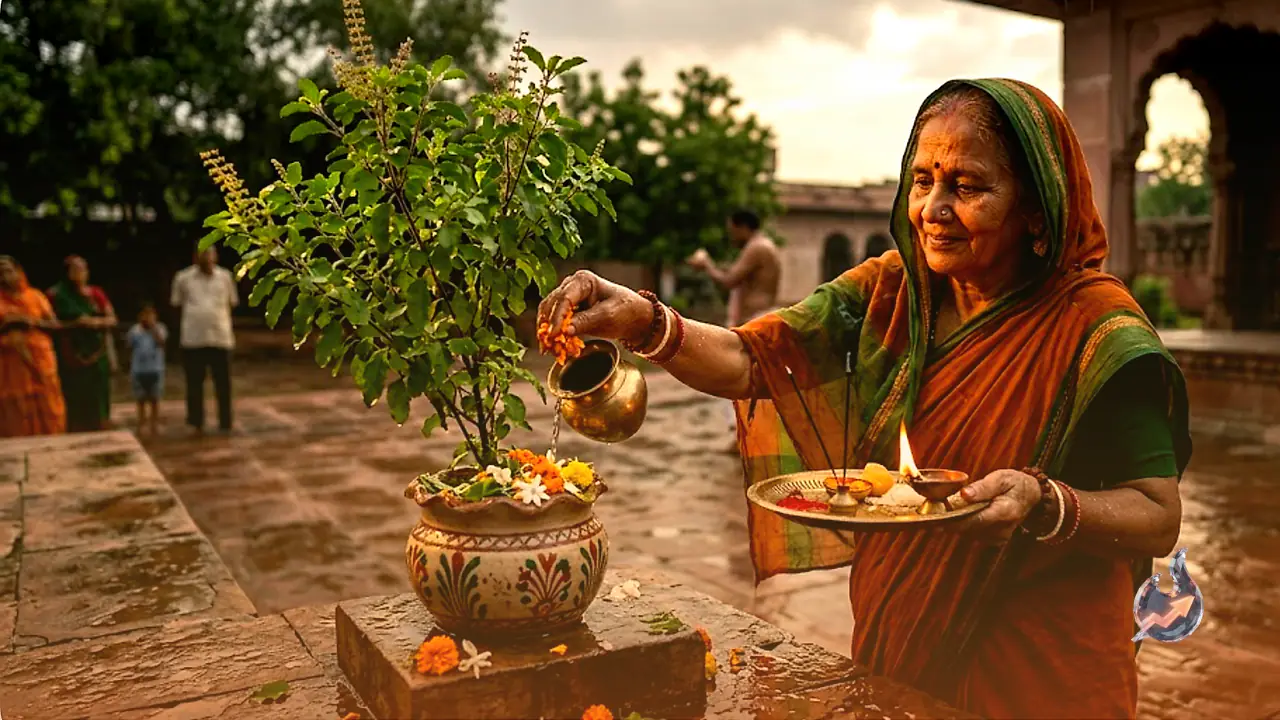

The sacred month of Ashadha has arrived, and for devout Hindus, this is one of the most spiritually charged periods of the year. It is especially significant for the worship of Lord Vishnu. Ashadha is the month in which Devshayani Ekadashi falls, after which Lord Vishnu is believed to enter a state of divine sleep called Yoga Nidra for four months, a period referred to as Chaturmas. During Chaturmas, all auspicious and ceremonial activities, including weddings, housewarming rituals, and Mundan, are suspended. However, this is considered an extremely meritorious time for prayer, devotional chanting, charity, and acts of spiritual merit. Since Tulsi, the holy basil plant, holds a place of supreme importance in Vishnu worship, performing Tulsi puja during Ashadha carries exceptional religious significance. Here is everything you need to know about how to worship the Tulsi plant during this month and what precautions must be observed.
Offer Water to the Tulsi Plant Every Morning
Throughout all thirty days of the Ashadha month, devotees should offer water to the Tulsi plant each morning after sunrise. While doing so, chant the mantras of Lord Vishnu and fold your hands in a gesture of prayer and reverence. This daily practice is said to bring peace and lasting prosperity into the household. One important exception to keep in mind: water must not be offered to Tulsi on Sundays, on Ekadashi dates, or on days when a solar or lunar eclipse takes place.
Light a Ghee Lamp at the Tulsi Plant Each Evening
Lighting a ghee lamp in front of the Tulsi plant every evening during Ashadha is regarded as highly auspicious and deeply beneficial. The warm glow of this lamp is believed to dispel all negative energies from the home and fill the space with positive vibrations. Those who worship the Tulsi plant regularly at dusk are said to receive the continuous blessings of both Lord Vishnu and Goddess Lakshmi, ensuring divine grace remains with the family throughout the month and beyond.
Circumambulating Tulsi Removes Life's Obstacles
After performing Tulsi puja during the Ashadha month, devotees should complete 7, 11, or 21 circumambulations, known as parikrama, around the Tulsi plant. This practice is believed to swiftly dissolve all obstacles, hardships, and difficulties from one's life. Those who follow this ritual with sincerity and regularity are said to experience lasting happiness and harmony within their homes.
Offering Tulsi Leaves to Lord Vishnu Is Essential
The entire month of Ashadha is dedicated to Lord Vishnu, which makes it essential to offer Tulsi leaves to him during every daily puja. According to religious belief, both the worship and the food offering, known as bhog, made to Narayan are considered incomplete without Tulsi. Devotees must therefore ensure that Tulsi leaves are included in every act of Vishnu worship performed during this month, without exception.
Mantras to Chant During Tulsi Worship
Reciting these Vishnu mantras during Tulsi puja is believed to multiply the spiritual benefits of the practice:
- Om Namo Bhagavate Vasudevaya
- Om Narayanaya Vidmahe Vasudevaya Dhimahi Tanno Vishnuh Prachodayat
What to Avoid During the Ashadha Month
Along with observing the prescribed worship rituals, certain restrictions must also be followed during Ashadha to receive the full merit of this sacred month:
- Avoid all tamasic foods, including meat, alcohol, eggs, fish, garlic, and onion.
- Stay completely away from all forms of intoxicants throughout the month.
- Auspicious ceremonies such as weddings, housewarming rituals (griha pravesh), Mundan, and other celebratory events should not be conducted during Ashadha.
- Consumption of green leafy vegetables is also considered inadvisable and should be avoided during this month.