























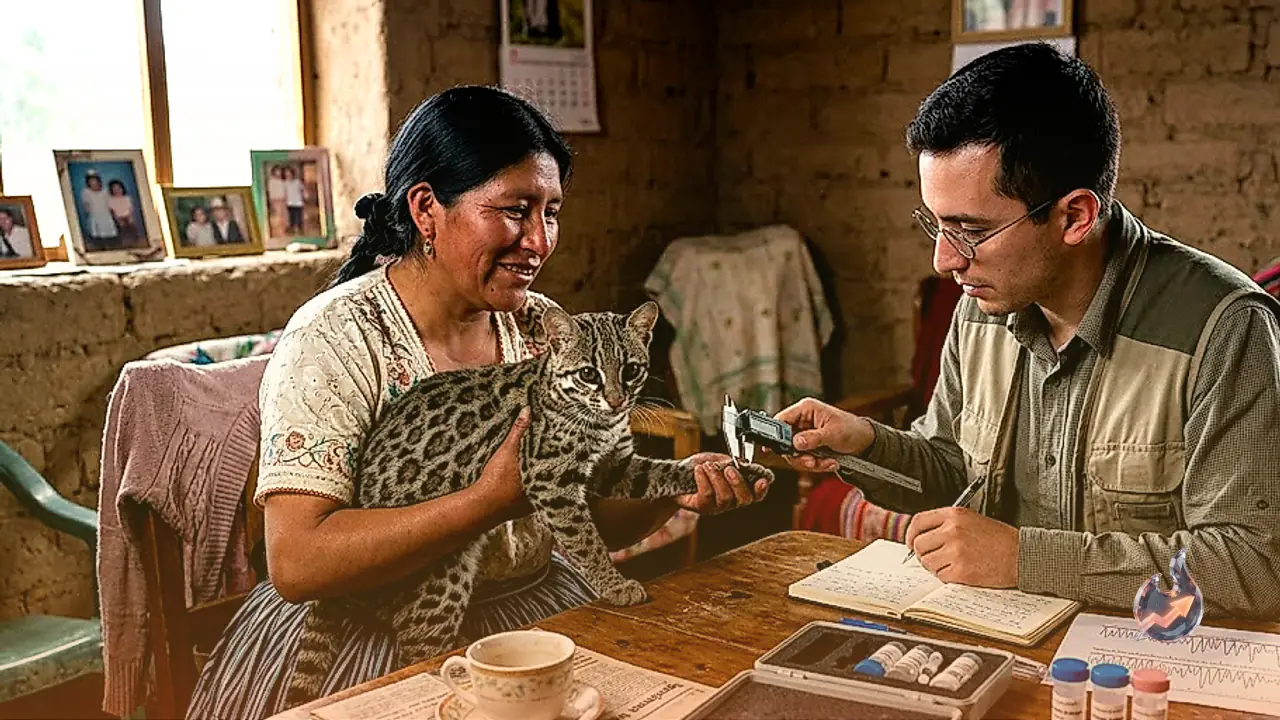

A remarkable biological discovery has emerged from the cloud-shrouded forests of Bolivia, where a small feline previously kept as a domestic pet by a local family has turned out to be an entirely undocumented wild species. Formally designated as Leopardus tilcayo, the creature measures just 46 centimeters in length and weighs approximately 1.4 kilograms, making it noticeably smaller than an average house cat. Despite its diminutive physical stature, the animal carries an evolutionary heritage spanning millions of years that has astonished biologists and taxonomists alike.
The First Living Cat Species Formally Described in Over a Century
Discovered within the rugged montane forests of the Yungas region in Bolivia, this feline belongs to the broader tiger cat lineage. Researchers note that this milestone represents the first time in over one hundred years that a new living cat species has been formally assigned a scientific name and cataloged in modern zoological records. Locally known as Tilcayo, the animal features a light brown coat adorned with irregular rosette patterns resembling rounded floral clusters. While its compact frame initially masked its identity, its distinct features eventually led researchers toward a significant taxonomic breakthrough.
From a Local Household to a Protected Wildlife Sanctuary
At the center of this remarkable revelation is a 10-year-old male Tilcayo, one of only two live specimens examined throughout the study. Before attracting scientific interest, the animal had spent years living inside a local family home where it was treated as a conventional domestic or stray cat. The feline has since been relocated to the Senda Verde wildlife sanctuary, where it now resides under professional care. Researchers first grew suspicious when they noticed that the cat physical characteristics did not align with documented descriptions of known tiger cat varieties, prompting an extensive genetic investigation.
Comprehensive Genetic Screening Uncovers a 1.4 Million Year Lineage
To settle the question of its identity, scientists analyzed genetic samples from 38 cats sourced across multiple South American countries, including eight historical museum specimens. The genetic data fundamentally reshaped scientific understanding of the entire group. Populations previously grouped together as a single tiger cat species were revealed to encompass five distinct genetic lineages, with the Bolivian Tilcayo standing out as an entirely separate branch. Evolutionary divergence estimates indicate that its lineage split from other tiger cats roughly 1.4 million years ago, quietly persisting in the Andean wilderness until contemporary genetics brought it to light.