




















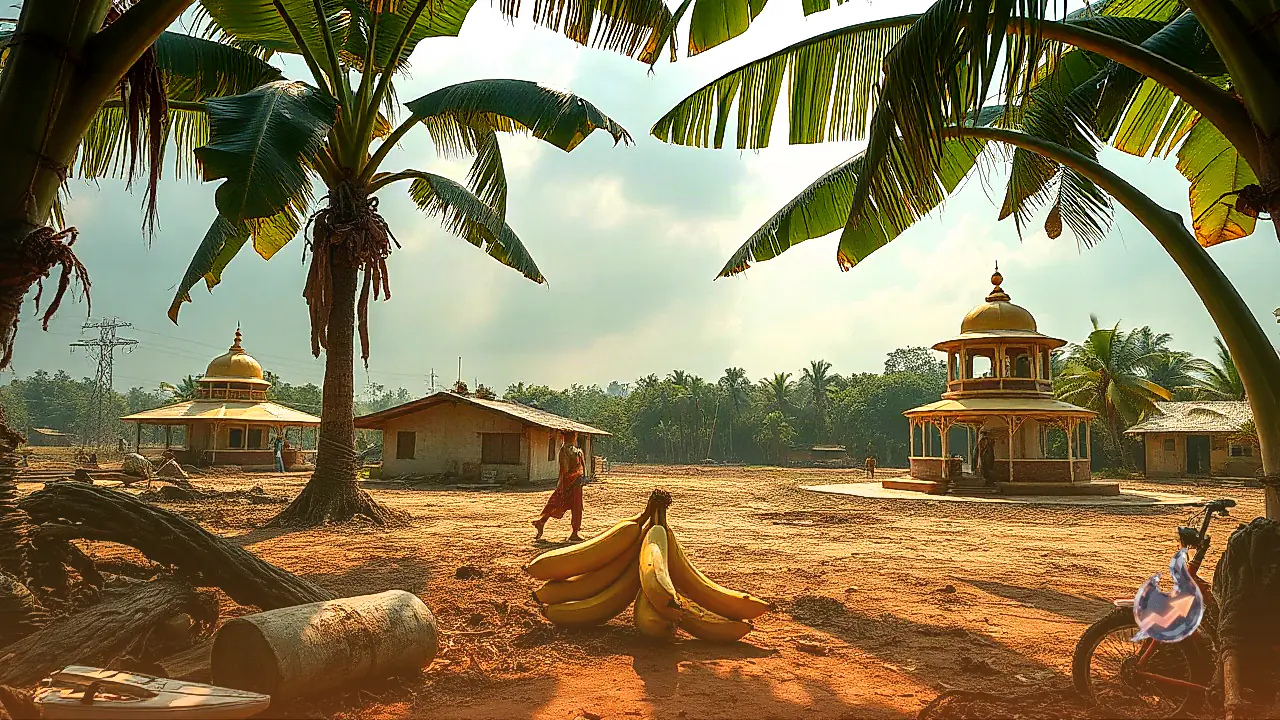

The bananas commonly purchased from local markets are soft, sweet, and completely seedless, making them one of the most widely consumed fruits globally. However, the original natural form of this familiar fruit looks drastically different. Deep within the dense forests of Telangana grows a unique wild banana that reveals large, stone-hard black seeds inside its peel instead of abundant sweet flesh. According to botanists, this wild variety represents the ancient progenitor from which the modern edible banana evolved thousands of years ago.
Fruit Composition: Filled 70 to 80 Percent with Hard Seeds
Scientific examinations of wild banana species growing in natural habitats, specifically Musa acuminata and Musa balbisiana, show that roughly 70 to 80 percent of the fruit's interior is occupied by extremely dense seeds. Only a minimal amount of sweet edible pulp adheres to these hard structures. The black seeds are so solid and sharp that attempting to chew the fruit like a standard banana could easily break a person's teeth. Consequently, forest dwellers adapt by filtering out the seeds to extract the sparse pulp, or they utilize the plant's stem and flowers to prepare cooked vegetable dishes.
Key Differences Between Wild and Commercial Varieties
There are distinct biological differences between cultivated market bananas and their forest counterparts. While commercial bananas feature only microscopic black specks at their center, wild bananas are densely packed with pea-sized, rock-hard seeds. Commercial bananas are seedless and propagated through cloning techniques using stem root cuttings. In contrast, wild bananas naturally disperse and propagate across forest ecosystems via their seeds. Furthermore, modern commercial fruit develops through a process called parthenocarpy, where fruit matures without pollination, resulting in a seedless structure.
Centuries of Breeding and the Genetic Value of Wild DNA
The popular sweet Cavendish banana enjoyed today is the result of thousands of years of human selection and agricultural refinement. Millennia ago, early farmers began identifying and cultivating rare natural mutant plants that produced fewer seeds. Over centuries of careful propagation, today's seedless crop was perfected. Despite this agricultural success, modern monoculture crops remain vulnerable to devastating fungal infections and diseases. To safeguard global supplies, scientists frequently utilize the DNA of these wild Telangana bananas, as they possess extraordinary natural disease resistance. Thus, these ancestral plants preserve forest biodiversity while serving as an indispensable genetic reservoir for future food security.