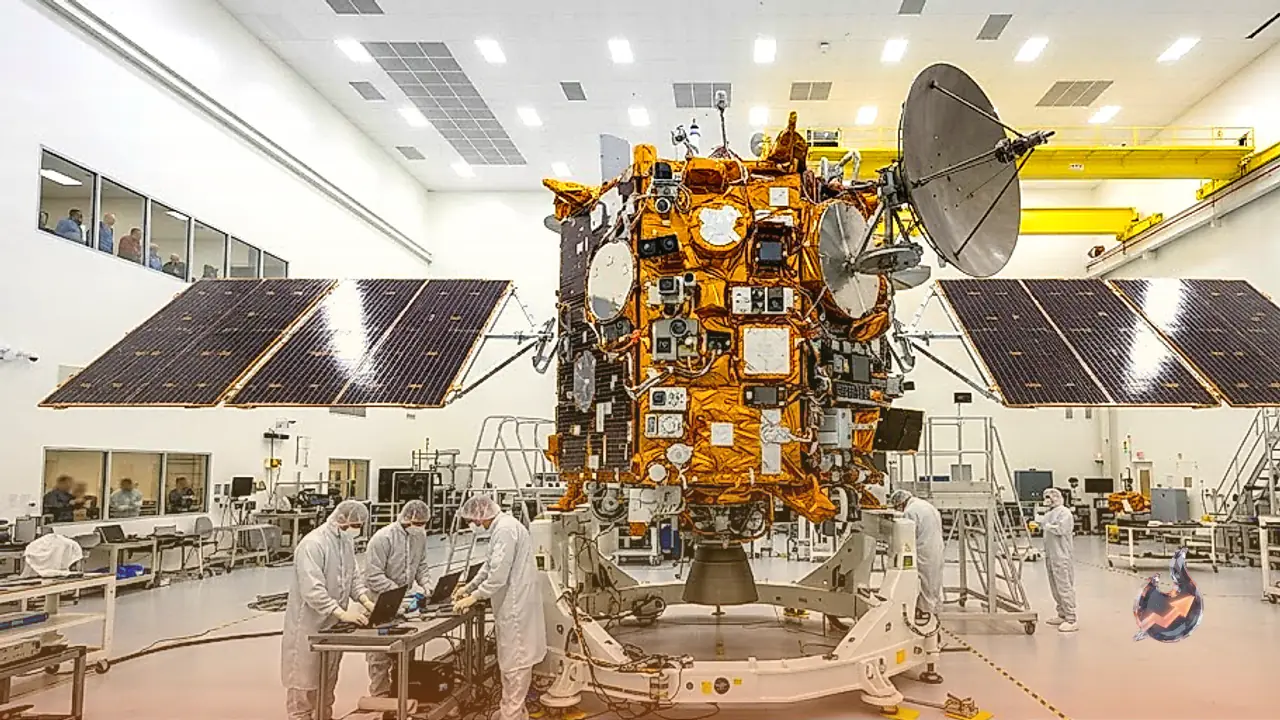






















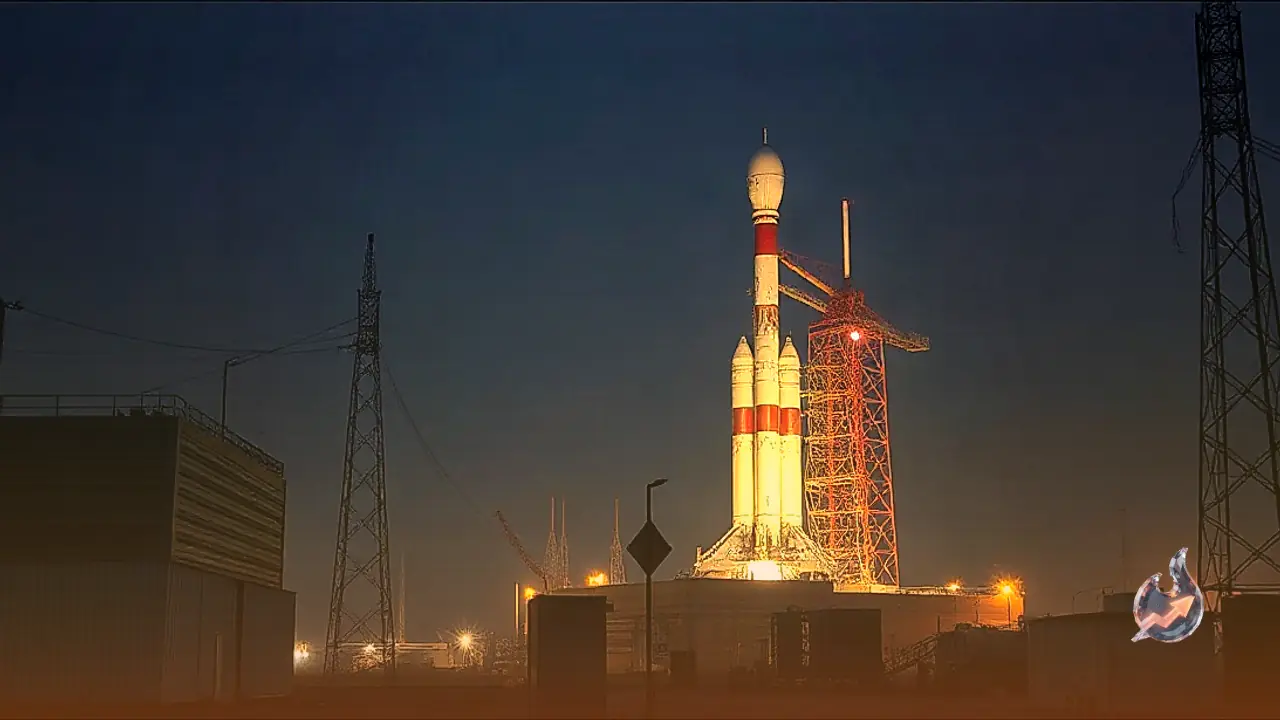

The Indian Space Research Organisation (ISRO) is preparing to break a seven-month operational pause by restarting its satellite launch schedule in early September 2026. Following a series of technical setbacks that temporarily halted its mission rhythm, the Indian space agency is targeting the first week of September to launch the GISAT-1A Earth observation satellite. Placed at the Satish Dhawan Space Centre in Sriharikota for an extended period, the satellite will spearhead a renewed sequence of missions. Following this launch, ISRO plans to orbit the NVS-03 navigation satellite in November. The resumption represents a critical attempt by the agency to rebuild momentum and reinforce India's orbital deployment capability after consecutive mission failures.
Key Features and Objectives of the GISAT-1A Satellite
The GISAT-1A spacecraft, also designated as EOS-05, serves as a direct replacement for the GISAT-1 (EOS-03) satellite launched in 2021. That earlier mission failed to reach its intended orbit when the rocket's final propulsive stage engine failed to ignite. Engineered for a operational lifespan of approximately 10 years, GISAT-1A is designed to deliver frequent, near-real-time imaging of expansive geographic areas across the Indian subcontinent.
Once positioned in orbit, the satellite will significantly enhance India's Earth observation network. Its operational capabilities are tailored to enable real-time monitoring of natural disasters, track agricultural trends and crop health, observe forest cover changes, and maintain surveillance over geographical and border regions. ISRO officials highlight that the successful deployment of GISAT-1A will provide essential data inputs for national disaster management and environmental surveillance frameworks.
Review of Recent Launch Failures and Technical Anomalies
ISRO's operational timeline across 2025 and 2026 experienced notable disruptions. Out of six missions executed during this multi-year span, three failed to insert their respective payloads into designated orbits. These failures were primarily driven by propulsion system anomalies and vehicle engine malfunctions during critical flight stages. The ongoing year opened with a setback on January 12, 2026, when the PSLV-C62 rocket failed during its attempt to orbit the EOS-N1 Earth observation satellite. Preliminary assessments indicated an anomaly during the third-stage burn. The official Failure Analysis Committee formed to investigate the incident has not yet made its findings public.
This event followed a challenging 2025 schedule during which ISRO conducted five launches. Among them, the PSLV-C61 mission, intended to deliver the EOS-9 satellite into orbit, suffered a similar third-stage technical failure. While ISRO maintains that the technical issues encountered on PSLV-C61 and PSLV-C62 were entirely separate, investigation reports for both occurrences remain unpublished. Additionally, out of two GSLV flights in 2025, GSLV-F15 experienced difficulties during orbit-raising manoeuvres required to position the NVS-02 navigation satellite, despite normal performance from the launch vehicle itself.
Successful Space Operations and Collaborative Missions
Despite these technical impediments, ISRO recorded key operational milestones during the same timeframe. The GSLV-F16 mission achieved full success, successfully deploying the NISAR satellite developed jointly by Indian and American space agencies. The NISAR mission continues to collect high-resolution radar imagery to measure subtle changes in Earth's land and ice surfaces.
Furthermore, ISRO successfully operated two missions utilizing its heavy-lift LVM3 vehicle. These flights successfully deployed the Bluebird-2 and CMS-03 communication satellites into their targeted orbits. These successful flights demonstrated the core reliability of the LVM3 architecture even as engineers worked to address third-stage issues observed on the PSLV platform.
Target Manifests for FY 2025-26 and FY 2026-27
The operational slowdown has created a noticeable gap between ISRO's planned launch targets and its actual mission output. According to the agency's annual plans, ISRO aimed to complete 15 missions during the 2025-26 financial year. That projection included four Earth observation satellites, one communication satellite, three uncrewed missions under the Gaganyaan human spaceflight initiative, alongside two launches each for the PSLV, GSLV, and LVM3 launch vehicles.
Looking ahead, ISRO has outlined an ambitious schedule for the 2026-27 financial year, targeting a total of 27 missions. This manifest includes five commercial flights of the Small Satellite Launch Vehicle (SSLV), four PSLV missions, three GSLV flights, and one LVM3 mission. Additionally, four test flights are scheduled under the Gaganyaan human spaceflight program. The upcoming launch of GISAT-1A in September will serve as the initial test for ISRO as it attempts to execute this expanded launch calendar.