























Swedish neurotechnology company Flow Neuroscience has introduced its brain-stimulation headset to the United States market as a nonchemical alternative to traditional antidepressants. The commercial rollout arrives in a country where approximately one in six adults relies on antidepressant medications. While the hardware offers a novel approach to mental health care, its four-figure cost presents a hurdle before the futuristic device gains widespread adoption among patients.
How the Forehead Device Works
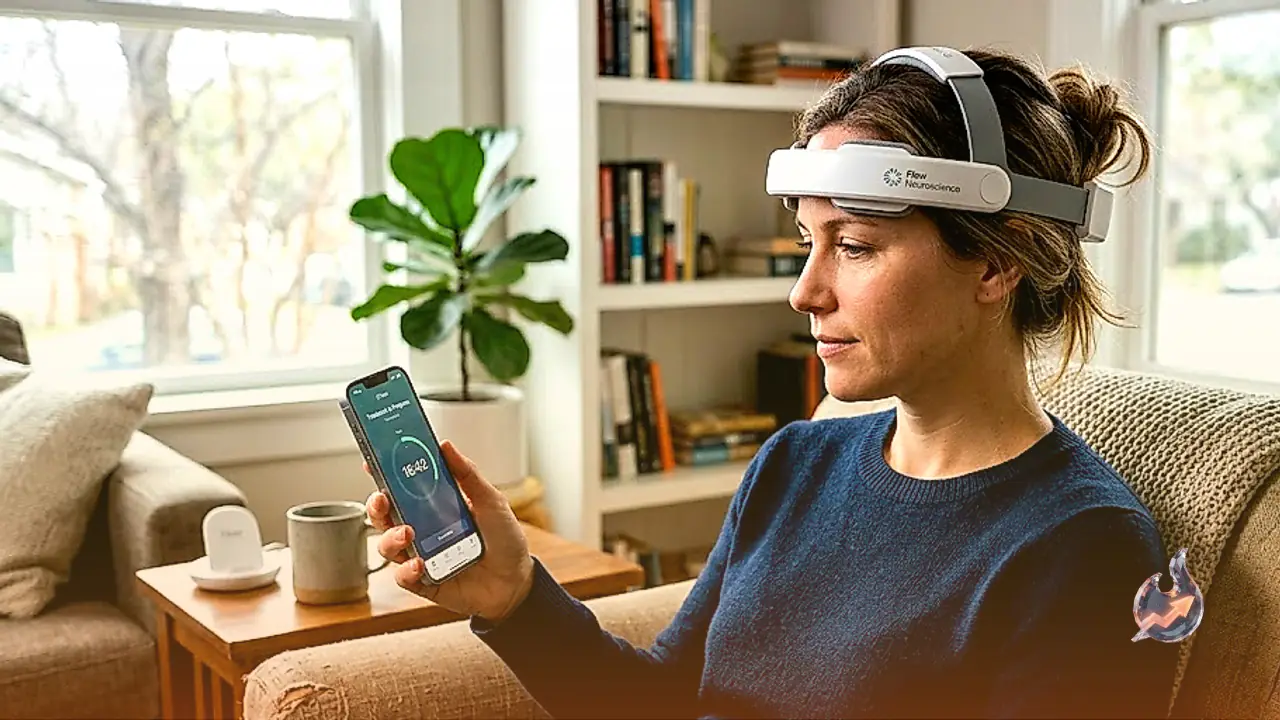
Designed to be worn across the forehead for 30 minutes daily and operated via a companion mobile application, the headset sends low-intensity electrical stimulation directly to the left frontal lobe of the brain. This specific cerebral region plays a central role in regulating mood and emotional responses. In clinical observations, individuals diagnosed with major depression frequently exhibit reduced neural activity and diminished connectivity across this particular area.
Regulatory Clearance and the Wearable Brain Tech Landscape
The regulatory path for Flow opened following clearance from the Food and Drug Administration last December. The device forms part of a wider wave of wearable technologies engineered to track, record, or electrically stimulate brain activity. In California, for example, Cognixion modified the Apple Vision Pro to create an assisted communication setup allowing paralyzed individuals to communicate without requiring speech or motor movement. In other consumer wellness categories, a headband from Muse focuses on meditation support, while Elemind has developed hardware intended to accelerate sleep onset.
Parallels with Clinical TMS Therapy
Mechanistically, Flow targets the same neural region addressed by transcranial magnetic stimulation, or TMS, an established medical treatment for depression that relies on magnetic fields to trigger neurons. However, standard TMS therapy requires patients to visit a specialized clinic in person. A complete treatment regimen generally involves five sessions per week extending over multiple weeks, and the cumulative out-of-pocket price tag can climb as high as $15,000 without insurance coverage.
Engineering an At-Home Solution
Daniel Månsson, the CEO of Flow and a former clinical psychologist who cofounded the venture, sought to create a more manageable everyday therapy for patients. To address the issue meaningfully, Månsson explained, an intervention must generate the necessary impact on brain function while remaining fully safe and practical for home use.
Clinical Trial Outcomes and Efficacy
A structured clinical trial featuring 174 individuals diagnosed with major depressive disorder showed positive outcomes for the hardware. Among patients who utilized the active Flow headset, 45 percent achieved symptom remission at the 10-week evaluation mark, compared to a 22 percent remission rate recorded in a control group given an inactive sham device. The study enrolled patients who were already taking prescribed antidepressants alongside those not taking any, demonstrating that the device can safely complement pharmaceutical regimens under clinical guidance, according to Månsson.
Comparing Side Effect Profiles
The adverse effects reported during the trial remained minor, with some users noting localized skin irritation, mild headaches, or temporary difficulty concentrating. In contrast, standard pharmaceutical antidepressants frequently cause unwanted side effects such as nausea, weight gain, drowsiness, dry mouth, and sexual dysfunction, though many of these symptoms subside within a few weeks of starting a prescription.
European Track Record and American Pricing Realities
European regulators originally approved the technology in 2019, and Månsson notes that more than 65,000 individuals across Europe have used the headset. In addition, the National Health Service in the United Kingdom is conducting pilot programs with the device. Across the United States, patients can now obtain a prescription through in-person medical visits or remote telehealth appointments.
For the time being, American patients will need to self-fund the therapy out of pocket: the upfront cost sits at $2,200 for the initial 10-week period, followed by an ongoing subscription fee of $325 per month. That pricing structure remains substantially higher than generic antidepressants, which typically enjoy standard insurance coverage. Månsson stated that the company is actively negotiating with insurance providers to secure reimbursement pathways.
Investor Support for Drug-Free Mental Health Care
Billionaire venture capitalist Vinod Khosla, an early backer of Flow, sees nonpharmaceutical psychiatric interventions as the clear trajectory for future treatment. Khosla noted that most individuals taking prescription medication for depression would prefer to avoid chemical options if given an effective, nonchemical alternative.