



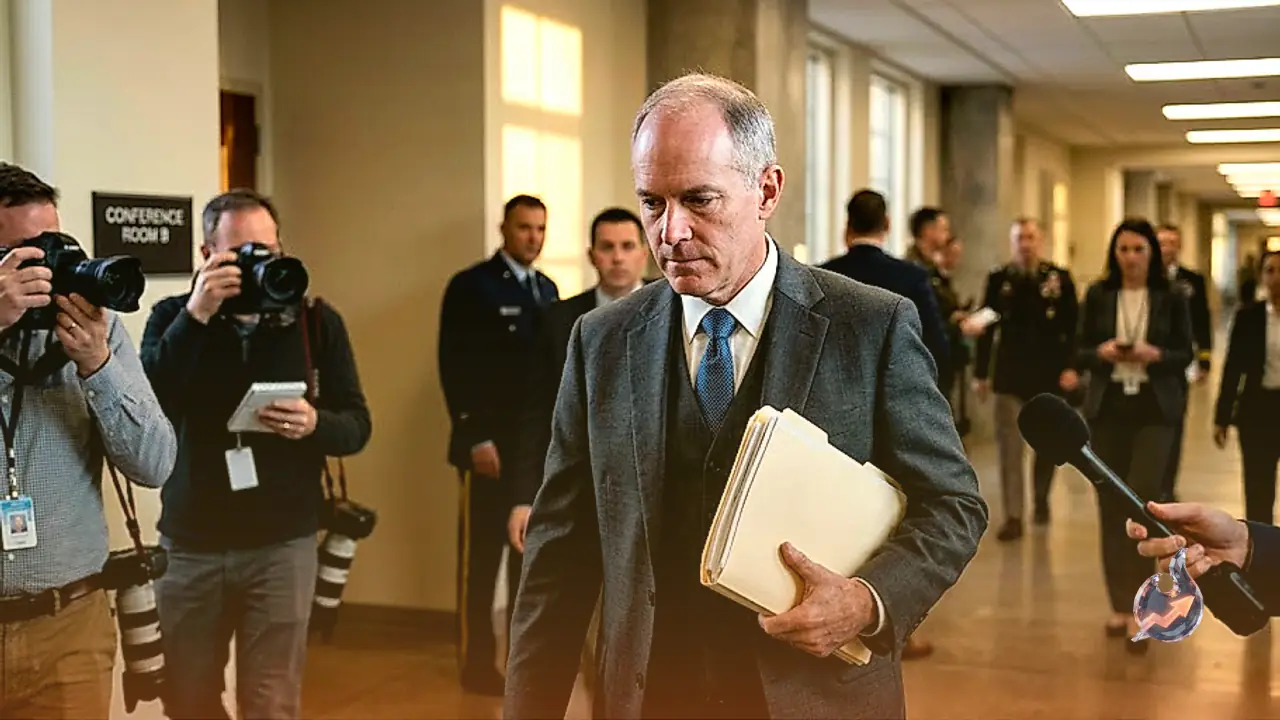



















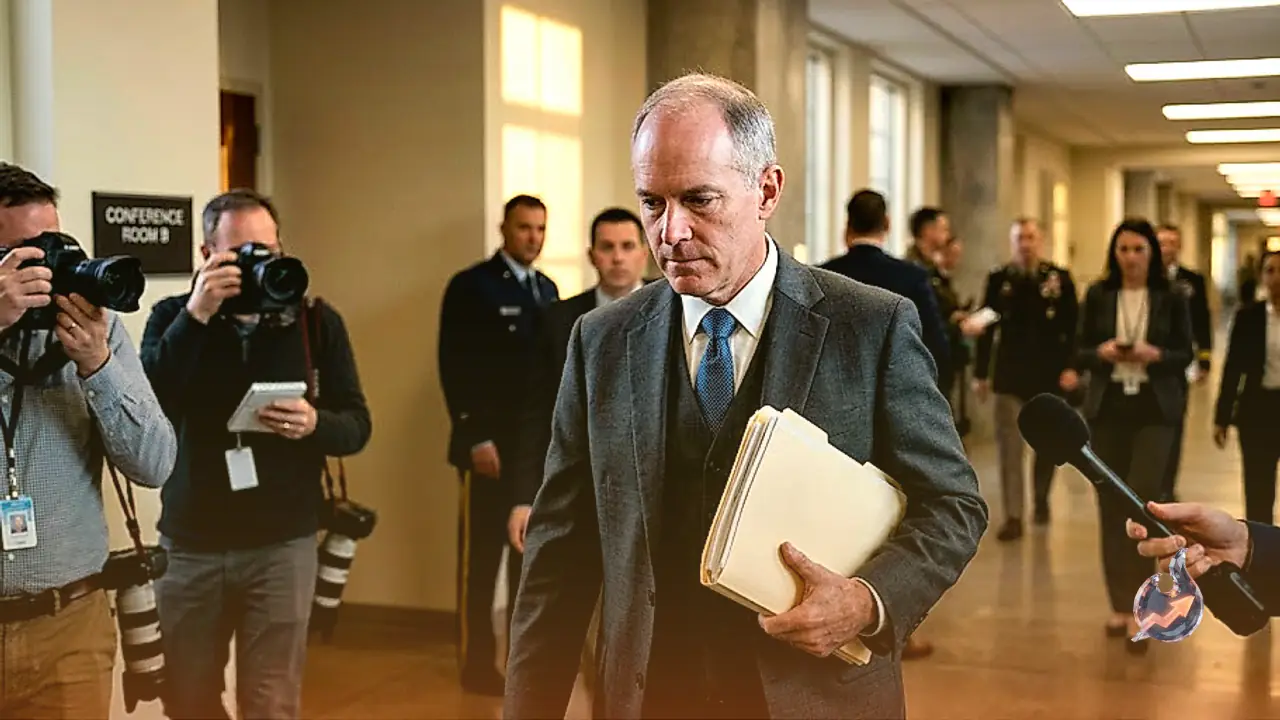

During a congressional hearing, a witness repeatedly stated that he could only answer inquiries regarding whether a private firm he served was reverse-engineering nonhuman technology inside a secure Sensitive Compartmented Information Facility. He expressed deep concerns about whether his disclosures were legally permissible and noted the constant threat of potential prosecution under federal espionage laws.
One year later, the Defense Department announced it had successfully reduced those legal risks, though researchers tracking unidentified anomalous phenomena maintain that the measures fall short of achieving comprehensive government transparency.
The Pentagon revealed that it had implemented a targeted legal waiver, granting all current and former service members, civilian personnel, and defense contractors holding defense-related information the right to disclose it to a White House-directed initiative that has been publishing UFO documents online since May.
The unpublished waiver supersedes standard civil and administrative enforcement clauses tied to nondisclosure agreements and special access program protocols, provided those communications go directly to the designated White House team known as PURSUE. Individuals bound by secrecy oaths who possess relevant knowledge can now speak to this specific team without risking lawsuits or security clearances, though these protections do not extend to communications with Congress, the media, or the general public. Furthermore, the directive contains no provisions regarding criminal law and applies solely to agreements executed within the United States.
President Donald Trump signaled this policy shift earlier in the summer when he reportedly instructed defense and intelligence agencies to waive related nondisclosure agreements. The directive gained momentum when Principal Deputy Director of National Intelligence Aaron Lukas issued a memo to eighteen intelligence leaders declaring that agreements restricting disclosures to the president or designated entities like PURSUE were no longer enforceable. The memo referenced an unspecified presidential directive and established a thirty-day window for the intelligence community to formulate its own procedures, a deadline that lapsed in August. The White House referred media inquiries regarding the matter to the Defense Department, where a spokesperson declined further comment beyond the initial press release.
For individuals like Borland, for whom these frameworks were ostensibly designed, the announcement remains entirely unconvincing. He argues that bad-faith actors claim the directive empowers whistleblowers to speak publicly, but insists it changes nothing and merely offers another bureaucratic office to visit.
Those who became whistleblowers earlier were already informed that their nondisclosure agreements had been waived and that they possessed the legal right to communicate with the All-domain Anomaly Resolution Office, the Pentagon unit established in 2022 to investigate UAP reports, according to Borland. He maintains that the new directive merely reiterates guidelines that have been repeated for years.
A legislative provision passed by Congress in December 2022 already stipulated that authorized disclosures channeled through the official office would not breach nondisclosure agreements, violate classification protocols, or contravene espionage statutes. Borland utilized that exact established channel.
However, that office retains minimal credibility among prospective whistleblowers, particularly after its former director publicly challenged the veracity of informants and a subsequent historical report found no evidence of government-recovered alien technology. Borland testified that he met with the office in March 2023 but withheld sensitive sources and methods because he perceived their public assessments as misrepresentations. Later that year, following testimony from a former intelligence officer regarding an alleged multi-decade retrieval initiative, Borland filed a formal complaint with the intelligence community inspector general detailing what he knew and the retaliation he subsequently experienced.
In his statement to Congress, he noted that he has since been blocked from resuming his previous employment and remains blacklisted across several intelligence agencies.
Other informants have encountered similar repercussions after stepping forward, ranging from residential break-ins to compromised personal information.
Another major limitation of the new waiver is that it exclusively covers individuals affiliated with the Pentagon, leaving a significant void regarding intelligence agencies like the Central Intelligence Agency. Borland expressed satisfaction that Department of Defense personnel are covered, but emphasized that the intelligence side remains entirely unaddressed.
He stressed the necessity of extending similar protections to the broader network of intelligence bodies, including the National Security Agency and the Federal Bureau of Investigation, as well as scientific organizations like NASA.
Marik von Rennenkampff, a former State Department analyst and Pentagon appointee who now works with the research nonprofit Sol Foundation, concurs with that assessment, noting that alleged secrets regarding nonhuman technology are frequently held within specific specialized units. He pointed to a particular CIA unit rumored to oversee these legacy efforts.
The publicly announced measures do not yet encompass the core of the alleged legacy initiatives, von Rennenkampff noted.
An inherent limitation persists that no administrative memo can resolve, as many individuals possessing this information are employed by private defense contractors, and the government cannot unilaterally waive agreements to which it is not a party. Only statutory legislation can address those specific contracts, and only when channeled through designated official pathways.
Despite these considerable shortcomings, researchers maintain that the recent policy announcement represents a notable milestone.
After decades of institutional denial, obfuscation, and public ridicule surrounding the subject, genuine political capital has finally been invested, according to von Rennenkampff. Unlike previous bureaucratic offices, the new initiative reports directly to political appointees within the White House rather than career civil servants.
This demonstrates that the administration takes extraordinary claims regarding the retrieval of nonhuman craft with utmost seriousness, he argued. Analysts noted a particularly telling phrase in the official release, which stated that individuals with direct knowledge of these programs have historically feared legal liability.
The wording specifically refers to individuals possessing direct knowledge rather than partial awareness, secondhand accounts, or speculative assertions, von Rennenkampff observed.
Borland hopes the initiative will ultimately report to officials possessing the executive authority to act upon the information received. He pointed to White House deputy chief of staff for policy Stephen Miller, whose involvement in the portfolio was recently confirmed by Secretary of State Marco Rubio, as an indication that the administration intends to move beyond mere rhetoric.
Furthermore, Borland extended a direct invitation to the leadership, asserting that substantial evidence and credible witnesses exist behind the scenes. If the leadership genuinely wishes to uncover the facts, they could summon the whistleblowers to the White House immediately to present their evidence directly, he concluded.