


















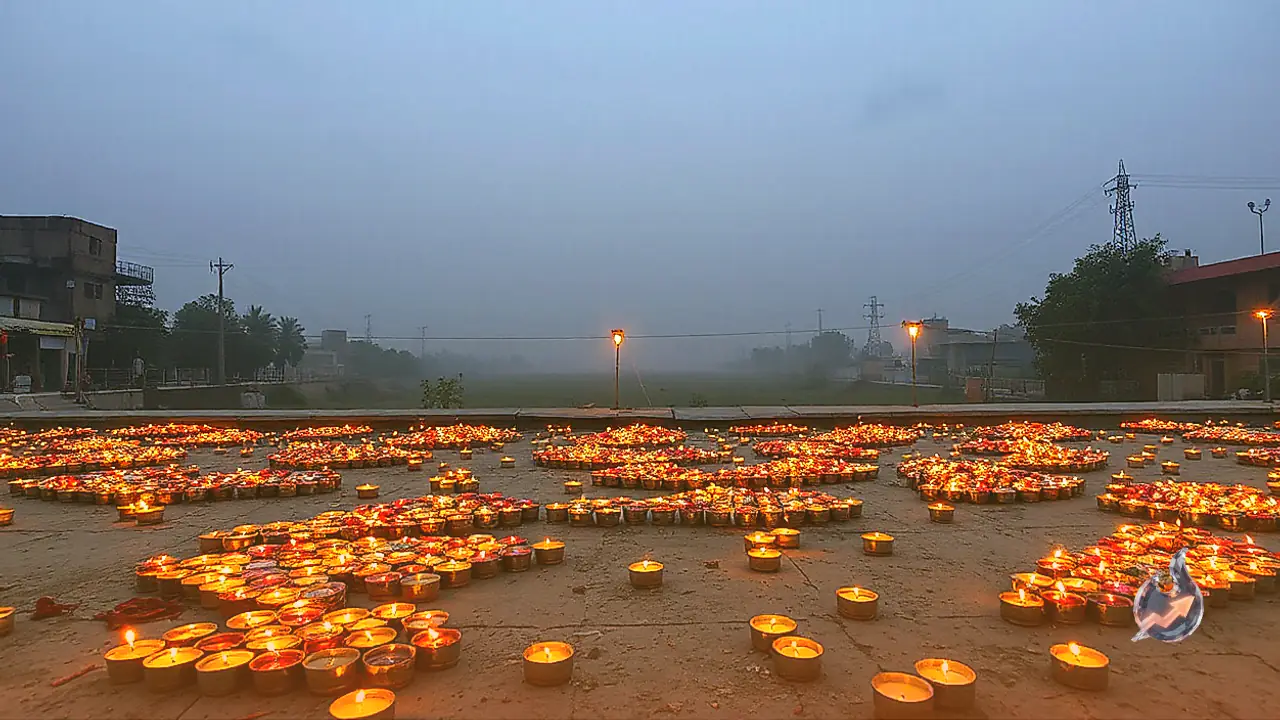

During festive occasions, lighting spaces with candles is an age-old custom across Indian households, yet market shelves have long been dominated by standard, repetitive shapes. Breaking away from that conventional mould, Aditi Maurya, a resident of Phulpur in Uttar Pradesh's Prayagraj district, decided to infuse visual artistry into daily wax goods. Rather than sticking to plain cylinders or simple tapers, she introduced hand-crafted candles sculpted into realistic blooms and animal figurines, creating a unique product line for home styling.
Her creative output recently took center stage at the Diwali Shilp Mela organized within the North Central Zone Cultural Centre campus in Prayagraj. Visitors navigating the craft fair were drawn toward her counter, where finely detailed shapes and neat finishes offered something distinctly different from regular retail options. By applying imaginative touches to a familiar commodity, she demonstrated how modern artisanal design can reinvent traditional home decor.
Drawing Inspiration from Handcrafted Soaps
The entrepreneurial idea came entirely from Aditi Maurya's own observations of local market shelves. She realized that consumers looking for candles were mostly restricted to ordinary geometric forms that carried little aesthetic value beyond illumination. She believed that introducing dedicated artistry, distinct textures, and varied outlines could turn functional lighting tools into statement pieces of home decor.
The creative spark for this transformation originated while examining designer handmade soaps that are cast into diverse decorative shapes. Seeing the variety of silhouettes achievable in soap manufacturing, she realized similar casting techniques could be applied to melted wax. Following that realization, she began procuring appropriate moulds and raw materials to start sculpting wax into petals, botanical figures, and playful objects.
A Roster of Over 25 Distinct Designs
From initial trials, Aditi quickly scaled her collection to include more than 25 separate variations. Her botanical lineup features delicate shapes resembling roses, lotus blooms, and sunflowers. Alongside flora, she incorporated contemporary figurines designed to catch the eye of young shoppers, such as pandas, owls, bubble cubes, and miniature teddy bears.
These candles serve a dual function: they brighten a room when lit and serve as standalone ornaments on desks and sideboards during the day. Their decorative value has made them popular choices for gifting during birthday parties and celebratory family gatherings. Furthermore, she integrated a selection of scented variants that release pleasant fragrances into the room while burning.
Soy Wax Formulation and Tiered Pricing
In terms of production standards, Aditi crafts her range using soy wax instead of common paraffin. Soy wax acts as a premium grade base material, allowing finished candles to burn more steadily, maintain shape integrity, and last longer through extended burn cycles. While using better raw components, she structured prices so that different categories remain accessible to budget-conscious shoppers.
The simplest petite flower candles start at 60 rupees, with certain alternative smaller patterns priced at 80 rupees. Larger and more detailed pieces, such as the rose-shaped candle, sell for 200 rupees, while top-tier premium decorative moulds reach up to 300 rupees. This broad pricing spread ensures that both casual fair shoppers and dedicated home stylists find suitable choices.
Scaling from a 20-Thousand-Rupee Budget Across Multiple Tiers
When initially charting her venture, Aditi set an operating budget of roughly 20 thousand rupees to test production viability. As orders arrived and the demand for newer moulds and varied fragrances increased, her total capital deployment grew to approximately 50 thousand rupees. Her venture has been running for only three to four months, yet commercial transactions picked up quickly right from the early weeks of manufacturing.
Currently, her inventory is being distributed across physical retail counters and craft events in tier-2 and tier-3 locations. At the same time, consumers living in major tier-1 urban areas are purchasing her decorative pieces through online platforms. While cross-border international shipments have not yet commenced, she remains focused on widening her domestic footprint. Originating from Phulpur, her artistic endeavor illustrates how creative thinking can rejuvenate common products and create viable self-employment opportunities.