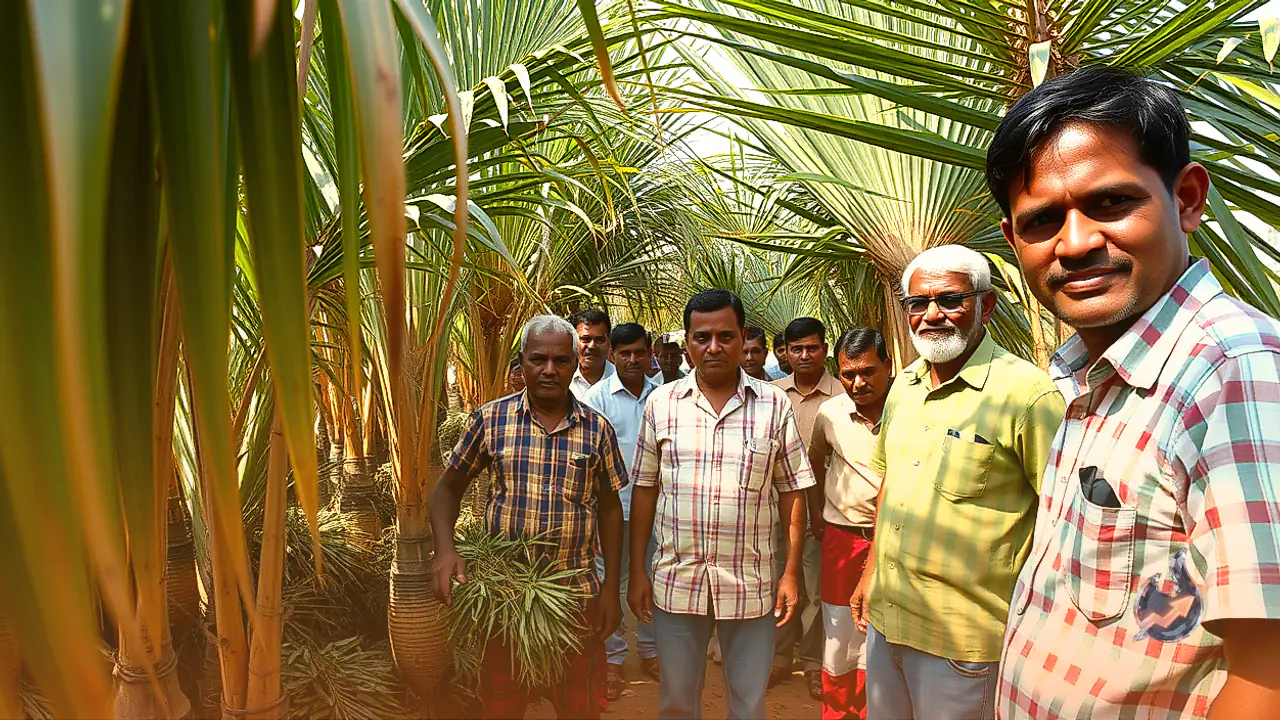




















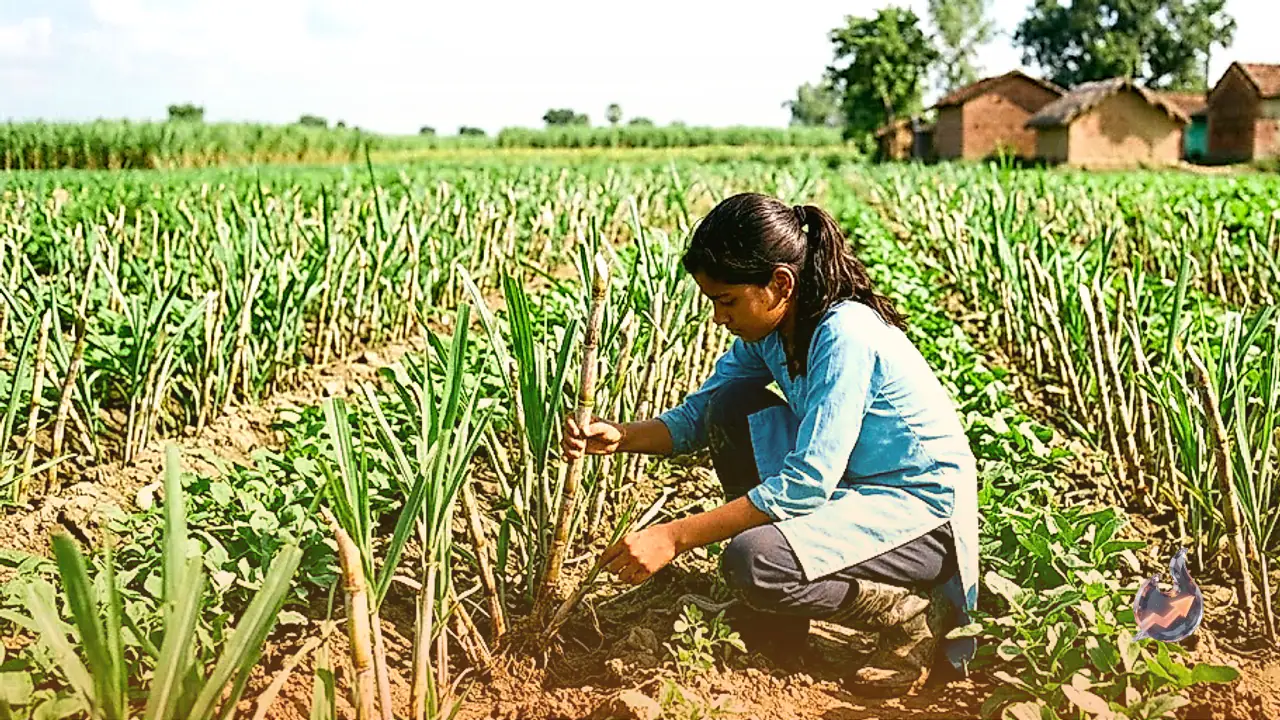

Riya Upadhyay, an eighth-grade student from the Gonda district of Uttar Pradesh, has set an inspiring benchmark by successfully combining her education with large-scale sugarcane cultivation. Managing a four-acre farm, she not only maintains a firm focus on her academic progress but also actively contributes to expanding her family's agricultural income. Through effective time management and the adoption of modern agricultural practices, she demonstrates how young individuals can turn farming into a productive and financially rewarding pursuit.
Trench Farming Technique and Variety Selection
Instead of relying on traditional sowing methods, Riya employs the trench method for cultivating sugarcane across her four-acre field. This technique involves carving out well-spaced parallel channels or trenches across the field prior to planting the cane sets. Riya explains that maintaining precise distance between rows makes field operations considerably easier, allowing for efficient irrigation, smoother application of fertilizers, convenient weeding, and close monitoring of crop health throughout the growing season.
To evaluate crop resilience and maximize yield, Riya has planted four distinct sugarcane varieties this season: 0118, 14201, 18231, and 21012. She notes that cultivating multiple cultivars side by side offers valuable practical insights into how different seeds perform under local soil and weather conditions. Experimenting with these four varieties enables farmers to compare growth rates and make well-informed choices regarding the most profitable sugarcane strains for future planting cycles.
Farm Economics and Strategic Intercropping
Riya maintains a clear understanding of the input expenditure and potential financial returns associated with sugarcane farming. Based on her calculations, cultivating one bigha of sugarcane requires an investment of approximately Rs 20,000. Under favorable conditions and proper field care, each bigha can generate gross revenue of up to Rs 50,000. With four acres dedicated to this crop, the cumulative earnings are projected to yield a substantial net profit for her household.
To optimize land utility and mitigate initial production costs, Riya integrates intercropping techniques within her sugarcane fields. Because sugarcane is a long-duration crop that takes several months to mature, growing short-term companion crops between the wide sugarcane rows provides early returns. Riya emphasizes that revenue obtained from harvesting intercrops often offsets the primary expenditure spent on seeds, fertilizers, and irrigation for the main sugarcane crop before it is harvested.
Time Management and Empowering Rural Youth
Academic learning remains Riya's foremost priority. She allocates dedicated hours for her schoolwork while utilizing her free time after classes to handle agricultural tasks. Her routine responsibilities include managing field irrigation, carrying out weeding and hoeing, applying nutrients, and inspecting crop progress. She asserts that with disciplined scheduling, students can comfortably pursue their education alongside active participation in farm management.
Riya firmly believes that agriculture should never be viewed as an inferior profession. She emphasizes that combining accurate technical knowledge, hard work, and modern agricultural practices can unlock immense financial potential in farming. Her dedication while studying in the eighth grade serves as a motivational model for children and young people across rural communities. Looking ahead, Riya aims to continue her higher education while expanding her endeavors in the agricultural sector.