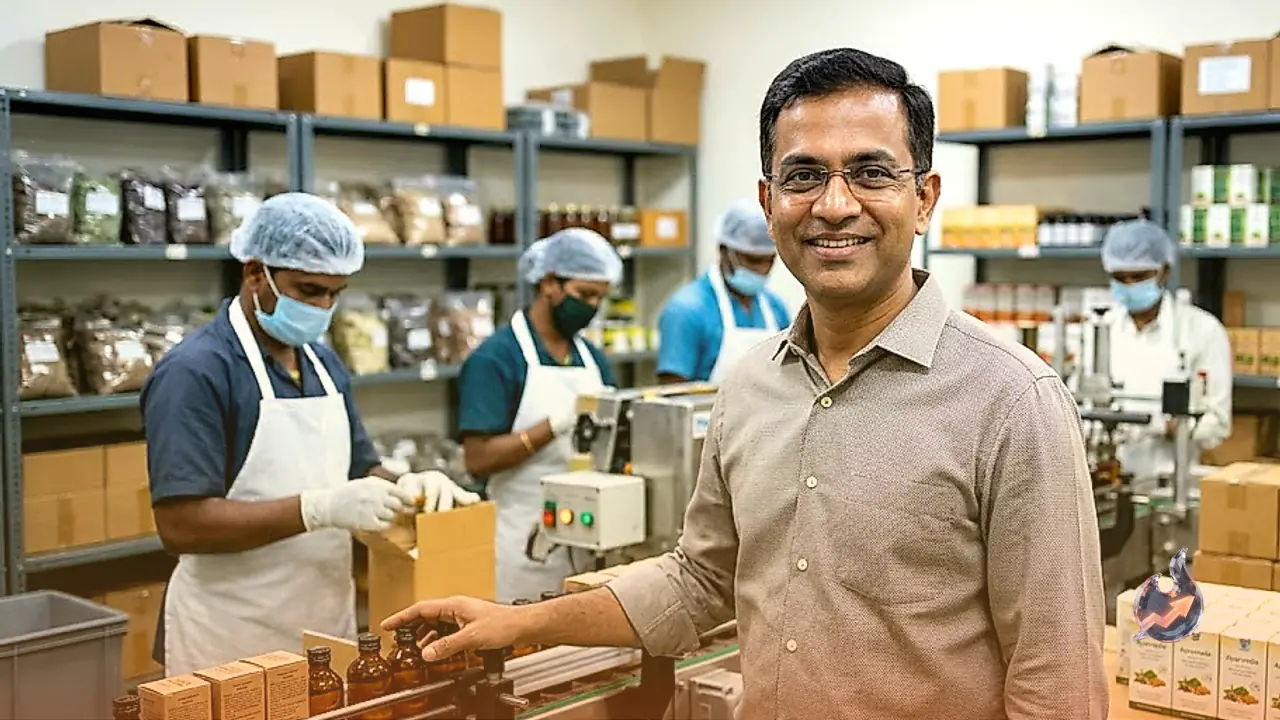




















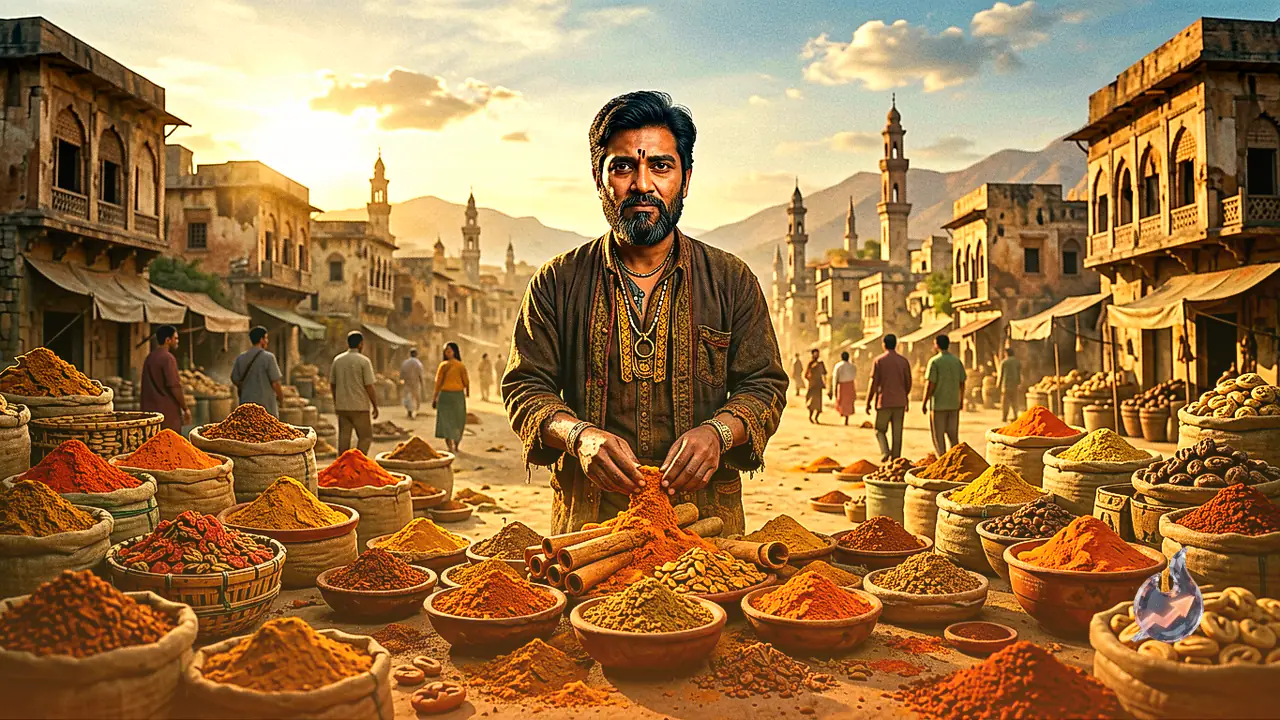

The journey of a young scholar returning from higher education abroad to set up a thriving manufacturing enterprise in his hometown of Jaunpur, Uttar Pradesh, offers an inspiring roadmap for emerging Indian entrepreneurs. Harshvardhan Raghuvanshi pursued his Master's degree in London, United Kingdom, where his exposure to international markets triggered a business concept centered around authentic Indian spices. Upon returning to India, he chose to step away from traditional trading and established HVR Spices as an independent manufacturing unit. Within a short span of just 1.5 years, the brand has successfully established its footprint across key commercial centers in Uttar Pradesh, Delhi, and Haryana. Having expanded to over 20 cities, the venture demonstrates how localized manufacturing combined with global insight can build a competitive enterprise.
Global Exposure in London and Identifying the Spice Market Gap
During his postgraduate studies in London, Harshvardhan Raghuvanshi maintained a keen interest in Indian culinary traditions. However, while shopping at Asian supermarkets and specialty grocery outlets across London, he observed that only a limited number of mainstream Indian spice brands occupied the shelves. This gap in the overseas market sparked a strategic vision. He recognized that despite the immense worldwide popularity of Indian cuisine, there remained significant untapped potential for high-quality, regionally produced spice brands to establish a global presence. This observation inspired his ambition to build a spice enterprise originating from Jaunpur that could eventually compete on international platforms, allowing future generations to take pride in a brand founded by a youth from their home district.
Strategic Rationale Behind Entering the Spice Manufacturing Sector
Harshvardhan approached the selection of the spice industry with a pragmatic business rationale. He noted that the spice market in India is exceptionally large and resilient because spices represent an indispensable daily staple across households. Regardless of whether an individual consumes meals four or five times a day, spices remain an essential component of daily food preparation. This perpetual consumption ensures consistent demand throughout the year, insulating the sector from drastic cyclical downturns. Furthermore, the spice category presents extensive avenues for both domestic scaling and international export, making it an ideal choice for a scalable manufacturing business.
Carving an Independent Identity as a Second-Generation Entrepreneur
Identifying as a second-generation entrepreneur, Harshvardhan grew up in an environment where business discussions were common, as his father was a first-generation businessman. This upbringing provided him with early insights into commercial operations and market dynamics. However, rather than simply stepping into an established family enterprise, Harshvardhan sought to create his own independent value and establish a distinct identity. Driven by this ambition, he chose to venture into the manufacturing sector, building an enterprise from the ground up rather than relying on existing family operations.
Navigating Palate Diversity Through Rigorous Quality Controls
In the spice manufacturing industry, Harshvardhan views product quality as the central foundation for long-term survival. He emphasizes that consumer taste preferences in India vary significantly over short geographical distances, with certain regions favoring high pungency while others prefer balanced, tangy flavor profiles. Navigating this diverse market requires stringent raw material sourcing, superior crop selection, and refined processing methods. He points out that purchasing high-grade raw crops alone does not guarantee end-product excellence. Maintaining consistency necessitates comprehensive quality control across processing, precise grading, hygienic storage, and strict ambient temperature management during manufacturing to secure lasting consumer trust.
Eighteen-Month Reach Across 20 Cities and Market Challenges
Over the course of 18 months, HVR Spices has achieved rapid distribution growth, entering more than 20 cities across northern India. The company has onboarded a distribution network of over 150 distributors to serve retail outlets in Uttar Pradesh, Delhi, and Haryana. Despite this rapid expansion, entering a competitive category dominated by established legacy brands presented formidable challenges. Convincing consumers to switch to a new brand required overcoming initial market inertia. Throughout this growth phase, the venture encountered various consumer critiques regarding packaging attributes, such as pouch dimensions and color schemes. Harshvardhan treated these inputs as constructive feedback, utilizing them to continuously refine product presentation and operations.
Guidance for Emerging Founders: The Central Role of Patience
Offering advice to aspiring entrepreneurs, Harshvardhan underscores patience as the most critical virtue in business. He cautions against expecting immediate financial returns or instant market dominance, emphasizing that building a resilient brand requires sustained effort. Success, according to his experience, stems from relentless hard work, active listening to market feedback, prompt correction of operational flaws, and unwavering confidence in product quality. What began as a conceptual idea during his university days in London has now materialized on the ground in Jaunpur as HVR Spices, demonstrating how visionary leadership and patience can elevate a regional manufacturing initiative into an expanding commercial success.