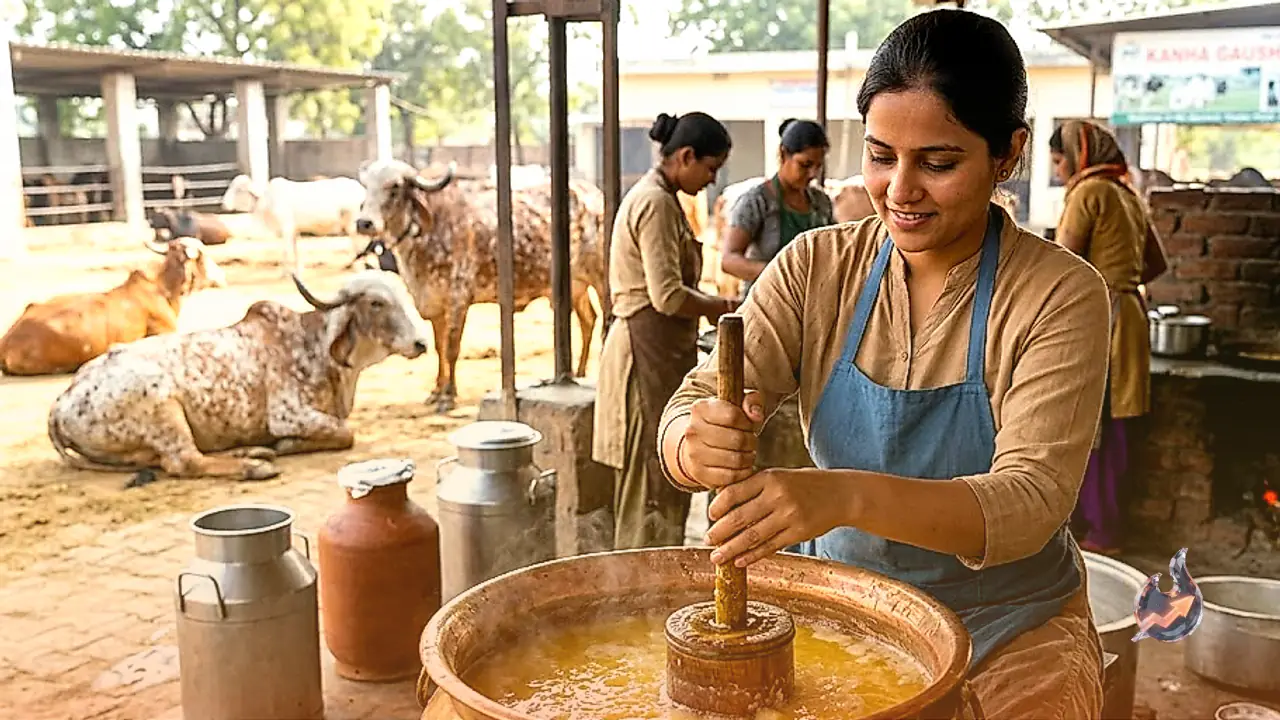




















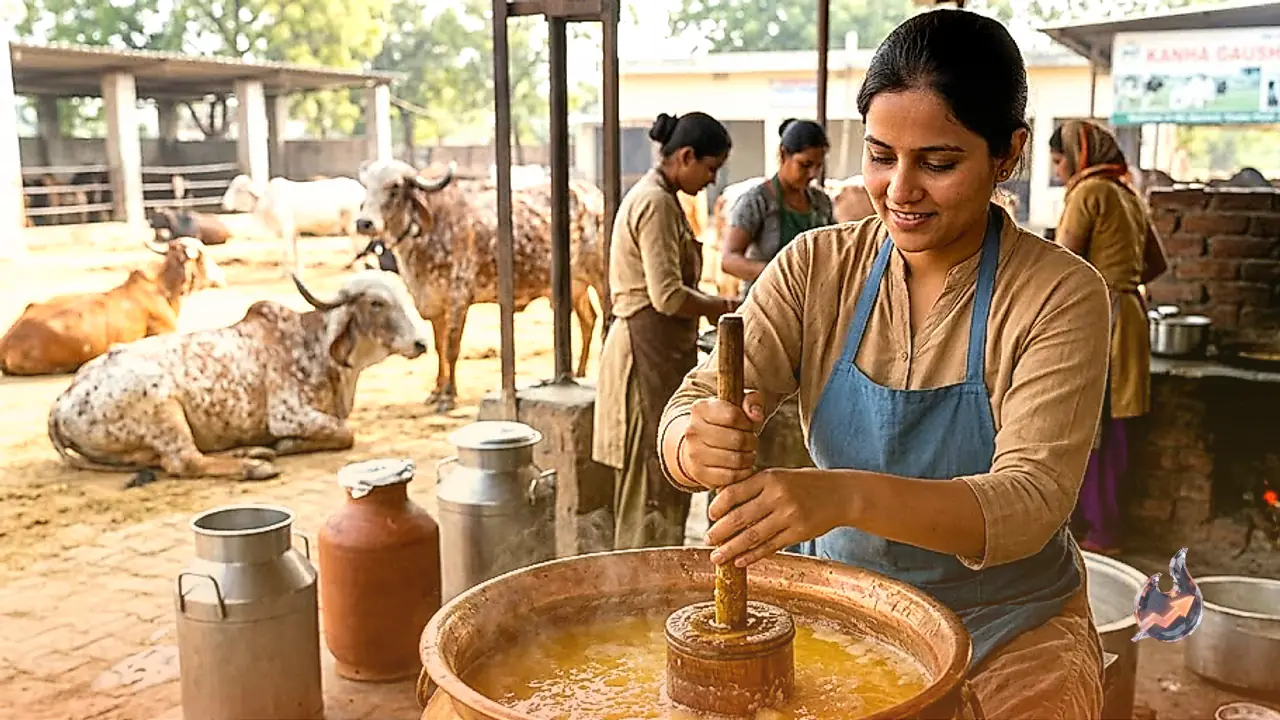

Situated along Gwalior Road in Jhansi, Kanha Gaushala has emerged as a compelling demonstration of how indigenous cattle rearing can evolve into a structured rural enterprise. Centered on the conservation of native livestock breeds, the initiative is spearheaded by Tanya Bansal, who has turned traditional dairy practices into a high-value operational setup. The facility currently accommodates approximately 90 indigenous cows, a herd that also features two specialized Gir breed cattle.
Artisanal Processing Yields Premium Clarified Butter
The primary highlight of the facility lies in the high-grade clarified butter, or desi ghee, produced from the milk yield of these indigenous animals. Distinct from conventional, mass-processed alternatives found across standard retail shelves, this ghee is processed strictly through traditional craft methodologies. Because the entire procedure avoids chemical intervention and adheres to stringent purity standards, the resulting product commands an exclusive valuation in the market, fetching prices reaching several thousand rupees per liter.
Bansal notes that while commercial viability is essential, her overarching objective centers on protecting and promoting indigenous bovine varieties. The operational routine inside the shelter places maximum emphasis on nutrition and hygiene. Cattle are sustained on fresh green fodder combined with specialized grain feeds and natural supplements. Sanitation standards across the shed floors are monitored rigorously to maintain animal wellness. Every consecutive stage, right from hand-milking to curd preparation and traditional churning, remains unadulterated. This uncompromising focus on transparency has cultivated substantial consumer confidence, driving consistent growth in orders.
Expanding Rural Employment and Value-Added Dairy
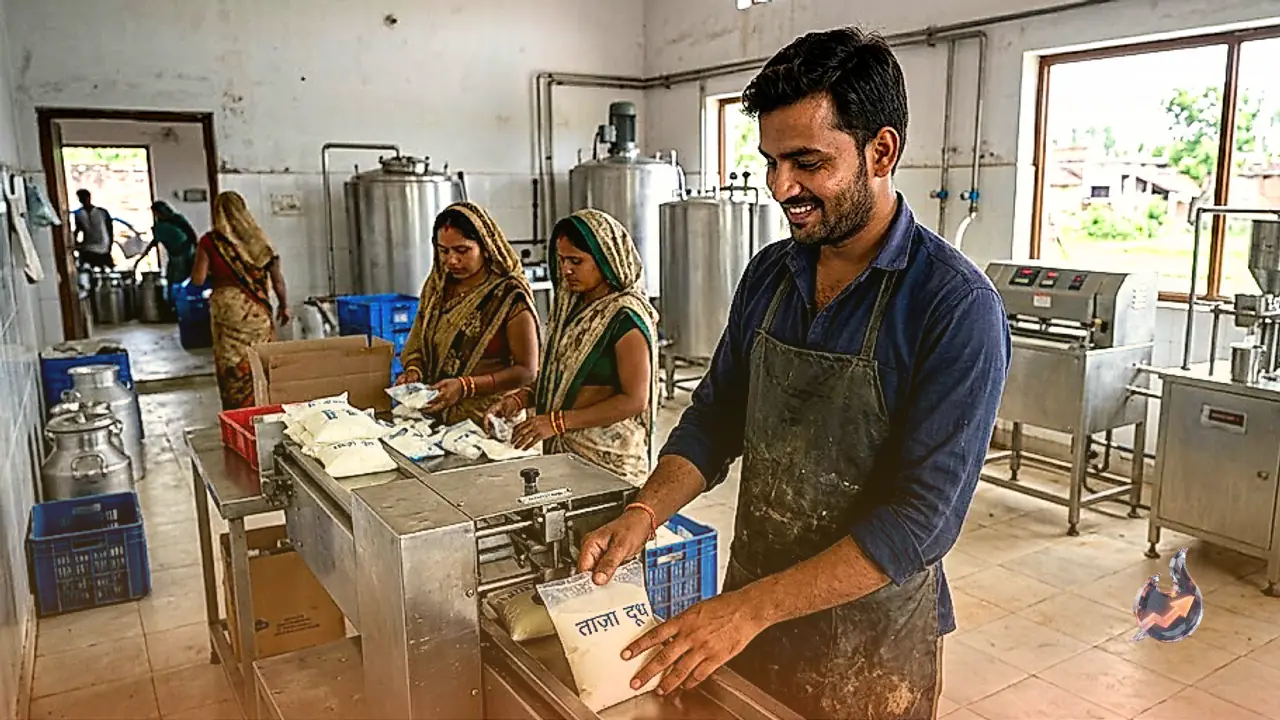
The enterprise originally began on a modest, small-scale foundation. Over time, as consumer trust in product integrity deepened, operational capacity scaled proportionally. Today, the shelter serves as a stable livelihood engine for multiple neighborhood workers, offering hands-on roles encompassing cattle upkeep, milking routines, churning processing, and hygienic packaging tasks.
Beyond high-grade ghee, the shelter produces and distributes regular fresh milk and curd directly to consumers arriving from surrounding localities. Bansal emphasizes that households are increasingly recognizing the health benefits tied to indigenous dairy consumption, which continues to validate the initiative. Looking ahead, she aims to widen distribution networks so that unadulterated indigenous dairy products reach a broader consumer base. The ongoing progression in Jhansi underscores how systematic planning and quality control can transform traditional animal husbandry into an economically rewarding livelihood model.