





















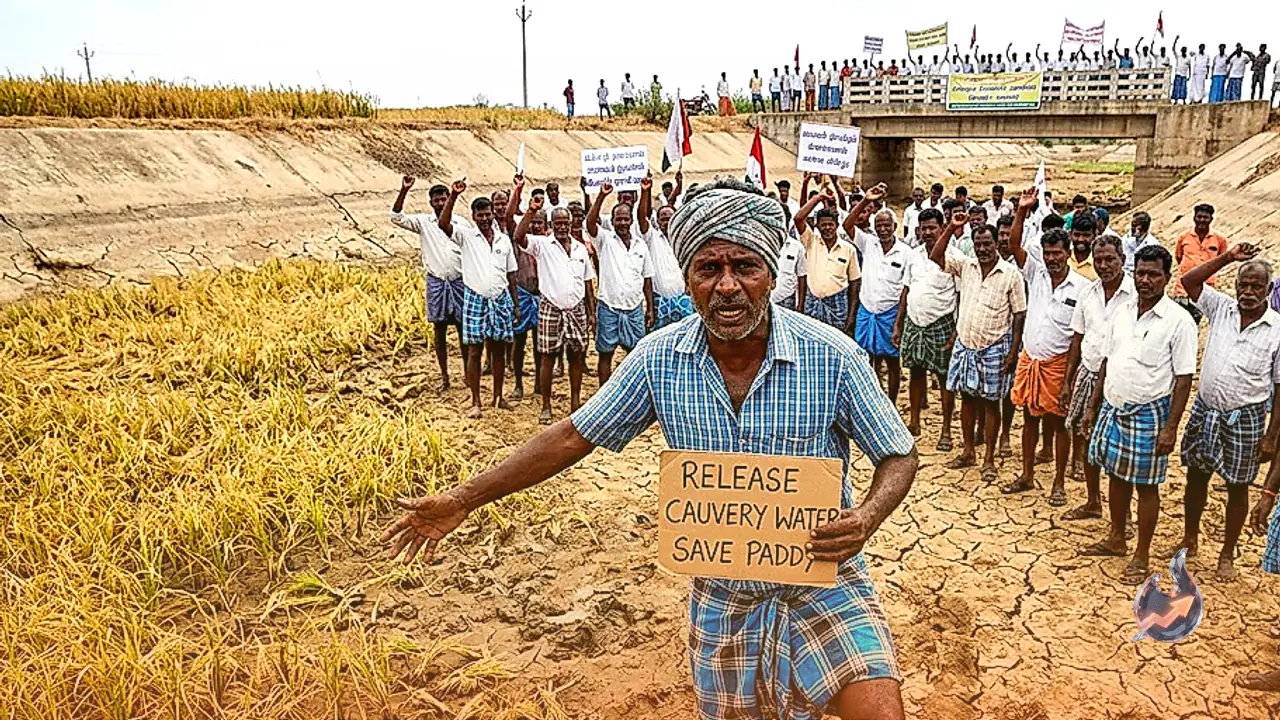

Farmers across the Tiruchirappalli district of Tamil Nadu are staring at an escalating crisis as the crucial samba paddy cultivation season gets underway. Anxious over the survival of their prepared nursery beds, local cultivators have urged the state government to immediately release Cauvery river water into all 17 irrigation canals spread across the district. Farmers warned that although water released from the Mettur reservoir has already reached the downstream region of Karaikal, many connecting canal networks remain dry, putting fragile young paddy saplings at risk of withering away. Having invested in preparing nurseries under the assumption of an uninterrupted water supply through local canal distributaries, farmers now find themselves stranded without enough moisture to initiate field transplantation.
Widening Imbalance at Mettur Reservoir
Water release operations from the Mettur reservoir officially began on September 1, and the river discharge reached Karaikal on Sunday. However, latest hydrological measurements have raised alarms regarding the sustainability of this discharge. On Tuesday evening, the water level at Mettur reservoir stood at 84.16 feet, holding a storage capacity of 46.228 thousand million cubic feet. Data released by the Water Resources Department revealed that the reservoir received a meager inflow of 3,867 cusecs, while the outflow maintained for irrigation was running high at 12,000 cusecs. This steep deficit between intake and discharge has triggered widespread panic among farming groups, who estimate that the current storage may last barely 25 days. Farmers have demanded an immediate explanation from the state regarding contingency strategies if the present discharge volume cannot be sustained in the coming weeks.
Samba Acreage at Stake Amid Power Disruptions
The stakes remain exceptionally high in the Cauvery delta belt, where 54,929 hectares of agricultural land were brought under samba paddy cultivation across Tiruchirappalli district during the previous agricultural year. Farmers noted with concern that the Agriculture Department has not yet clarified the formal coverage target for the ongoing season, leaving them unable to structure their transplantation schedules. Adding to their plight, frequent power cuts have rendered electric pump sets unusable for irrigating sensitive nursery plots. In response, growers have demanded emergency fuel subsidies to operate diesel generator pumps so they can salvage drying seedlings. In areas like Thirupparaithurai, farmers pointed out that even three weeks after the Cauvery river discharge commenced, water has completely failed to reach the Puthu Ayyan canal that irrigates their farmlands, prompting demands for decisive preventive measures to halt crop destruction.
Appeals to River Authority and Administrative Response
Seeking higher intervention, PR Pandian, president of the Tamil Nadu All Farmers Associations Coordination Committee, appealed to the state government to approach the Cauvery Water Management Authority to secure Tamil Nadu's mandated quota under Supreme Court orders. Meanwhile, representatives of the Water Resources Department assured that discharge had already been initiated into selected canals, including the Uyyakondan channel. According to officials, water had been diverted into local canals on September 7, a day after releases were triggered from the historic Grand Anicut, known locally as Kallanai, to supply delta farmlands. Officials explained that because distribution takes place through staggered, phased channels across different reaches of the river system, it naturally requires an extra day or two for water to reach remote fields, expressing optimism that supply would arrive by Wednesday.