






















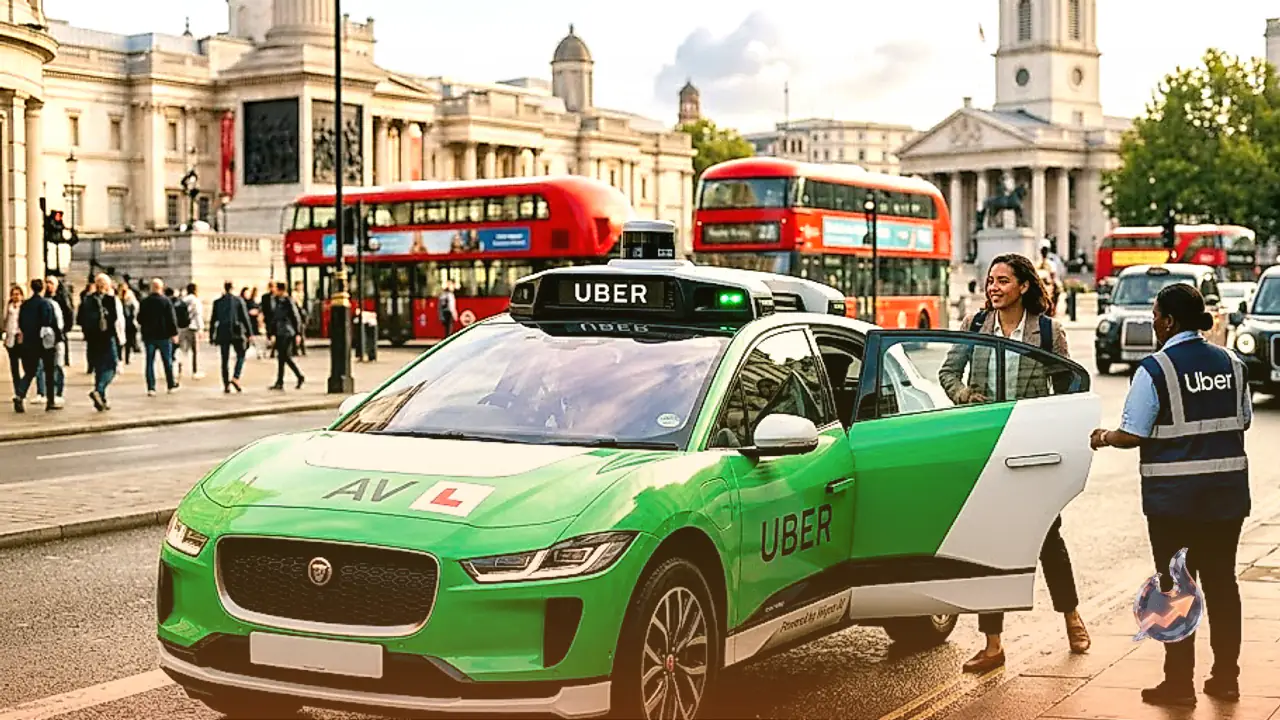

Commuters in London have begun experiencing a major shift in urban mobility, as self-driving cabs accessible directly through a smartphone application roll out on public roads. Global ride-hailing company Uber and British artificial intelligence developer Wayve launched London's inaugural public robotaxi service on 3 September 2026. This deployment marks the first time that members of the public across the United Kingdom can book and ride in an autonomous vehicle using the standard Uber application. While the initial operational launch relies on a small fleet, it represents a foundational milestone for commercial autonomous transport in Britain.
Electric Vehicle Fleet Powered by Mapless AI Systems
The service has debuted with an initial contingent of 15 Ford Mustang Mach-E all-electric vehicles. Each car is integrated with Wayve's advanced AI driving technology, which processes real-time data gathered by a comprehensive array of cameras and surround sensors. This setup allows the vehicle to perceive road layouts, monitor traffic signals, and evaluate the movement of nearby traffic. According to Wayve, its underlying AI framework does not rely exclusively on pre-mapped route data. Instead, the algorithm learns navigation patterns directly from real-world driving experiences, enabling the vehicle to continuously adapt to unfamiliar streets and complex traffic environments.
Safety Drivers On Board and Regulatory Compliance
Despite the autonomous capabilities of the vehicle technology, the initial deployment includes a mandatory human safety protocol. Every robotaxi operates with a licensed safety driver, certified by Transport for London, positioned behind the steering wheel. The primary responsibility of this individual is not active vehicle operation, but rather maintaining continuous oversight and assuming manual control if required by road conditions or safety contingencies. Deploying taxis completely free of human personnel will require further regulatory approvals from governing transport authorities before full commercial clearance is granted.
Pricing, Fare Structure, and Service Coverage Boundaries
Passengers using the service will not face inflated prices or special surcharge fees for riding in a robotaxi. When users request trips under standard service tiers such as UberX, Uber Electric, or Uber Comfort, they may be matched with a Wayve-equipped autonomous vehicle. Riders are not given a direct option to specifically demand a robotaxi during initial booking; however, upon assignment, the passenger retains the choice to accept the autonomous ride or request a traditional human-driven vehicle instead. The current service area covers designated zones within London, though airport routes remain excluded from the operational footprint.
Consumer Interest and Future Autonomous Market Competition
Public interest in the autonomous cab launch has been substantial, with over 1.4 lakh (140,000) London residents registering on Uber's official robotaxi interest list prior to the service rollout. For Uber, this deployment forms part of a broader strategic shift toward scalable autonomous mobility networks across international markets. The competitive landscape in London is expected to intensify further as rival autonomous technology firms, including Waymo and Baidu, prepare their own automated taxi services for the city. Consequently, the evolving transport dynamic on London roads will transition from traditional rival cab companies to a direct competition between human drivers and automated AI systems.