























A throat examination has long remained one of the most static and unchanged elements of a routine physical, standing alongside temperature checks and listening to a heartbeat. Yet the patterns formed on the mucous membranes and blood vessels of the pharynx vary distinctly according to the infecting pathogen, concealing a wealth of diagnostic intelligence. Tokyo-based medical technology startup Iris, founded by former emergency physician Sho Okuyama, is now unlocking this hidden information by leveraging specialized hardware and artificial intelligence.
Eliminating Swab Discomfort with Pharyngeal AI Imaging
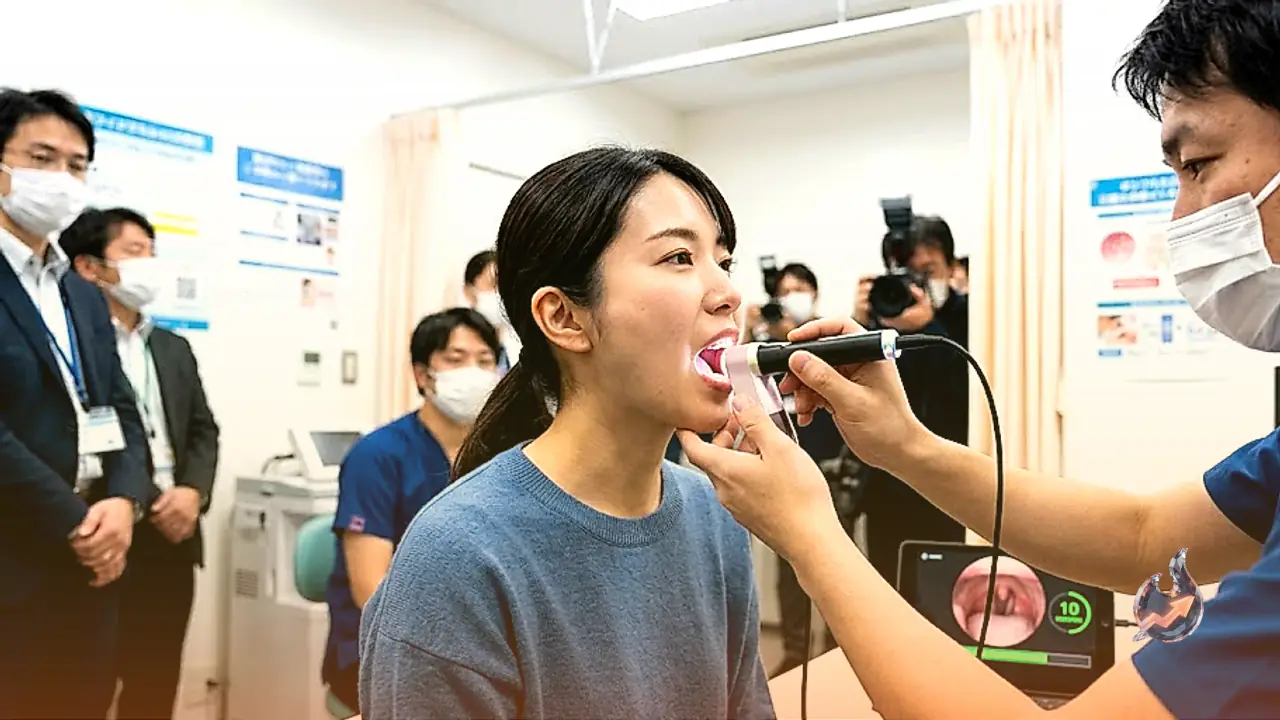
Traditional diagnostic methods for respiratory infections like influenza rely heavily on inserting a swab deep into the nasal cavity to collect a specimen. This process is notoriously uncomfortable for patients and often demands waiting until symptoms fully manifest to yield reliable results. The system created by Iris, known as Nodoca, completely bypasses this painful routine. Nodoca employs a compact device equipped with a specialized camera to capture high-definition images of the pharynx. By combining these pharyngeal photographs with clinical data gathered during the patient interview, the AI system evaluates the presence of influenza in just over 10 seconds. Furthermore, because it detects subtle mucosal changes, Nodoca can be effectively deployed at a much earlier stage following the onset of symptoms.
Regulatory Milestone and Integration Across Hospitals
Nodoca achieved a historic regulatory breakthrough in 2022 when it became Japan's very first AI-driven medical device to receive approval as a "new medical device" while simultaneously gaining reimbursement coverage under the national health insurance system. This regulatory support catalyzed rapid clinical adoption. To date, more than 2,000 medical institutions across Japan have integrated Nodoca into their daily diagnostic procedures. Expanding its diagnostic footprint further, regulatory authorities granted additional approval in October 2025 for a new function capable of evaluating Covid-19 infection patterns, reinforcing the device's role as a multi-pathogen screening tool.
Rural Medical Roots and Hardware Innovation
The conceptual foundation of Nodoca originated from Okuyama's firsthand experiences working as a doctor in isolated communities. Early in his career, Okuyama practiced medicine on remote Japanese islands populated by only a few hundred residents. Lacking advanced diagnostic machinery, he had to rely almost entirely on a basic stethoscope alongside his own visual and auditory observations. This experience shaped his approach to medical AI. While most health-tech developers focus exclusively on diagnostic algorithms, Okuyama recognized that data acquisition hardware was the primary differentiator. He noted, "When people hear medical AI, they think of diagnosis, but the real differentiating factor lies in sensing and acquiring data." By developing proprietary camera hardware tailored specifically for pharyngeal imaging, Iris ventured into an unmapped area of clinical sensing.
Overcoming Data Scarcity to Build a Market Barrier
When Iris was launched in 2017, there were no existing datasets of throat images available to train artificial intelligence models. To bridge this gap, Okuyama provided specialized cameras to approximately 100 medical centers, collecting patient-consented images over a three-year span. By navigating three major uncertainties—custom hardware engineering, dataset accumulation, and demonstrating clinical AI accuracy—Iris paved the way for commercialization. Once Nodoca entered active clinical use, a powerful network effect took hold. Anonymized data continuously feeds into the platform, expanding the training library from hundreds of thousands of pre-launch images to several million today. This vast repository creates a formidable competitive barrier, preventing latecomers from easily entering the market.
Future Horizons: Chronic Disease Screening and Global Expansion
The clinical possibilities of Nodoca extend well beyond acute viral infections. Because mucosal vascular patterns reflect systemic health indicators, Iris is currently conducting research to train its AI algorithms to detect chronic lifestyle-related conditions, including hypertension and diabetes, directly from throat images. Okuyama envisions that within ten years, a single photograph of the throat will enable a comprehensive battery of health screenings. Since the computational cost of AI inference is negligible, expanding the range of tests adds virtually no marginal cost. To support this systemic shift, Okuyama is actively advocating for regulatory reforms and engaging with government officials to streamline AI integration across primary care and specialized medicine. Additionally, because human mucous membrane characteristics remain consistent globally, the algorithms trained in Japan can be applied internationally, with preparations already underway for US clinical trials.