





















For the first time since 2012, the governing architecture of the internet is opening its doors to a massive wave of new web extensions in 2026. The Internet Corporation for Assigned Names and Numbers, known as ICANN, is the international multistakeholder body responsible for coordinating the global domain name system and IP address allocation. While daily web navigation relies on the seamless resolution of addresses, the underlying infrastructure is governed by strictly negotiated protocols. A notable demonstration of ICANN policy occurred in 2022 when the organization rejected a formal request from Ukraine to disconnect Russian top-level domains such as.ru. ICANN maintained its core principle of preserving operational stability and security without acting as an online content censor.
Global Stakeholders Convene at ICANN86 in Seville
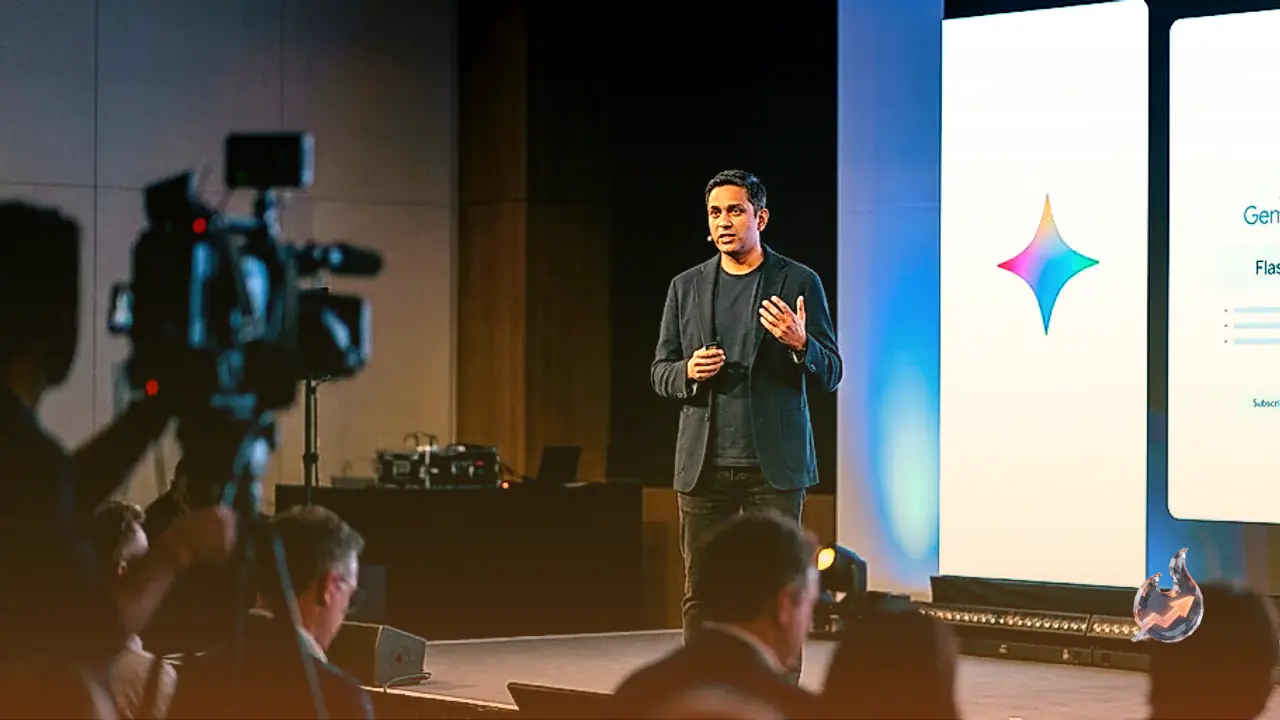
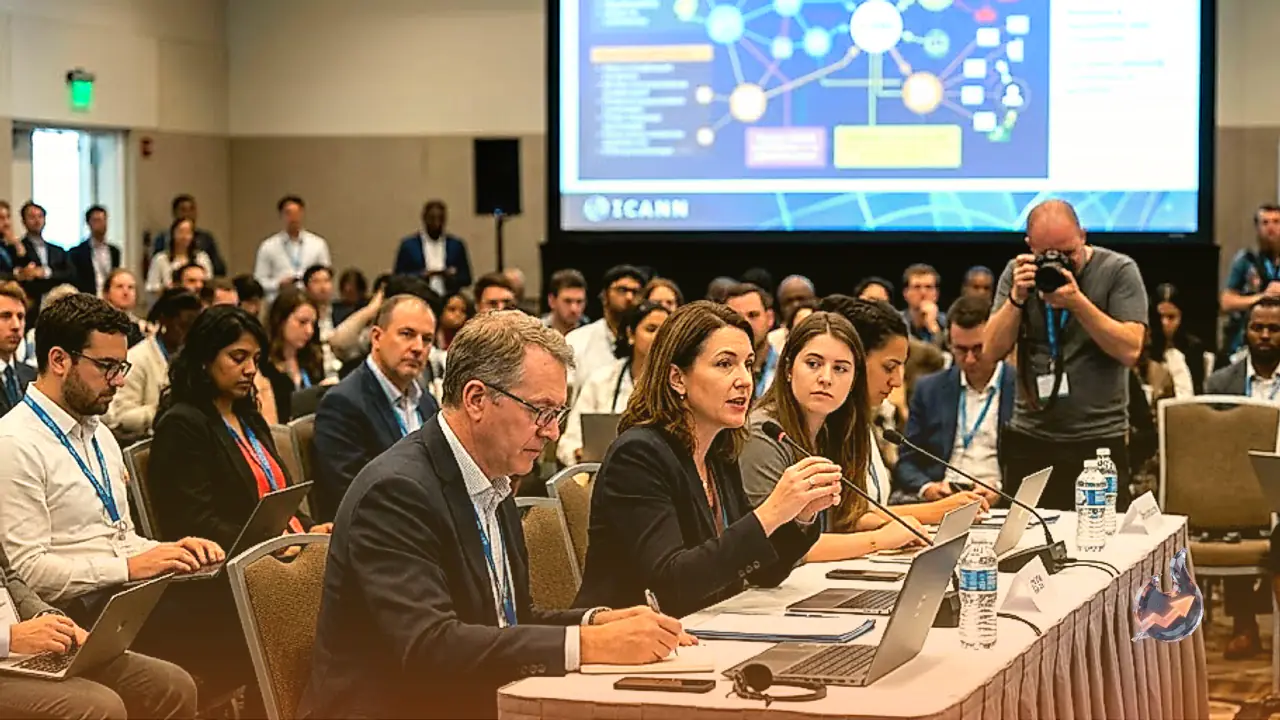
In Seville, Spain, ICANN convened its 86th official public meeting, continuing a series that began with ICANN01 in Singapore in 1999 following the transition of core internet technical management away from exclusive United States government oversight. The gathering drew more than 1,000 attendees representing over 100 countries, including at least four delegates from the United States Department of Commerce. The assembly brought together major tech firms including Google and Amazon, domain registrars like GoDaddy and Porkbun, United Nations bodies such as the World Intellectual Property Organization, legal experts, academic researchers, and independent technologists.
The Seville conference served as the second of three statutory meetings scheduled for the year, following a session in Mumbai in March and preceding an October summit in Bali. The proceedings took on heightened significance as the final in-person gathering before the closure of the initial application window on August 12 for the upcoming 2026 expansion round.
Verisign Economics and Competitive Dynamics
The financial scale of operating foundational web registries is exemplified by Verisign, the entity managing.com, which generates 1.5 billion dollars annually through registry operations and annual domain renewals. The company has maintained an uninterrupted record of 100 percent operational uptime across the past 28 years. This recurring-revenue structure drew an investment from Warren Buffett in 2012, when Verisign shares traded at approximately one-eighth of their current market valuation. Alongside major operators, single entrepreneurs and compact teams also manage profitable niche top-level domains.
The decade-long gap between application cycles has created intense commercial urgency, as strings assigned to a registry operator become unavailable to competitors. Following the August deadline, ICANN announced it had received upwards of 1,600 applications. The full registry of proposals will be made public on Reveal Day on October 7. Because of competitive sensitivities, prospective applicants frequently maintain strict confidentiality regarding target strings, often conducting critical negotiations exclusively during in-person meetings.
SuperNova200 and Shifting Registry Strategies
Among public applicants, Nova Registry, subsequently rebranded as Link Freedom Group or LFG, mounted an extensive campaign. Representation for the entity was handled by Liley, an industry figure who previously navigated the contentious launch of the.xxx domain, a process that involved public advocacy with adult performers Ron Jeremy and Stormy Daniels and intense regulatory resistance during the Bush administration. In January 2025, Liley met with ICANN representatives in Los Angeles ahead of a formal announcement before ICANN82 in Seattle, unveiling a plan titled SuperNova200 to seek 200 extensions in the 2026 round.
ICANN assesses an application fee of 227,000 dollars per requested string to fund administrative and technical evaluation. The required capital of approximately 36 million dollars for Nova's initiative was financed by Yoni Belousov, an independent domain investor active in the sector since age 14. Nova, which previously operated solely the.link registry, later revealed in August that it had submitted applications for 316 individual strings.
Niche Extensions and Identity on the Decentralized Web
While the 2012 expansion generated over 1,200 new extensions with varying degrees of adoption, modern web architecture increasingly incorporates custom domains as digital identifiers, as seen across decentralized social networks like Bluesky.
The 2026 round features diverse applications across technical and cultural categories. Initiatives include.agent, aimed at establishing collaborative standards for artificial intelligence entities; cryptocurrency and token identifiers such as.doge and.ape via D3; sovereign data registries like.self; subculture identifiers such as.furry; environmental concepts like.tree; and enterprise brand extensions including Salesforce seeking.salesforce.
A notable community-driven project is dotMeow, led by Van Daele and Thomas, which is applying for.meow. Designed as a dual-purpose registry.meow targets both cat enthusiasts and members of the queer community. Revenue generated from domain registrations is designated to support queer social initiatives. The founders selected the string to circumvent the political and cultural challenges faced by explicit identifiers during the 2012 round, when Saudi Arabia lodged formal objections against.gay on cultural grounds. Under ICANN rules, formal objections must target the literal string itself rather than the operating organization.
To secure funding, the dotMeow project utilized a Kickstarter campaign combined with support from ICANN's Applicant Support Program, reducing its direct application outlay to approximately 55,000 dollars. The crowdfunding effort generated around 137,000 dollars, reaching 150 percent of its stated target, with contributors pledging 32 dollars or more receiving first-year registration vouchers. The initiative secured approximately 2,000 backers across 40 countries. Based in Belgium, the dotMeow Foundation plans to maintain minimal data collection under European Union GDPR regulations.
Governance Structure and Multistakeholder Operations
Equity measures in the current round show measurable expansion: while the 2012 cycle awarded financial aid to only one applicant through the Applicant Support Program, the 2026 round qualified 56 applicants, predominantly from the Global South. This distribution supports ICANN's mandate to maintain a unified global internet and mitigate technical fragmentation, such as Russia's RuNet.
The decoupling of ICANN from direct United States Department of Commerce control gained momentum following revelations by Edward Snowden, aligning with the vision of early leaders like initial board chair Esther Dyson to prevent centralized governmental control. However, legal ties persist due to ICANN's incorporation as a California nonprofit. In 2019, this status enabled regulatory review when the proposed 1.1 billion dollar sale of the.org registry to a private equity firm was halted following opposition from the California Attorney General.
ICANN operates through two components: a permanent operational staff of roughly 450 personnel, and the broader global community of stakeholders who formulate policy through bottom-up consensus. Unlike traditional treaty organizations where sovereign states hold exclusive voting power, ICANN's multistakeholder framework places governments on equal standing with corporations, civil society, and technical engineers.
Regulatory Framework and Allocation Auctions
The rules governing the expansion are codified in ICANN's 439-page Applicant Guidebook. Two-letter strings remain strictly reserved for country code top-level domains, such as.co for Colombia.me for Montenegro, and.ai for Anguilla, which earned nearly half its territorial revenue from domain sales last year. Three-letter country designations, including.eth for Ethiopia, are similarly protected. The framework accommodates Internationalized Domain Names in scripts such as Devanagari, Arabic, Chinese, and Cyrillic. Geographic strings like.nyc and.paris mandate official municipal approval, while confusingly similar strings and registered trademarks are disallowed.
In cases where multiple entities seek the identical string, resolution procedures apply. During the 2012 cycle, Google acquired.app for 25 million dollars, while the rights to.web were secured for a record 135 million dollars in an auction backed by Verisign, an outcome that faced ten years of litigation before deployment. While ICANN collected approximately 240 million dollars from 16 direct auctions in 2012, secondary private auctions distributed roughly 650 million dollars among competing applicants. For the 2026 expansion, ICANN has modified the regulatory code to prohibit private financial resolutions following Reveal Day on October 7, ensuring all contested strings proceed through standardized institutional mechanisms.