




















Many people want to reduce their daily intake of processed sugar without having to sacrifice sweet flavors in morning tea and daily beverages. For those looking for an accessible solution, a small balcony corner can be turned into a personal source of natural sweetness. Stevia, widely recognized in India as sweet tulsi or the sugar plant, produces leaves packed with naturally sweet compounds. Because of this inherent sweetness, the plant has long been valued as an herbal replacement for table sugar. Better yet, cultivating it does not demand acreage or an expansive garden, as an ordinary domestic pot is more than capable of supporting healthy growth.
Understanding Stevia and Its Natural Sweetness
Stevia is a leafy botanical known for the concentrated sweet compounds housed inside its foliage. Gardeners and wellness enthusiasts use either fresh cuttings or grind the dehydrated leaves into a fine, versatile powder. The sweetness delivered by these leaves far outpaces ordinary granular sugar. While common comparisons often claim it is roughly 30 times sweeter than standard sugar, actual perceived strength can vary depending on preparation methods and the form used. For this reason, horticulturists suggest treating the plant as a natural sweetener rather than an identical substitute for refined sucrose.
Choosing the Container and Preparing the Potting Mix
For container gardening in an apartment setting, a pot measuring between 10 to 12 inches across is an ideal starting point. The single most important feature of the chosen pot is proper drainage. Check the container base thoroughly to ensure there are ample drainage holes, because stagnant standing water around the root zone will quickly lead to root rot and kill the plant.
Soil preparation requires a light, porous texture rather than dense garden earth. Combining standard garden loam with vermicompost or well-decomposed organic manure creates an ideal nutritional base. Adding coarse sand or coco peat helps aerate the medium and facilitates swift water drainage. Before loading the container, confirm that the blend is neither sticky nor excessively heavy so developing roots can branch out freely.
Sunlight Requirements and Watering Protocols
Stevia thrives in bright environments and needs adequate exposure to stay healthy. The container should be positioned in a location that receives approximately 5 to 6 hours of direct natural sunlight every day. An open balcony, an unshaded terrace, or a sunny windowsill will generally provide the conditions the plant needs to flourish.
When it comes to hydration, overwatering remains the most common pitfall for indoor gardeners. Water should only be applied when the top layer of the potting mix feels dry to the touch. The frequency and volume of water will naturally shift depending on changing seasons and ambient humidity. Taking extra care during the monsoon period is vital to ensure rainwater never collects or puddles at the base of the container.
Pinching Technique for a Bushy, Leafy Harvest
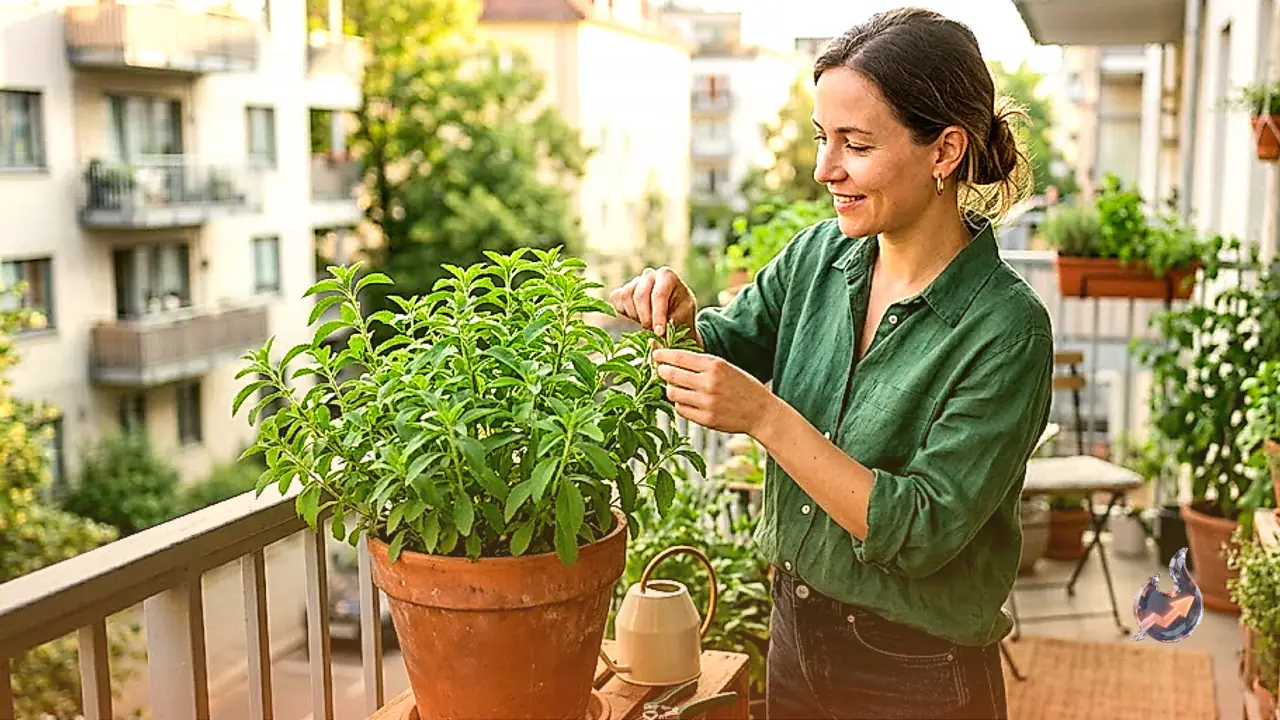
If left untended, stevia often grows upward as a single, slender stem, yielding fewer leaves overall. The practice of pinching offers a simple remedy to encourage dense, bushy growth. In this technique, the tender growing tips at the top of the central stem are gently clipped or pinched away using fingertips.
Removing the terminal shoot stimulates dormant lower buds to branch outward. Instead of an elongated stalk, the plant fills out into a compact, bushy cluster with multiple leafy stems. Carrying out this light pruning on a regular schedule dramatically increases overall foliage production, securing a steady supply of leaves over time.
Harvesting, Drying, and Long-Term Storage
Once the plant has established a healthy framework of branches, leaves can be picked as needed. Freshly harvested leaves should immediately be rinsed under clean running water to dislodge any surface dust, followed by gently shaking off surplus moisture.
Spread the cleaned leaves across a breathable cotton cloth or sheet of clean paper in a shaded, well-ventilated indoor space. Drying them in direct, harsh sunlight should be avoided to protect their beneficial qualities and flavor profile. After the leaves dry thoroughly and turn brittle, crush them by hand or process them in a blender to create a fine powder. Store the finished powder in an airtight jar kept away from humidity to prevent spoilage.
Everyday Uses and Practical Precautions
Because stevia delivers an intense level of sweetness, it is sensible to begin with minuscule amounts. Try stirring tiny quantities into morning tea, coffee, fresh lemonade, or other homemade beverages to gauge flavor intensity before using larger amounts.
It is equally important to distinguish between homegrown whole leaves and commercial stevia sweeteners found on retail shelves. Commercially packaged powders and drops frequently contain additional bulking agents or processing ingredients alongside pure extracts. Whenever purchasing packaged alternatives, reviewing ingredient labels remains crucial to understand what you are consuming.
Starting Simple with Balcony Gardening
The greatest advantage of growing stevia at home lies in its simplicity. A single container is all that is required to begin, and gardeners can easily multiply their collection as plants adapt and grow. With good drainage, reliable sunlight, and regular attention, even a modest balcony ledge can serve as a productive herbal garden delivering natural sweetness whenever needed.