





















Whenever discussions surrounding indigenous rights, cultural autonomy, and the broader Indian independence struggle emerge, the immortal rallying cry of "Jal, Jangal, Zameen" (Water, Forest, Land) is invariably remembered. To honor the legendary Gond tribal warrior who coined this deeply resonant and revolutionary slogan, the state of Telangana proudly maintains a breathtakingly beautiful and historically significant district named Komaram Bheem Asifabad. During a massive administrative reorganization drive conducted across the state in 2016, this specific region was officially carved out of the larger Adilabad area to function as an independent, self-governing district. Today, this newly minted administrative zone is recognized not merely for its captivating scenic landscapes, but also as a living, breathing testament to the glorious heritage and relentless struggles of India's indigenous populations.
The Origins of a Historic Uprising
The roots of the region's historical prominence can be traced back to a period of intense agrarian and forestry conflicts. During the 1930s, the local tribal communities were suffocating under the incredibly harsh and systematically exploitative forestry laws enforced by the erstwhile Nizam rulers of Hyderabad. Historian and senior journalist Shahid Umer states that Komaram Bheem successfully spearheaded a massive armed rebellion against these oppressive forestry regulations of the Nizam's regime. Taking the mantle of leadership, Bheem tirelessly educated the marginalized regional tribes about their inherent natural rights, uniting them to reclaim their rightful access to the forests and lands that their ancestors had inhabited for centuries.
A Monumental Sacrifice at Jodeghat
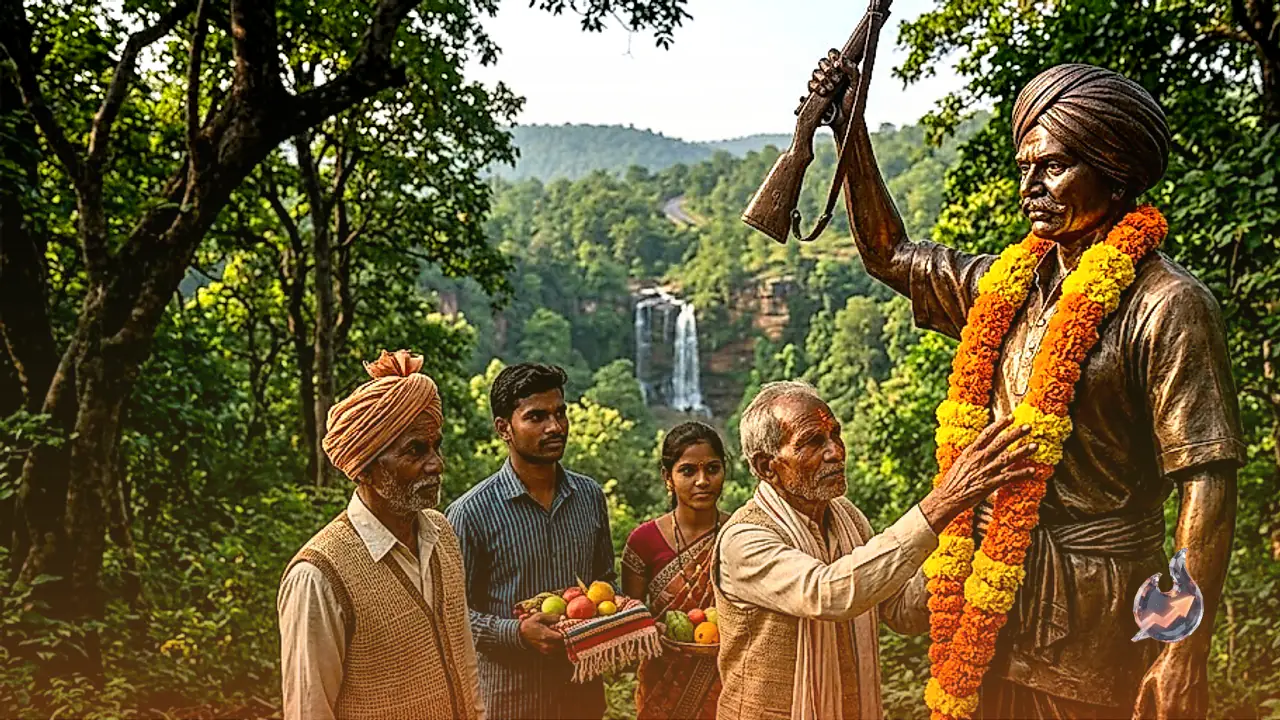
This fierce resistance eventually culminated in a tragic yet intensely inspiring chapter of regional history. In October 1940, while battling the heavily armed military forces of the Nizam with extraordinary valor and uncompromising courage, Komaram Bheem attained martyrdom deep within the remote forests of Jodeghat. In order to permanently enshrine his supreme sacrifice in the public memory, the current government of Telangana has completely revitalized the village of Jodeghat. The administration has constructed a magnificent memorial site accompanied by a state-of-the-art tribal museum, specifically designed to educate visiting tourists and future generations about the immense price paid for indigenous sovereignty and freedom.
A Melting Pot of Diverse Cultures
Geographically positioned right against the border of neighboring Maharashtra, the district is celebrated for its incredibly rich and diverse socio-cultural fabric. Because of this proximity to another major state, the local demographic exhibits a fascinating and harmonious linguistic confluence. While Telugu serves as the predominant language of public discourse, it beautifully coexists with Marathi, Gondi, and Lambadi, creating a vibrant multilingual environment. Furthermore, because a vast majority of the district's landmass is enveloped by dense, thriving forestry, it fundamentally remains a tribal-dominated and nature-centric territory where ancient cultural traditions seamlessly blend into everyday life.
Preserving Ecology and Endangered Vultures
For passionate nature lovers and enthusiastic eco-tourists, this heavily forested district is nothing short of an absolute paradise. The continuous, soothing flow of the Pranahita river, the lush green, winding pathways of the Kerameri hills, and the visually stunning cascades of the Saptakundala waterfalls significantly amplify the pristine, untouched beauty of the local environment. Beyond its visual appeal, the district plays an exceptionally crucial role in global wildlife conservation initiatives. Specifically, the towering, rugged cliffs of Palarapu Guttalu, located deep within the Bejur area, function as a primary natural habitat and an essential, undisturbed breeding center for the critically endangered long-billed vultures.
Agricultural Lifelines and Industrial Growth
Switching focus to regional development and agriculture, the massive Sri Komaram Bheem irrigation project operates as the fundamental lifeline for the district's rural economy. This critical piece of water infrastructure is responsible for effectively irrigating thousands of acres of fertile, cultivable farmland, while simultaneously ensuring a reliable, year-round supply of clean drinking water to countless remote villages. On the industrial front, the area is anchored by the presence of Sirpur Paper Mills, which holds the prestigious distinction of being one of the oldest active paper manufacturing plants in India. Established way back during the reign of the Nizam, this incredibly historic facility single-handedly gave the surrounding locality its name—Kagaznagar. Today, Kagaznagar has evolved into the largest, most bustling industrial and railway transit hub in the entire district.
Navigating the Local Political Landscape
Finally, looking at the region through the lens of modern politics and governance, the district's administrative framework is built around two primary, highly influential assembly constituencies: Asifabad and Sirpur. Both of these crucial political battlegrounds are fully integrated as essential components of the much larger Adilabad Lok Sabha constituency, ensuring that the unique socio-cultural and economic demands of this historic, tribal-majority district are adequately represented on the national parliamentary stage.