
















Across the spiritually rich landscapes of southern India, the tradition of shaping sacred icons from natural stone spans multiple centuries. Within Telangana, historical Shaivite centers such as the Rajarajeshwara Swamy temple in Vemulawada, the famed Thousand Pillar temple of Warangal, and the pilgrimage shrine of Kaleshwaram have long held deep reverence for Shivlings carved from emerald stone and natural quartz crystal, known traditionally as sphatik. Since the era of Adi Shankaracharya, South Indian monasteries and temples have regarded the consecration of a sphatik Shivling as an embodiment of profound peace and positive energy. This enduring legacy continues today, with millions of families throughout Telangana maintaining a steadfast household practice of placing these crystal icons inside their domestic shrines.
The Complex Craft of Shaping Natural Quartz
According to Vijaya Durga of Crystal Workshop, sphatik is essentially natural silicon dioxide, widely identified as quartz crystal. Transforming this dense geological material into a smooth spiritual emblem is substantially more demanding and precarious than working with ordinary stone. The process requires high technical discipline across four sequential stages
- Careful Selection of Raw Crystal: Raw stones extracted from mines are meticulously evaluated to separate solid, structurally sound, and naturally transparent pieces from flawed specimens.
- Initial Cutting and Profiling: Industrial cutter machines slice away extraneous rock mass, defining the primary structural geometry of the central Shivling and the yonipitha base.
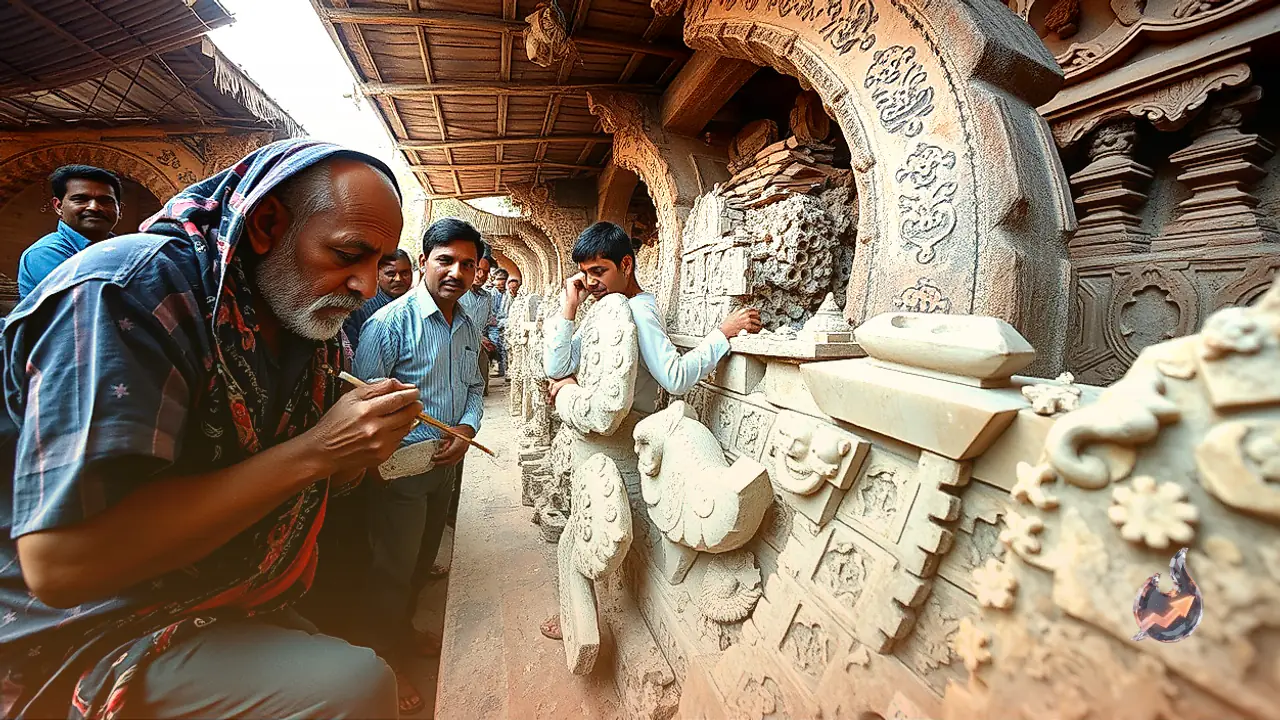
- Delicate Hand Carving: Seasoned craftsmen utilize chisels and specialized grinding tools to shape the rounded apex of the Shivling and the subtle downward slope of the water channel. Because natural quartz crystal carries latent internal fractures, any momentary lapse in handling can fracture the entire mineral block.
- Multi-Hour Lapping and Buffing: In the concluding step, the carved stone undergoes extended polishing with water and silicon carbide powder on dedicated wheels, drawing out a brilliant, glass-like reflective finish without relying on artificial coatings.
Artisan Earnings and Regional Market Dynamics
Religious commodity markets across Hyderabad, Secunderabad, and neighboring Telangana districts see uninterrupted demand for authentic sphatik goods. Senior sculptors and specialized carvers involved in this demanding labor take home an average daily wage ranging from 700 to 1,200 rupees. Evaluated on a monthly schedule, a trained artisan earns a regular income between 22,000 and 35,000 rupees.
Valuation Tiers and Competition from Synthetics
Once finished, these natural crystal Shivlings command retail prices ranging from 1,500 rupees to 50,000 rupees or higher, dictated directly by structural size and optical clarity. Nevertheless, the craft confronts structural headwinds in contemporary retail settings. Readily available, lower-priced substitutes made of synthetic resin and industrial glass flood devotional stalls, creating serious market pressures for the traditional craftsmen striving to keep their time-honored heritage economically viable.