




















Vast prehistoric creatures once roamed ancient landscapes that now form part of modern Telangana, leaving behind remarkable traces preserved deep within the earth. Located in the Mancherial district, the forested tract of Vemanapally is known today for its dense green vegetation and tranquil countryside. Beneath this serene natural terrain lie ancient geological formations holding clues to a distant era dominated by gigantic creatures.
The Landmark 1984 Paleontological Discovery in Mangenapally
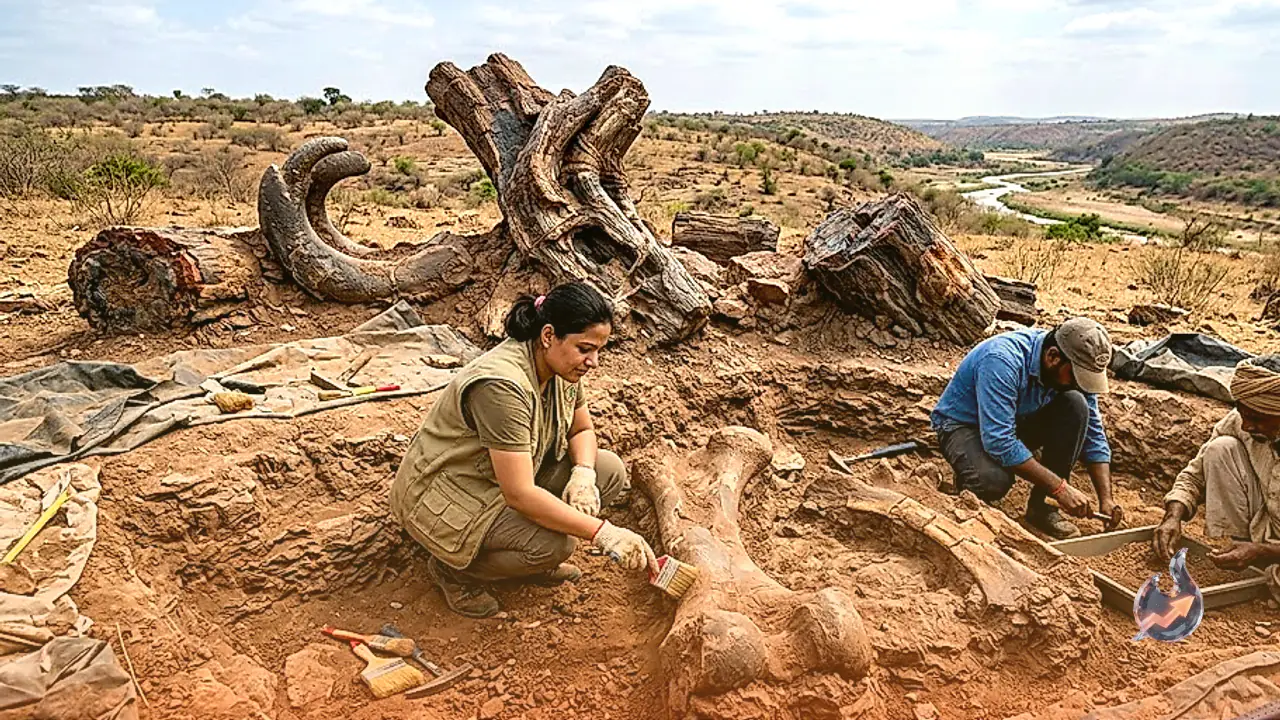
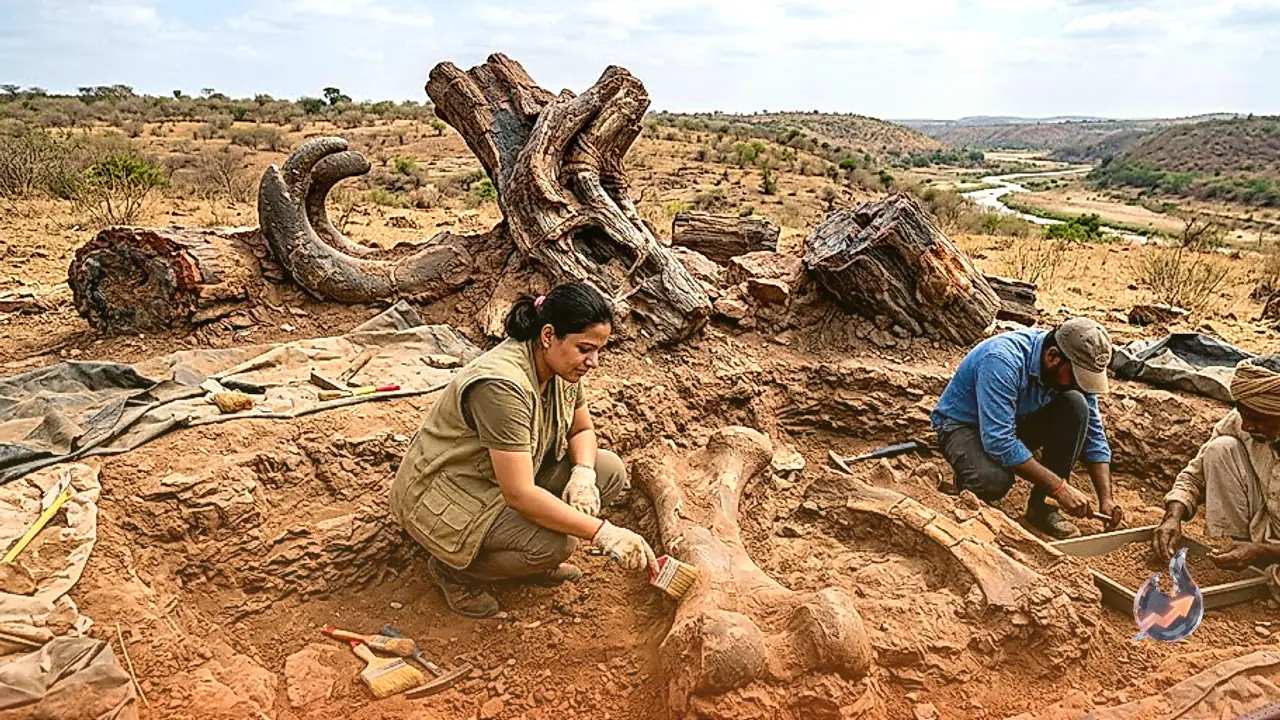
The historical significance of the region gained widespread national attention in 1984 during targeted explorations conducted by officials from the geology and archaeology departments. Surveying deep within the forests of Mangenapally, researchers uncovered the massive fossilized skeleton of a prehistoric dinosaur. The uncovered remains measured approximately 14 meters in length and 5.5 meters in height. The unearthing of a skeletal structure of such immense scale generated astonishment across India, confirming that gigantic terrestrial monsters once inhabited this river basin.
Ancient Relics Scattered Along the Pranahita Basin
Flowing adjacent to the Maharashtra border, the Pranahita river corridor is renowned for its picturesque landscapes as well as its geological wealth. Traces of ancient prehistoric life are not confined to a single spot in the valley. Instead, fossil remnants are distributed across several localities, including Sumputam, Oddugudem, and Mangenapally. This contiguous stretch along the river basin serves as an authentic window into prehistoric antiquity, offering an open record of environmental evolution spanning millions of years.
Petrified Tree Trunks Resembling Marine Creatures
Beyond dinosaur bones, the region is equally notable for extraordinary plant fossils that underwent petrification over deep geological time. Along the watercourses and streams near Oddugudem and Sumputam, entire segments of ancient trees have turned completely to solid rock. Intriguingly, weathering and mineral crystallization have given these petrified tree fragments silhouettes that closely resemble starfish, turtles, and fish. The striking visual resemblance of ancient timber to marine fauna presents a captivating natural curiosity.
Catastrophic Floods and Chemical Metamorphism
Local traditions and environmental evidence suggest that severe historic cataclysms played a defining role in preserving these specimens. Catastrophic deluges accompanied by relentless rainfall caused turbulent floodwaters to bury towering trees under heavy strata of sand and river sediment. Over extended geological epochs, intense subsurface pressure and mineral rich chemical environments steadily replaced organic tissue with stone. This natural metamorphosis converted ancient wood into permanent petrified fossils.
Convergence of Prehistoric Fossils and Kakatiya Heritage
Vemanapally holds cultural importance that extends far beyond paleontology into documented human history. In the nearby settlement of Rajaram, historical Dashavatara stone sculptures dating back to the 12th century Kakatiya dynasty remain preserved. The presence of these medieval sculptures adds profound archaeological and cultural depth to the landscape. Consequently, Vemanapally stands as an exceptional destination where millions of years of prehistoric animal life meet centuries of refined medieval human craftsmanship.