






















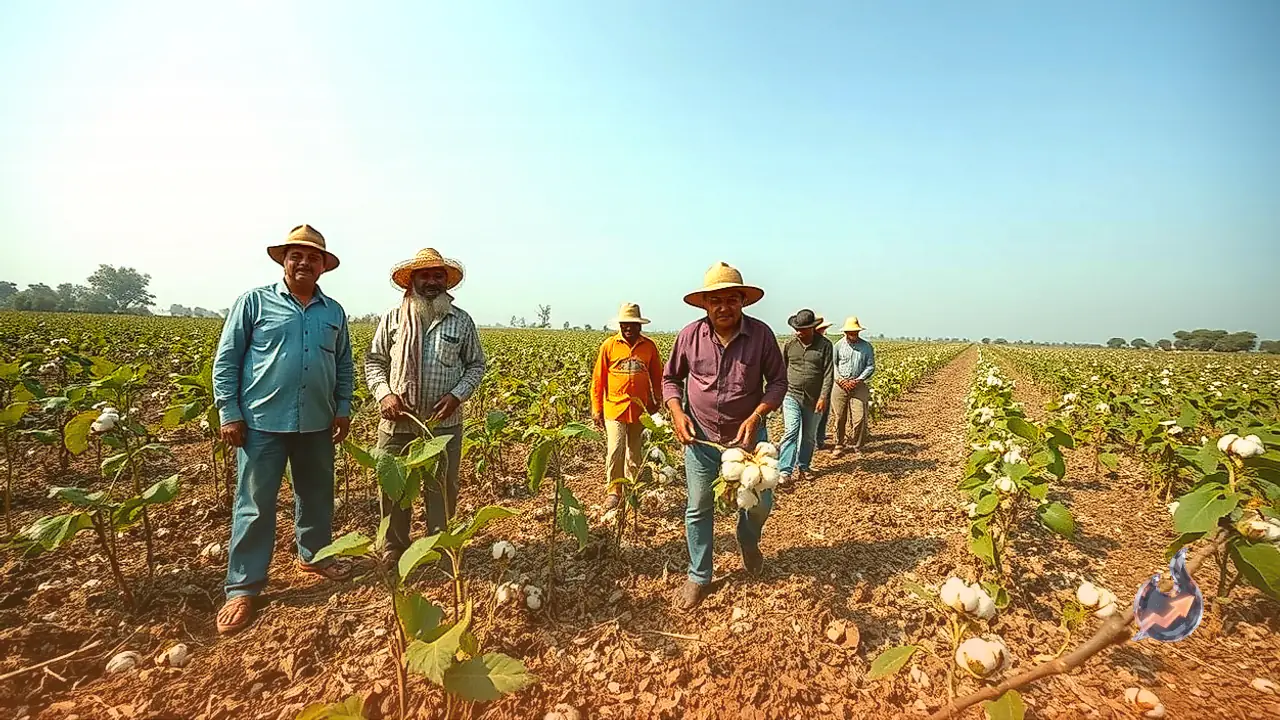

Managing post-harvest agricultural residue has long stood as an exhausting hurdle for farming communities across rural India. In Telangana, where farmers extensively cultivate cotton, maize, and soybean, harvesting grain and commercial yield leaves behind massive volumes of dry stalks and vegetative waste. Pressured by the tight turnaround time required to prepare land for the next sowing cycle, growers routinely set these leftover stalks ablaze. This seasonal burning not only choked surrounding air with heavy pollution, but also incinerated vital organic nutrients within the topsoil. Moving away from this destructive cycle, local growers have developed an ingenious solution by converting these discarded stalks into biochar, a form of organic charcoal.
A Zero-Cost Technique for Producing Charcoal on the Farm
The practical method used to convert crop residue into biochar is straightforward, natural, and requires no external monetary investment. Once harvesting wraps up, farmers gather the scattered dry plant stalks and assemble them at a central spot on the land. A shallow pit is dug directly into the soil, and the collected agricultural waste is loaded inside before being set alight.
The crucial technical step lies in carefully regulating combustion rather than permitting a wild, open blaze. Left unattended, rapid combustion would quickly reduce the biomass to useless gray ash. To prevent this, farmers continuously sprinkle water over the burning material, ensuring it smolders slowly under controlled conditions. This managed low-oxygen burn transforms the tough agricultural fibers into solid, carbon-dense black charcoal rather than ash. Because the entire procedure relies solely on farm labor, simple digging, and water, growers produce high-grade biochar without spending any money on industrial machinery.
Enhancing Soil Fertility and Water Retention Across Generations
Applying biochar directly to arable soil yields remarkable long-term agronomic benefits. Local farming experience indicates that this organic charcoal does not decompose rapidly once integrated into the ground. A single application can actively preserve and enhance soil fertility for approximately 20 to 50 years.
In addition to neutralizing unwanted odors from agricultural soil and restoring natural structure, biochar functions as a durable sponge beneath the surface. It dramatically increases moisture retention capacity, shielding crops against moisture stress during prolonged dry spells or sudden droughts. This conditioning works effectively across all types of edible crops, from cereals and lentils to commercial vegetable patches, without leaving any harmful residues.
Transforming Farm Waste into Lasting Wealth
Wood charcoal holds a well-established history in rural Indian households, where it was traditionally utilized for dental hygiene as tooth powder and various domestic tasks. That time-tested understanding has now found a renewed agricultural purpose. For communities struggling with the hazards of burning stubble and stalks, adopting on-farm biochar production provides an effective, ecologically sound path to convert agricultural waste into long-lasting land wealth.