
















The historical landscape of Telangana extends well beyond medieval fortresses and temple architecture, preserving vital chapters of early Buddhist culture in the Deccan region. Situated in the Khammam district of the state, Nelakondapalli represents one such prominent historical enclave, celebrated as one of the foremost Buddhist establishments of ancient southern India. The commanding Buddhist Mahastupa preserved here remains a compelling testament to the spiritual vitality and architectural sophistication of that bygone era.
Historical Context of the Satavahana and Ikshvaku Eras
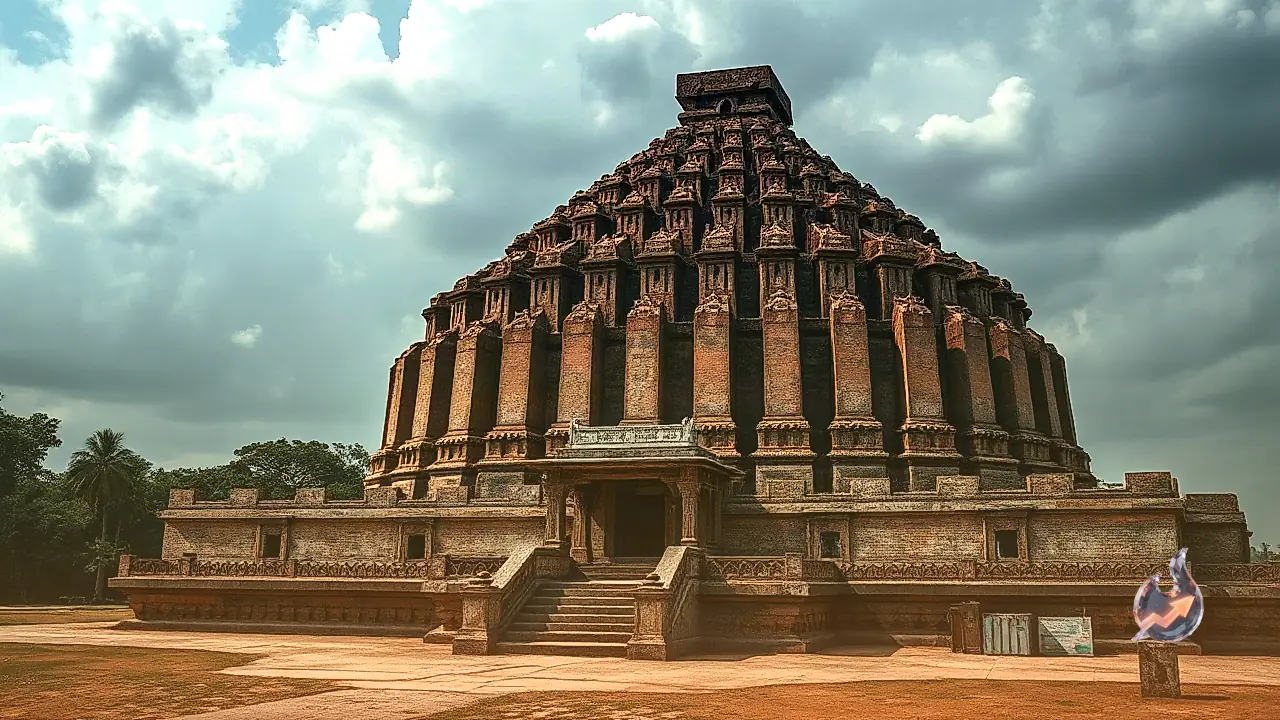
According to history scholar P. Nageshwar, the primary chronological window of this settlement dates back to approximately the third and fourth centuries CE. This era coincided with the overarching political authority and cultural patronage of the Satavahana and Ikshvaku dynasties across the Deccan. During the 1970s and 1980s, the Department of Archaeology initiated systematic excavations at the site, which ultimately revealed an enormous stupa constructed from burnt bricks. Due to its sheer physical footprint, this monumental structure is recognized among the largest brick-built stupas discovered anywhere across southern India.
Wheel-and-Spoke Architectural Design
The structural layout of the Nelakondapalli stupa displays rare engineering finesse and remarkable artistic character. It was designed on a circular wheel-and-spoke pattern, featuring radiating brick walls that structurally echo the revered Dharmachakra motif in Buddhist philosophy. Projecting platforms known as ayaka platforms are built along the four cardinal directions around the stupa, representing an iconic architectural hallmark of contemporary Andhra and Deccan Buddhist monuments.
Excavated Monasteries, Artifacts, and Coins
Extensive archaeological field operations across the complex unearthed much more than the primary stupa structure. Excavators discovered the foundational outlines of residential viharas or monasteries constructed for practicing monks, ancient water wells, utilitarian earthen pottery, coinage minted during the Satavahana era, and rare carved images of Lord Buddha. These material finds clearly demonstrate that the site operated far beyond simple worship rituals, serving as a buzzing academy for Buddhist education, monastic disciplines, and philosophical discourse.
Strategic Position on Ancient Deccan Trade Corridors
Researchers observe that Nelakondapalli occupied a vital geographic node along the principal transit routes of the ancient Deccan. The settlement acted as an essential transit bridge connecting coastal Andhra with the interior plateau regions of the Deccan. This strategic location encouraged regular interactions between merchants, itinerant monks, and scholars, fostering a dynamic confluence of commerce, spiritual thought, and culture. Today, the monumental stupa complex at Nelakondapalli stands as an invaluable destination for historians, researchers, and cultural tourists seeking to explore the deep Buddhist heritage of Telangana.