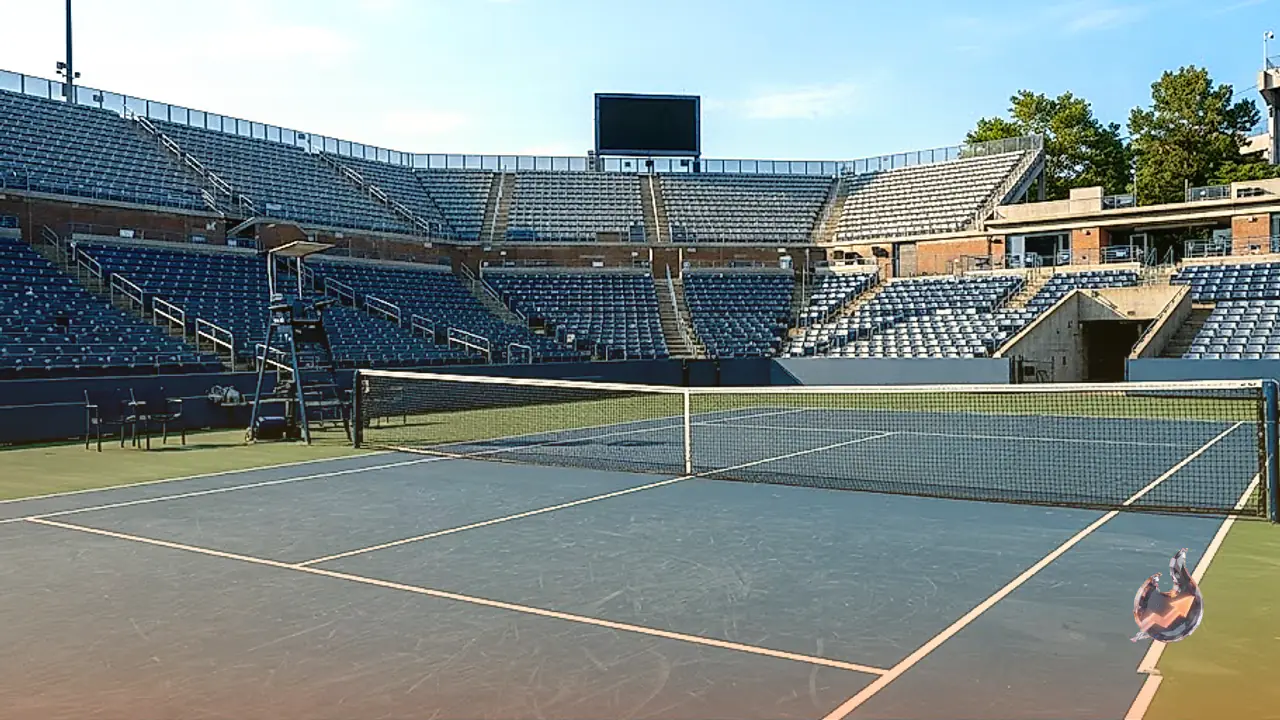






















By the time Sofia Kenin had defeated Venus Williams in straight sets, the clock in New York had ticked well past 2am local time. The stands inside Arthur Ashe Stadium had emptied out significantly by the time the contest concluded, leaving a quiet atmosphere behind for those still lingering. Finishing matches at such advanced hours places immense strain on the physical conditioning, recovery timelines, and daily routines of elite athletes.
The Business of Night Sessions and TV Rights
Three of the four major tennis championships, namely the Australian Open, Roland Garros, and the US Open, implement a split schedule that separates daily matches into distinct day and night sessions. At the US Open, tournament organizers specifically select two marquee fixtures, comprising one men's match and one women's match, to commence at 7pm in the heart of New York City, long after the bulk of daytime action has already wrapped up. The underlying motivation behind designing structured night sessions is fundamentally financial, as it allows organizers to maximize their revenue streams.
This scheduling model makes it entirely possible to sell double the number of tickets for the same seat, with one spectator purchasing access for the daytime matches before a completely different attendee pays to watch the evening slate. Furthermore, tickets for the night sessions command higher prices because the later start time appeals strongly to working spectators who can arrive after finishing their jobs, and because these slots traditionally feature higher-profile competitors. Beyond gate receipts, packaging the night sessions renders television broadcasting rights vastly more lucrative for the governing bodies.
The US Open is domestically broadcast by ESPN, a network that secured a landmark agreement in 2024 to pay a staggering $2.04bn (£1.5bn) to air every single match of the tournament through 2037, which averages out to $170m (£126m) annually. Broadcasters can charge premium rates for advertising slots during primetime hours, a window that skews slightly later in the United States compared to regions like the United Kingdom, given that popular late-night talk shows in the country often begin around 11pm.
Wimbledon Contrast and Player Frustrations
Wimbledon operates under a distinctly different framework, avoiding the split-session system entirely. Play at SW19 commences at 11am local time and must conclude by 11pm, regardless of whether a match has reached its natural conclusion. If a contest remains unfinished by the cut-off point, the players simply return to complete the fixture the following day. While competitors occasionally express frustration when an ongoing match is abruptly halted, the definitive curfew ensures players understand where they stand while guaranteeing spectators can easily travel home via public transport without enduring Centre Court action until the early hours of the morning.
Given that the BBC, which holds the broadcasting rights for Wimbledon, does not rely on commercial advertising revenue, the financial imperative to guarantee late-night matches simply does not exist in the same capacity. Tournament organizers at the US Open, however, have consistently defended late scheduling as a direct benefit to paying fans. Speaking after maintaining the late schedule, tournament director Stacey Allaster noted that moving the evening start time up from 7pm to 6pm was reviewed heavily after the 2022 tournament, but proved unfeasible due to the logistical difficulties New Yorkers face reaching the venue even by 7pm.
Discussions regarding cutting the evening slate down to a single match were also dismissed by organizers, who argued it would be unfair to fans given that tennis lacks a fixed duration. Because a match can conclude swiftly or extend into a grueling five-hour marathon, stacking a men's five-set encounter and a lengthy women's fixture back-to-back on Arthur Ashe creates an unpredictable timeline that frequently pushes the second match past 3am.
Physical Toll and the Ongoing Dispute
By the conclusion of the late-night clash involving Williams and Kenin, the 23,933-capacity venue featured sparse crowds and numerous empty seats. Waiting around for delayed starts following prolonged earlier matches heavily disrupts player preparation, warm-up regimens, nutritional schedules, core body temperatures, and hormonal rhythms. Highlighting the severity of these conditions, 2023 US Open champion Coco Gauff pointed out that finishing a match at 3am is only the beginning, as mandatory media obligations, post-match showers, nutritional intake, and physical treatments push actual bedtime to 5am, 6am, or even 7am at the earliest.
These persistent scheduling conflicts form a core component of a broader, long-running dispute between professional players and Grand Slam organizers. Competitors have continually demanded a fairer allocation of the vast revenues generated by these major events, highlighting grievances that encompass late finishes, insufficient recovery windows, heavier media workloads, and pension contributions. Protesting against what they view as untenable working conditions, prominent players such as Gauff, Aryna Sabalenka, and Jannik Sinner restricted their media duties at Roland Garros and Wimbledon.
The intensifying standoff ultimately prompted Wimbledon and the US Open to elevate player prize money for 2026 and led to the establishment of a Grand Slam players advisory council, slated to launch after the conclusion of the US Open to grant competitors a stronger voice in tournament management. While it remains uncertain whether the council will successfully abolish late-night finishes, their widespread unpopularity among athletes is undeniable. Should player pressure force structural changes, broadcasters might reduce their financial bids for television rights, which could subsequently trigger reductions in player prize money. For the time being, the ongoing tug-of-war between commercial profitability and athlete welfare leaves the issue unresolved.