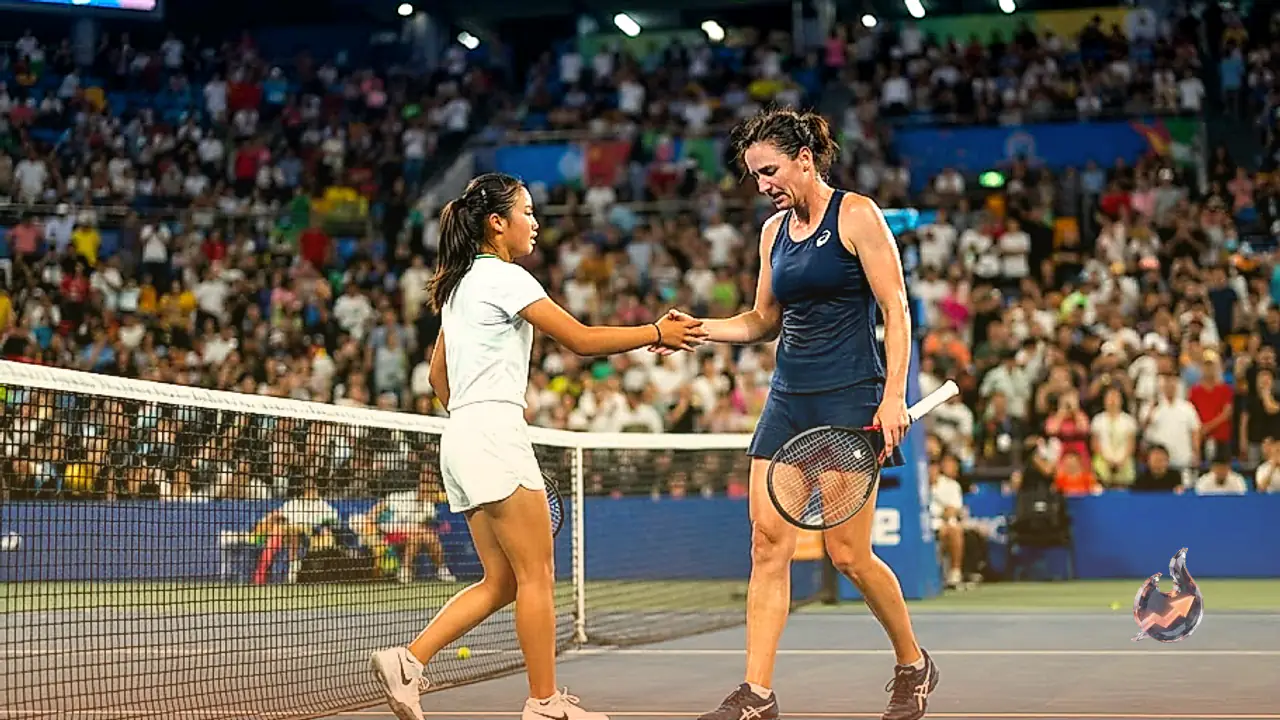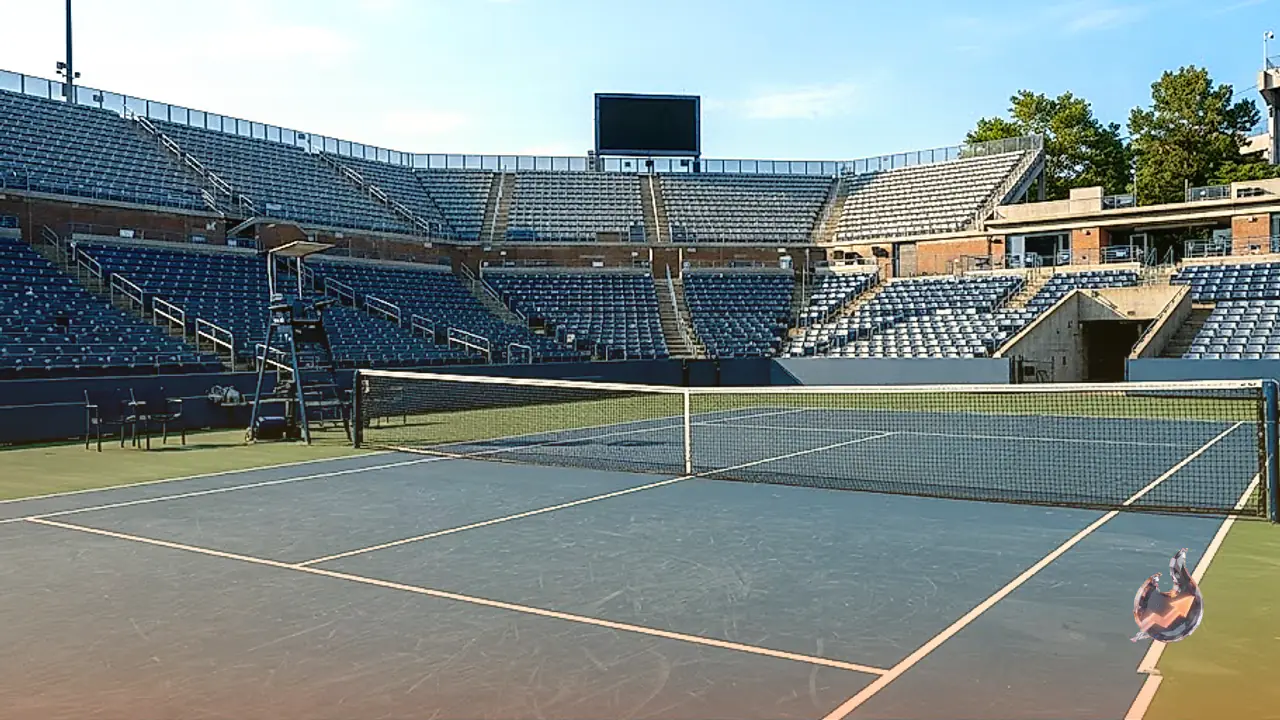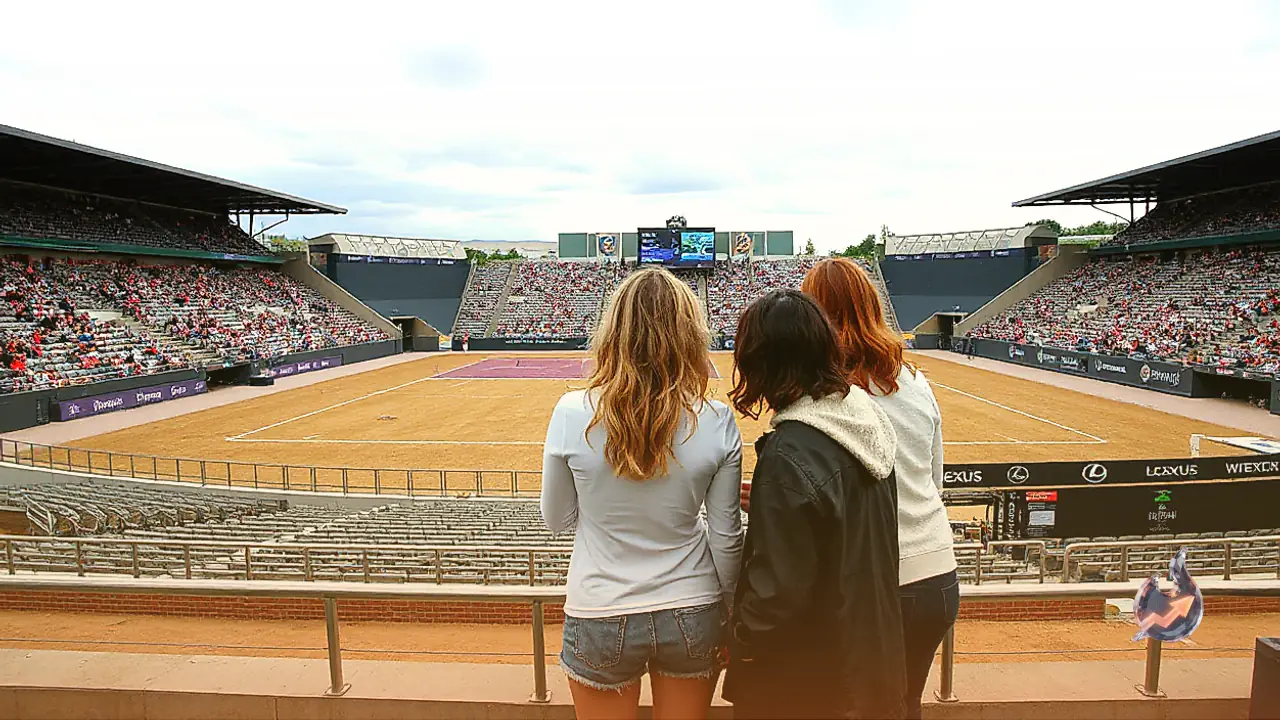
























Reentering the iconic hard courts of Flushing Meadows with the heavy weight of championship expectations can daunt even the most accomplished athletes. Yet, for 22-year-old American tennis star Coco Gauff, returning to the venue of her crowning achievement transformed past anxieties into an emphatic statement of intent. The world number four commenced her campaign at the New York Grand Slam tournament on Tuesday with a commanding 6-3, 6-4 victory over Turkey's Zeynep Sonmez in the opening round. Beyond the straightforward two-set scoreline lay a far deeper narrative: the complete structural resurrection of Gauff's service delivery. Exactly twelve months prior, Gauff lingering on drizzle-slicked practice courts in a desperate bid to fix a broken serve had become a bittersweet symbol of her frustration. Returning to the site of her 2023 breakthrough, where she captured the first of her two Grand Slam singles titles, Gauff displayed a service game that functioned not merely as a routine delivery mechanism, but as an aggressive, match-winning superweapon.
From Drizzle-Soaked Practice Courts to Complete Technical Mastery
To fully grasp the magnitude of Gauff's first-round performance, one must revisit the harrowing mechanical breakdown that previously threatened to limit her potential at the highest level of competitive tennis. During the 2023 season, the two-time major champion found herself embroiled in a protracted battle against severe serving yips. The vulnerability was laid bare at the Cincinnati Open, where a cascade of double faults severely impaired her tactical options and shook her baseline confidence. Desperate to rectify the flaw before defending her crown in New York, Gauff endured prolonged practice sessions in persistent drizzle, a stark image captured by photographers that defined her perseverance. Recognizing that minor adjustments would no longer suffice, Gauff took the bold risk of altering her core biomechanics on the eve of a major championship under intense global media scrutiny.
Collaborating closely with renowned biomechanics specialist Gavin MacMillan, Gauff undertook a comprehensive structural overhaul of her serving motion. MacMillan identified several core technical flaws that undermined her consistency: an erratic ball toss that forced her out of alignment, tossing the ball too far in front of her body, and failing to keep her wrist straight during impact. Under MacMillan's guidance, Gauff worked tirelessly to achieve consistency on the toss, refine her toss placement, and maintain a straighter wrist through the hitting zone. Adapting to fundamental technical changes while competing at the elite level involves significant psychological stress, particularly given the elevated expectations placed on a top-seeded player. Gauff acknowledged the immense pressure of proving that MacMillan's technical adjustments were sound, especially when immediate results failed to materialize during the initial two weeks of implementation.
The transition period tested Gauff's mental resilience as much as her physical coordination. Modifying muscle memory built over a decade of elite competition required thousands of repetitions on the practice court. Every aspect of her kinetic chain, from the bend of her knees to the extension of her hitting shoulder, had to be recalibrated to ensure seamless power transfer without compromising control. Despite the initial awkwardness and public scrutiny, Gauff remained committed to MacMillan's blueprint, trusting that long-term mechanical stability would eventually outweigh short-term competitive discomfort.
Deconstructing the Victory: How High-Speed Serves Disarmed Sonmez
The practical benefits of MacMillan's structural refinements were immediately visible from the very first point of Tuesday's encounter against Zeynep Sonmez. Opening her service game in the first set, Gauff delivered a blistering 112mph ace straight down the middle of the court, immediately followed by an unreturned first serve and another thunderous ace. Holding serve in under 90 seconds established a tone of total authority. Throughout the opening set, Sonmez struggled to make any meaningful contact whenever Gauff landed her first serve. Gauff won an extraordinary 93% of her first-serve points in the first set, wrapping up the opening frame 6-3 with minimal resistance from her Turkish opponent.
The true litmus test for Gauff's revamped mechanics arrived midway through the second set. After Gauff secured an early break for a 1-0 lead, Sonmez responded with aggressive baseline counter-punching, breaking back to level at 2-2 and subsequently earning three break points to push for a 4-2 advantage. In previous seasons, such high-stress moments often triggered service meltdowns. Instead, Gauff relied on her upgraded technique to pull herself out of danger. She saved the break points with a laser-precise ace wide to the court and an unreturned first serve clocked at 115mph. That crucial, courageous service hold shifted momentum decisively back in Gauff's favor, allowing her to break Sonmez in the very next game for a 4-3 lead.
Serving for the match, Gauff exhibited unwavering composure and supreme belief in her shotmaking. She unleashed a trio of unreturned first serves, each recorded just under the 120mph threshold, to rapidly earn three match points. Sonmez cracked under the pressure on the first match point following a brief rally, sealing Gauff's straight-sets triumph. The stark contrast in performance metrics highlighted how Gauff's serve, once a tactical liability, now dictates the terms of engagement on court.
Statistical Evolution and Tactical Confidence
Gauff's service statistics throughout the current WTA Tour season reflect both an ongoing refinement process and dramatic quantitative progress. Although Gauff has registered 301 double faults on the WTA Tour this season, which is more in absolute terms than any other female player, her average of 5.6 double faults per match remains lower than several of her top-tier peers. More importantly, recent statistical tracking from her title-winning run at the Cincinnati Open earlier this month revealed a dramatic increase in serving precision. Gauff is now striking targets closer to the boundary lines while fully maintaining her serve velocity, proving that her technical adjustments have enhanced accuracy without sacrificing power.
This statistical improvement has catalyzed a profound psychological transformation in how Gauff approaches high-stakes tennis matches. Reflecting on her growth over the past year, Gauff noted the stark contrast in her mental outlook on court. Gauff reflected on her transformation, saying, "It feels good to come into a tournament feeling confident on that shot finally." Rather than nervously hoping her serve simply lands inside the lines, as was the case last year, Gauff now approaches every service game with an aggressive mindset, aiming to strike serves between 110mph, 115mph, and 120mph to force returns out of play or hit outright aces.
Championship Intent and the Road Ahead
As the fourth seed at Flushing Meadows, Gauff's successful opening round performance sends a clear warning to the rest of the draw. The ability to generate free points during high-pressure situations significantly reduces her physical burden during long multi-set battles. In the second round, Gauff is set to clash with either Spain's Paula Badosa or Australia's Daria Kasatkina. Both potential opponents represent stern baseline tests that will further evaluate Gauff's service consistency under tactical strain. However, with her primary technical flaw successfully dismantled, Gauff enters the remainder of the tournament not as a defender guarding against technical breakdown, but as a fully equipped contender primed for back-to-back US Open titles.