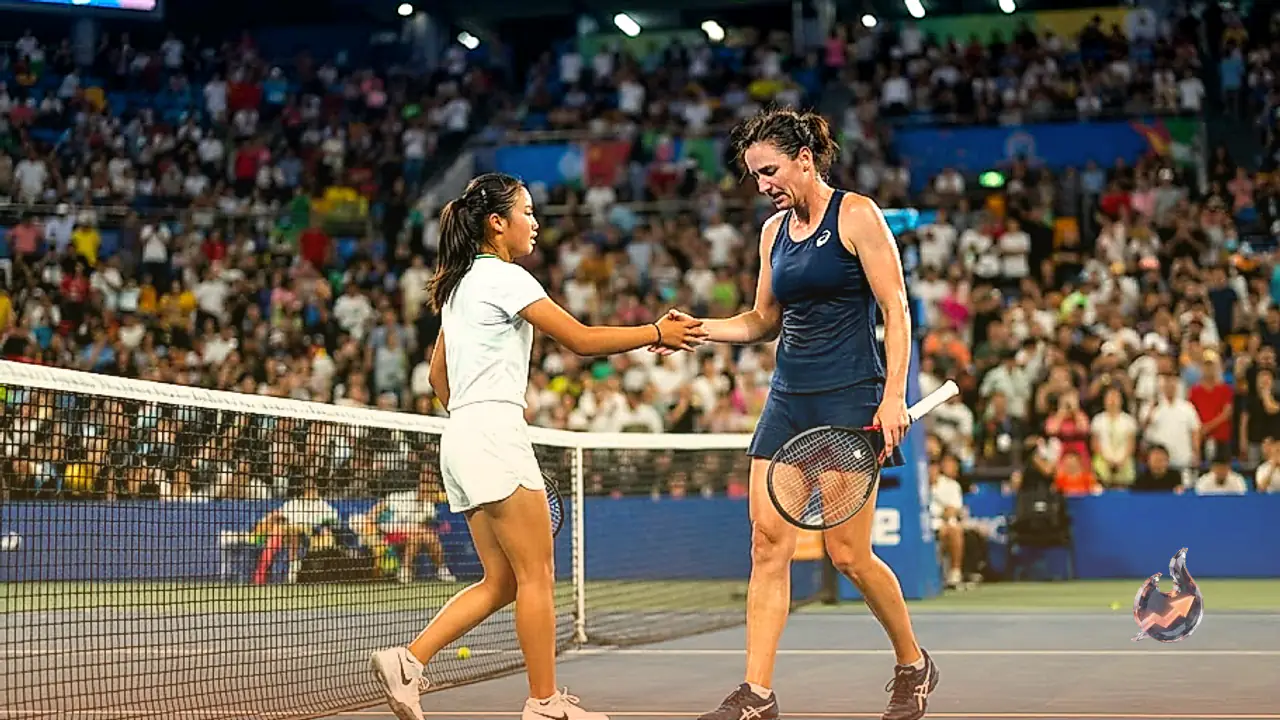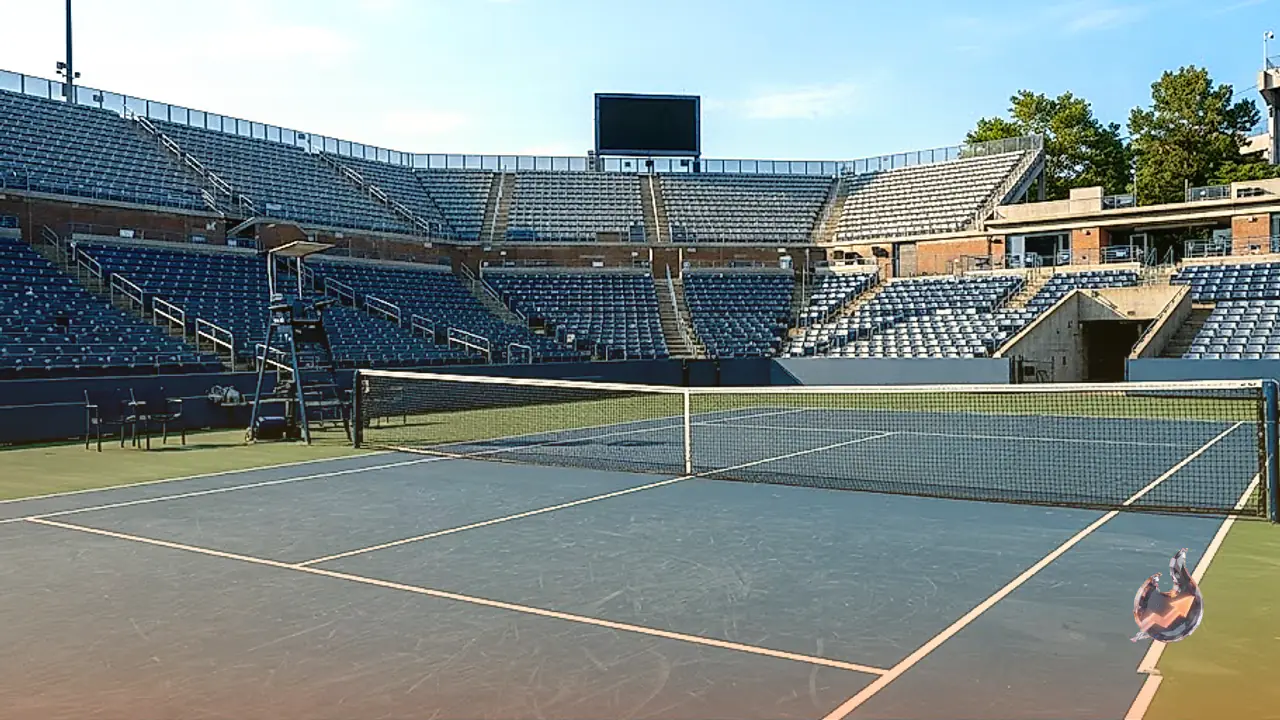





















Defending champion Aryna Sabalenka continued her relentless campaign at the US Open, securing one of the most swift and decisive Grand Slam victories of her career on the hard courts of New York. The 28-year-old top seed required just 53 minutes to dismantle Russian qualifier Polina Iatcenko 6-1 6-1 in their second-round encounter. While Sabalenka's explosive performance on Arthur Ashe Stadium reinforced her status as a formidable tournament contender, her demeanor off the court painted a more complex narrative. Despite sweeping past her 22-year-old opponent with clinical efficiency, the world number one appeared visibly dissatisfied at times and subsequently engaged in a tense exchange with a journalist during her post-match news conference, defending her professional commitment against media scrutiny.
Ruthless Court Dominance: Breakdown of the 53-Minute Victory
From the moment the opening serve was struck, the disparity in experience and raw power between the two players was starkly evident. Polina Iatcenko, a 22-year-old making her US Open main-draw debut after navigating the qualifying rounds, found herself overwhelmed on the world's largest tennis stage. Ranked world number 160, Iatcenko entered the match facing the formidable task of disrupting Sabalenka's heavy baseline drives. Sabalenka asserted immediate control, dictating play with her crushing forehand and authoritative serve. The top seed accumulated an impressive 24 winners across the two short sets, completely neutralizing Iatcenko, who managed to produce just 3 winners throughout the entire contest.
Iatcenko initially struggled with severe match nerves, finding it difficult to hold baseline exchanges against Sabalenka's relentless pace. However, the young qualifier demonstrated resilience in the sixth game of the opening set, holding serve to bring the score to 5-1 and breaking out into a wide, relieved smile as the crowd applauded her effort. Any hopes of a sustained comeback were immediately snuffed out by Sabalenka, who closed out the first set in less than 90 seconds with a flawless hold to love. The entire opening set concluded in a lightning-fast 24 minutes, underlining Sabalenka's uncompromising intent.
Mid-Match Intermission and Tactical Precision in the Second Set
Following the conclusion of the 24-minute opening set, Iatcenko opted to take a formal bathroom break to change her kit and attempt a mental reset away from the high-pressure stadium atmosphere. While her opponent was off court, Sabalenka chose to remain loose on the court, continuously practicing her serve and maintaining her physical rhythm rather than sitting down. This tactical decision paid immediate dividends when play resumed, as Sabalenka restarted the match with undivided focus.
Sabalenka immediately surged ahead in the second set, securing consecutive service breaks to establish a commanding 3-0 lead. A brief lapse in concentration occurred in the fourth game, where a series of unforced errors from Sabalenka allowed Iatcenko to break serve and narrow the deficit to 3-1. Unfazed by the minor setback, Sabalenka promptly reasserted her dominance by breaking Iatcenko's serve twice more in succession. The two-time champion wrapped up the second set 6-1, handing the young qualifier a stern lesson in elite-level Grand Slam tennis.
Tense Press Conference Confrontation Over Off-Court Activities
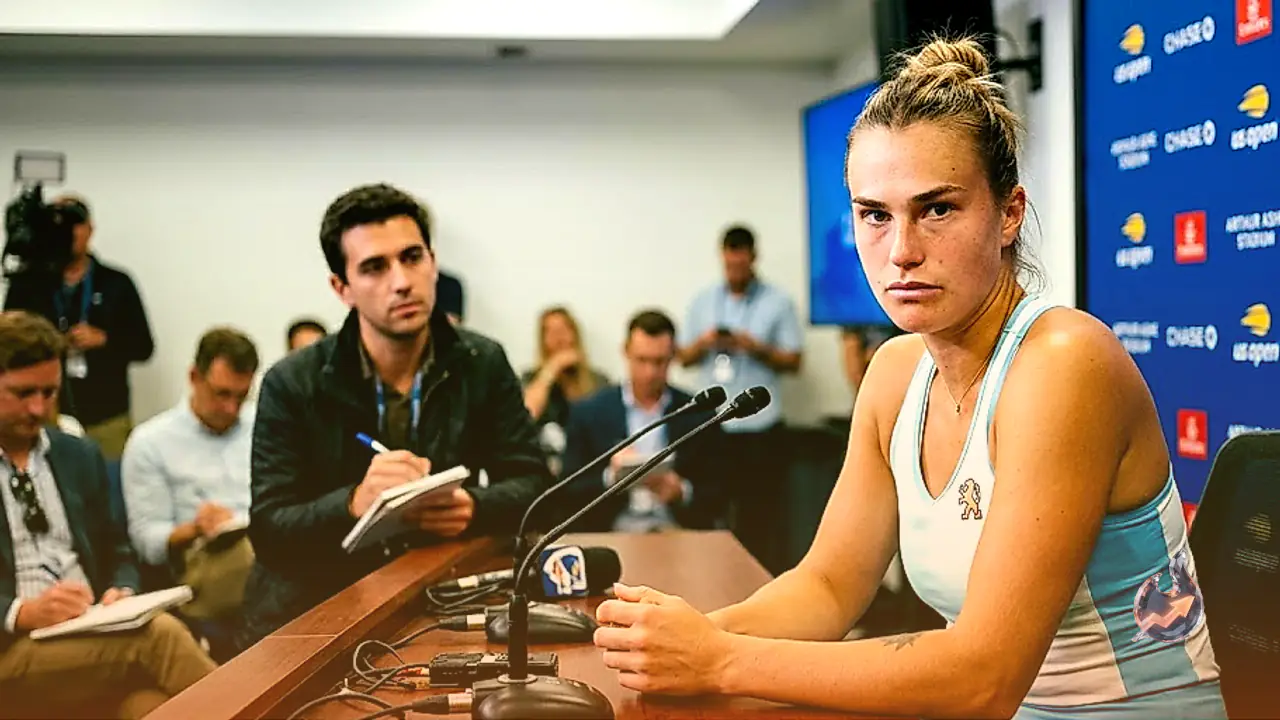
Despite her commanding victory, Sabalenka's post-match media session revealed underlying tension. The top seed took strong offense when a reporter questioned whether her build-up to the US Open had been compromised by attending a large number of parties and social events. Sabalenka forcefully rejected the premise of the question, clarifying that sharing promotional posts and brand activations on social media did not equate to neglecting her physical preparation or daily training schedule.
When the reporter pressed further, asking if she was only now getting serious with the tournament underway, Sabalenka delivered a sarcastic retort, stating that she had obviously not been serious prior to that point, before demanding the next question. Sabalenka had previously admitted prior to Flushing Meadows that she had been dealing with several personal and physical challenges during a difficult stretch of the season. Nevertheless, after defeating Iatcenko, she expressed satisfaction with her performance, emphasizing that she was happy with her level of play, her focus, and her ability to navigate the match efficiently.
Historic Ambition: Chasing a US Open Three-Peat Behind Evert and Williams
Sabalenka's campaign in New York carries immense historical weight as she attempts to achieve a rare US Open three-peat. If Sabalenka successfully defends her title this fortnight, she will become only the third woman in the Open Era to win three consecutive US Open singles titles. The only two players to accomplish this feat in modern tennis history are American legend Chris Evert, who won four consecutive titles between 1975 and 1978, and Serena Williams, who completed her three-year reign from 2012 to 2014.
Achieving three consecutive crowns at Flushing Meadows would solidify Sabalenka's legacy among the game's greatest hard-court champions. However, the world number one understands that maintaining her composure under severe pressure will be essential if she is to match the achievements of Evert and Williams.
Ranking Jeopardy: The Threat from Elena Rybakina, Jessica Pegula, and Coco Gauff
In addition to historical milestones, the battle for the WTA world number one ranking is reaching a dramatic climax at Flushing Meadows. Sabalenka faces a challenging scenario to retain her top ranking position. Even if Sabalenka wins the US Open title, Elena Rybakina would still surpass her and elevate to the world number one spot simply by reaching the semi-finals. Furthermore, third seed Jessica Pegula and fourth seed Coco Gauff also remain in mathematical contention to overtake Sabalenka for the top ranking if either player captures the New York title.
This high-stakes ranking scenario reflects the tight margin at the peak of women's tennis. For Sabalenka, lifting the trophy is a mandatory requirement to maintain any chance of staying atop the world rankings, making every match critical to her holding off her closest rivals.
A Rollercoaster 2026 Season: From Sunshine Double Dominance to Mid-Year Slump
The intense pressure surrounding Sabalenka comes on the heels of a highly unusual 2026 season characterized by extraordinary early success followed by a noticeable mid-year slump. Sabalenka opened the year in spectacular fashion, winning 26 of her first 27 matches. Her only defeat during that initial stretch came against Elena Rybakina in the final of the Australian Open. Following Melbourne, Sabalenka achieved the prestigious Sunshine Double by winning titles back-to-back at Indian Wells and Miami, firmly cementing her status as the dominant player on tour.
However, after completing the Sunshine Double, Sabalenka experienced a significant decline in form. Heading into the US Open, her win-loss record dropped to 17-7 over the subsequent period, and she managed to reach only one WTA semi-final in the preceding five months. Sabalenka openly acknowledged before the final major of the year that her recent performances fell far below her personal standards, making a strong run at Flushing Meadows essential to restoring her momentum.
Financial and Career Transformation for Qualifier Polina Iatcenko
While the defeat was swift and sobering for Polina Iatcenko, the experience and financial reward from her US Open debut represent a life-changing milestone for the 22-year-old Russian. Prior to arriving in New York, Iatcenko had earned a total of $300,000 (£220,000) in career prize money since turning professional. By reaching the second round at Flushing Meadows, she secured an additional $190,000 (£140,000) payout.
This substantial prize money boost provides Iatcenko with essential financial resources to reinvest into her tennis career, helping cover expenses for international travel, specialized coaching, and tournament registration fees as she seeks to build on her world number 160 ranking.
Third Round Matchup with Kamilla Rakhimova and Broader Women's Draw Trends
With her second-round victory secured, Sabalenka advances to face Uzbekistan's Kamilla Rakhimova in the third round. Across the broader women's singles draw, top-seeded players maintained control as the opening two rounds produced very few major upsets. Third seed Jessica Pegula kept her hopes alive for both a maiden Grand Slam singles title and the world number one ranking by defeating fellow American Sofia Kenin 6-3 6-1 in a convincing performance.
Additionally, Wimbledon runner-up Karolina Muchova, two-time major semi-finalist Marta Kostyuk, and 18-year-old American prospect Iva Jovic all earned straight-set victories to progress into the third round, reinforcing a trend of order and stability across the top tier of the women's draw.