























When planning an international trip, understanding the cultural norms and dress codes of the host nation is essential for a smooth journey. For travelers considering Saudi Arabia, a common question often revolves around whether foreign women are legally required to wear a traditional burqa in public. Historically, visitors assumed that women had to remain fully covered from head to toe. However, as part of broader initiatives to boost international tourism, the country has significantly relaxed its clothing guidelines for foreign visitors. While dress regulations are now far more flexible, adhering to general standards of modesty in public spaces remains important.
Relaxed Tourism Policies and Dressing Freedom
In a major effort to welcome global travelers, Saudi Arabia has modified several conservative clothing requirements that were once strictly enforced. Foreign female tourists are no longer expected to follow rigid garment rules at all times. Instead, visitors can freely explore public attractions wearing standard personal clothing, provided that the outfits remain modest. The overall objective is to ensure that tourists feel comfortable while still respecting the traditional values of the local society.
Distinguishing Between Burqa, Abaya, and Niqab
Travelers often confuse terms such as burqa, abaya, and niqab, though they represent distinct types of attire. An abaya is a long, loose-fitting outer garment designed to cover the body, whereas a niqab specifically covers the face. Foreign female tourists are under no obligation to wear a burqa or niqab during their stay. Standard, everyday clothing is completely acceptable for general sightseeing, making it unnecessary to adopt traditional Saudi garments unless one chooses to do so for personal convenience.
Why Carrying a Lightweight Abaya or Shrug is Practical
Although wearing an abaya is not mandatory for international women, carrying a lightweight, loose abaya or long shrug in your daypack is a very useful strategy. Having a quick layering option comes in handy when visiting historic quarters, traditional marketplaces, or conservative neighborhoods where local expectations around attire are higher. Furthermore, during hot weather, a breathable cotton abaya can offer effective protection from the sun while keeping you cool and comfortable.
What Clothes to Avoid and Better Outfits to Choose
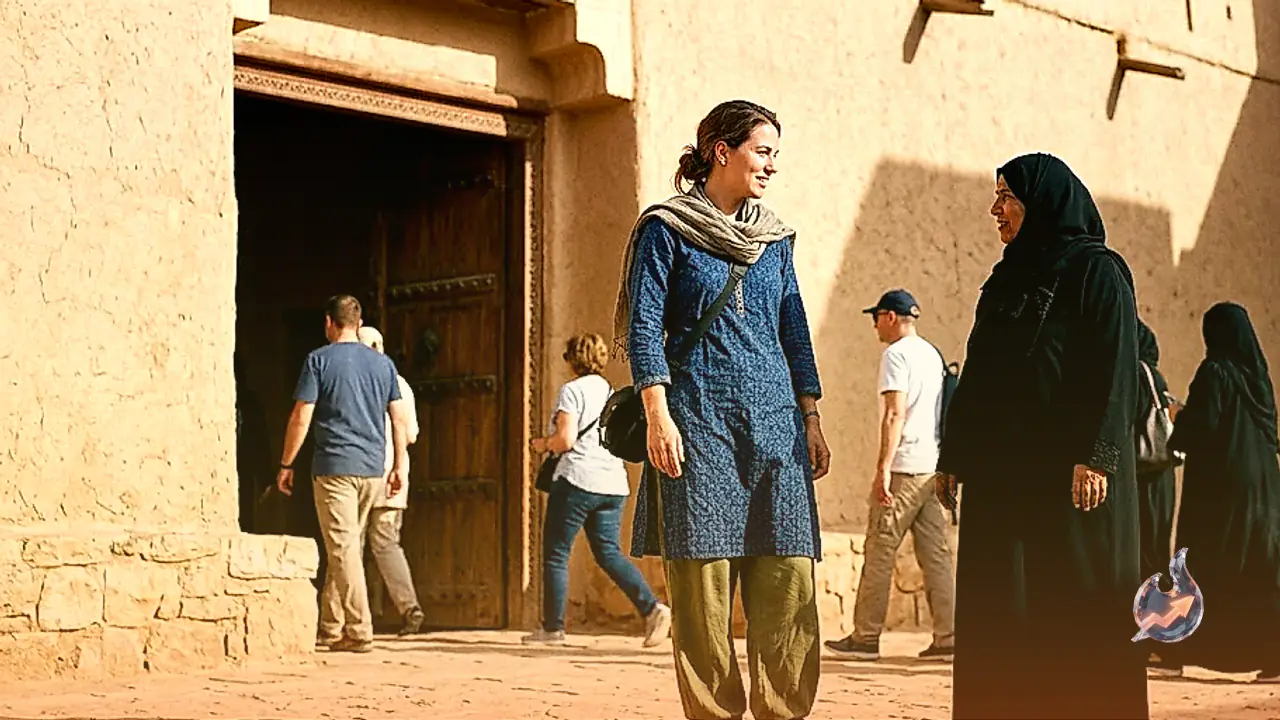
While moving around public areas, female visitors should refrain from wearing revealing or overly tight garments. Clothing items such as very short skirts, mini dresses, low-cut necklines, and transparent tops are generally considered inappropriate for public settings. Instead, practical options include full-length trousers, long skirts, maxi dresses, loose-fitting shirts, and long tunics or kurtas. These options provide ample coverage while ensuring ease of movement throughout the day.
Guidelines for Wearing Jeans and T-Shirts
Modern clothing items such as jeans, pants, and casual shirts are fully permitted for foreign female tourists. Women can comfortably wear jeans paired with t-shirts or tops, provided the tops are not excessively short, tight, or sheer. Choosing relaxed-fit clothing made from natural fabrics helps manage the warm climate while ensuring compliance with local expectations of modest attire.
Important Considerations for Religious Sites and Mosques
If your itinerary includes visits to mosques or sacred historical sites, special attention must be paid to specific entry requirements. Religious locations enforce stricter dress standards, requiring visitors to wear fully covering, loose garments. Carrying a headscarf in your bag is also recommended, as covering the head is frequently mandatory before entering these holy spaces. Respecting these guidelines ensures a hassle-free cultural experience.