





















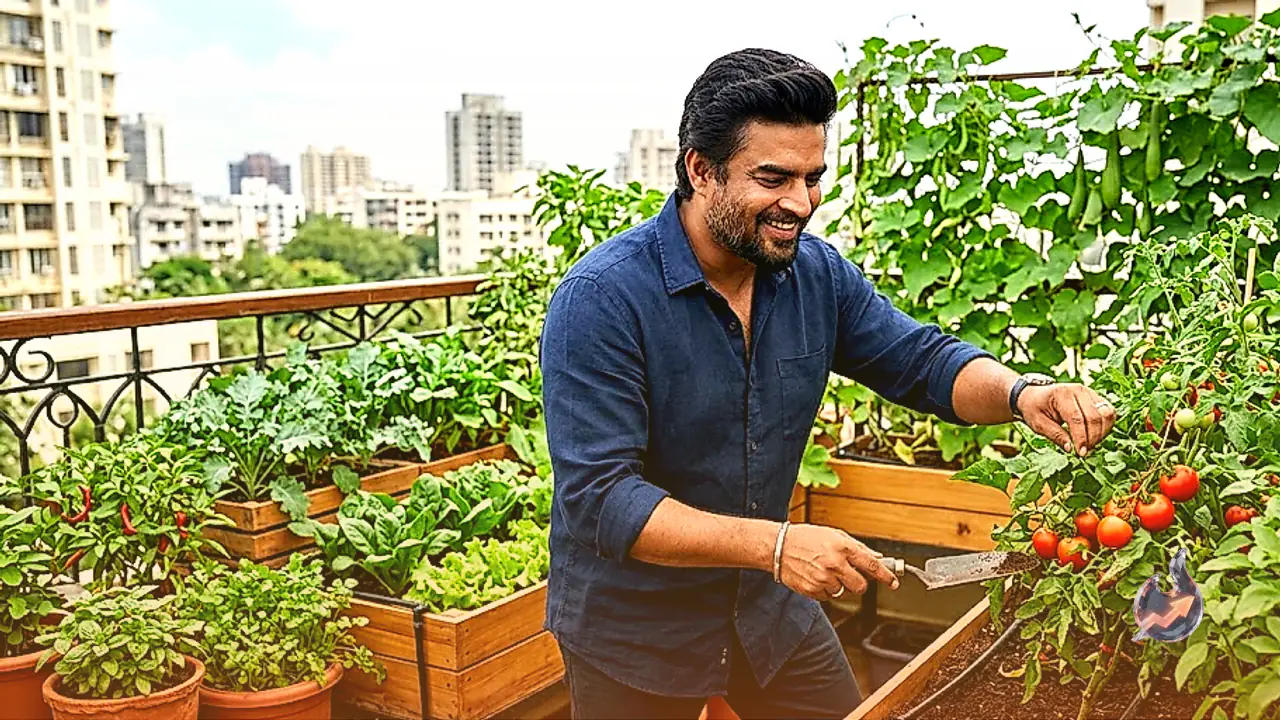

In crowded metropolitan centers where open patches of soil are an absolute luxury, harvesting home-grown tomatoes, okra, and broccoli right from an apartment terrace sounds remarkably rewarding. Actor R Madhavan ventured into this very path of domestic gardening several years ago at his residence. What started out as a relaxing pastime in between his work gradually turned into an integral component of his regular lifestyle. During an earlier interview, he revealed that his personal terrace garden managed to supply approximately 70 percent of the seasonal vegetable requirements consumed by his household.
Given the typical space limitations and pressing water issues in urban high-rises, his approach serves as a compelling blueprint for modern nature enthusiasts. To keep water consumption exceptionally low, he integrated a micro-drip irrigation network across his planters. His firsthand experiments offer practical lessons for anyone eager to raise clean, nutritious greens within confined domestic spaces.
Turning Idle Hours Into an Organic Farming Passion
The origins of Madhavan's agricultural experiments date back to around 2014. While devoting time to developing film scripts at home, the spare hours prompted him to study organic farming methods in depth. Driven by curiosity, he moved from reading reference manuals to planting actual seeds in containers. Before long, tending to seedlings turned into one of his favorite daily pursuits.
Crucially, his green space went far beyond purely decorative foliage and ornamental shrubs. He focused primarily on functional produce that could directly nourish his home kitchen. Depending on the prevailing season, his containers yielded crops of fresh tomatoes, okra, eggplants, broccoli, and crunchy cucumbers, turning his terrace into an edible sanctuary.
Interpreting the 70 Percent Harvest Metric
When assessing this project, a vital distinction needs to be kept in mind regarding the numbers involved. His statement about reaching a 70 percent threshold was not a measurement of the surface area covered on his terrace or balcony. Instead, Madhavan clarified that the produce harvested met roughly 70 percent of his family's total seasonal consumption of fresh vegetables.
Gardening experts highlight that this specific yield cannot be taken as an automatic guarantee for every apartment dweller. The volume of harvest generated by container plants varies widely based on distinct environmental factors. Daily sunlight duration, microclimate shifts, potting soil texture, aeration, and the gardener's consistency in managing plant health all influence how much a terrace can produce.
Practical Steps for Small Space Beginners
The overarching lesson from Madhavan's journey is that launching an edible garden does not call for sprawling land or an expansive farm plot. Any city resident can start out with just a handful of containers or lightweight fabric grow bags. For balconies that receive five to six hours of direct sunlight, hardy vegetables like chili peppers, tomatoes, eggplants, and okra are the most forgiving varieties to plant first.
Before assembling heavy planters, proper structural safeguards must be evaluated, starting with reliable water drainage. Excessive moisture seeping into flooring tiles and balcony parapets can compromise building structures over prolonged periods. Proper waterproofing and disciplined moisture management are critical precautions to take prior to expanding any rooftop planting arrangement.
Optimizing Potting Soil and Conserving Water
Healthy root systems require a porous and well-aerated potting mix rather than compact clay that retains stagnant moisture. Water must drain freely through the bottom holes so oxygen can reach the plant roots. Beginners should resist the urge to plant dozens of varieties at once; starting with two or three resilient crops makes it much easier to track hydration levels, light needs, and early growth patterns.
Water management played a crucial role in Madhavan's terrace layout, where he set up an efficient drip irrigation network. He noted that this regulated technique allowed him to use roughly one-twentieth of the water typically required by conventional hand-watering methods. While this specific water economy was achieved through his customized arrangement, it highlights the immense conservation power of targeted watering.
Patience, Vigilance, and Steady Care
Cultivating kitchen greens demands considerably more effort than simply scattering seeds and adding water. Keeping plants thriving requires observant eyes on soil fertility, sun exposure, and pest protection. Madhavan remarked that experiencing the continuous labor behind growing his own food deepened his respect for the tireless dedication of professional farmers working under grueling natural conditions.
For apartment residents planning their own green corner, the secret lies in starting small and aligning plant choices with the local weather. Achieving a productive urban garden does not require a lavish estate; a modest balcony, nutrient-rich soil, sensible watering, and everyday care are all it takes to enjoy clean, home-grown food.