




















Atta halwa is a classic traditional sweet that remains a household favorite during festivals and winter days. However, making it at home often comes with common challenges like unwanted lumps or a sticky texture. By paying close attention to the exact proportions and cooking methods, anyone can achieve a rich, grainy texture every single time.
Required Ingredients and Proportions
To prepare this recipe, take one cup of whole wheat flour, preferably with a slightly coarse texture to enhance the graininess. Add one tablespoon of semolina to it. You will need roughly three-quarters of a cup of desi ghee, three-quarters of a cup of sugar, and two and a half cups of warm water. For aroma and flavor, keep one teaspoon of cardamom powder ready. Chopped dry fruits such as cashews, almonds, and pistachios can be added around two tablespoons. The amount of sugar can be adjusted slightly based on personal preference.
The Slow Roasting Process
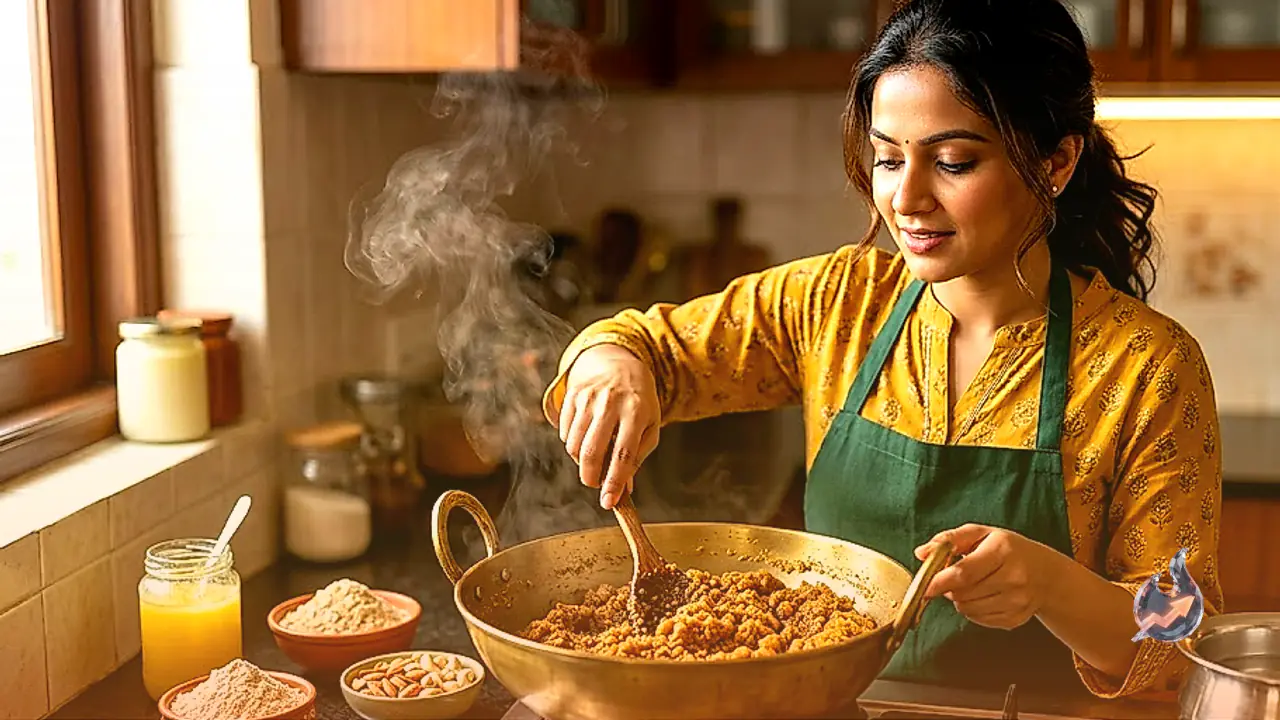
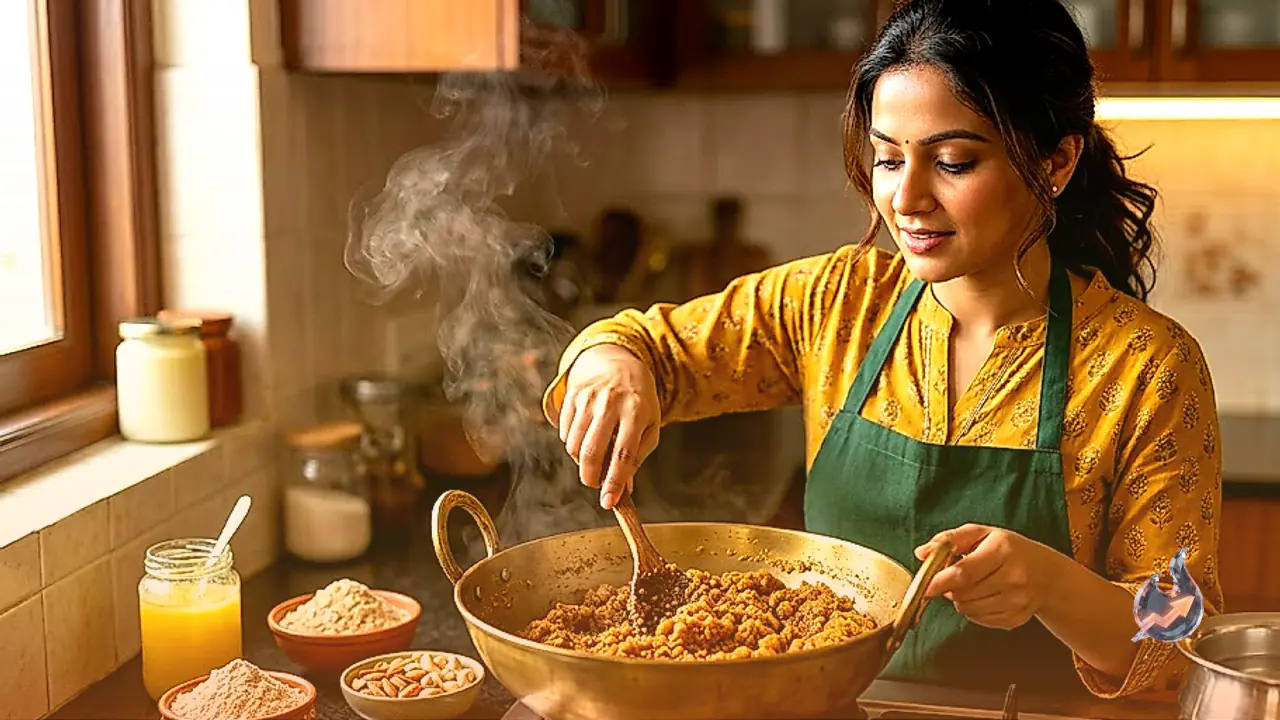
Begin by putting two and a half cups of water on to heat in a separate pan. The water does not need to come to a rolling boil. Next, take a heavy-bottomed kadhai and heat two spoons of desi ghee in it. Fry the cashews and almonds until they turn light golden, then remove them and set them aside on a plate. Add the remaining ghee to the same kadhai. Once the ghee warms up, add the wheat flour and semolina. Keep the flame low and avoid rushing, as roasting the flour patiently is the most crucial step.
Stir the flour and ghee continuously using a spatula. After roasting on a low flame for about 8 to 10 minutes, the flour will take on a light brown hue and release a rich, nutty aroma. The change in color and fragrance indicates that the flour is properly roasted. Make sure the raw flour scent completely disappears before moving to the next stage, as properly roasted flour forms the foundation of a delicious halwa.
Adding Warm Water and Sugar
Maintain a low flame while gradually pouring the warm water into the kadhai with one hand and stirring continuously with the other. Dumping all the water at once increases the risk of forming stubborn lumps. Keep the pouring speed slow and steady. Within moments, the flour will absorb the liquid and thicken. Cook until the water blends completely and the mixture begins to pull away from the edges of the vessel.
Once the flour is thoroughly cooked, add the sugar. Introducing sugar may temporarily make the mixture slightly loose and glossy, but there is no need to worry. Stir constantly for 2 to 3 minutes until the sugar dissolves completely. Mix in the previously roasted dry fruits and cardamom powder. Turn off the heat once the halwa thickens again and leaves the bottom of the pan.
Serving Suggestions
Transfer the piping hot atta halwa into a serving bowl and garnish with sliced pistachios on top. The rich aroma of desi ghee, the subtle hint of cardamom, and the grainy texture of the roasted flour make it a delightful treat. It can be enjoyed as a dessert after meals or whenever a craving for something sweet strikes during the day.