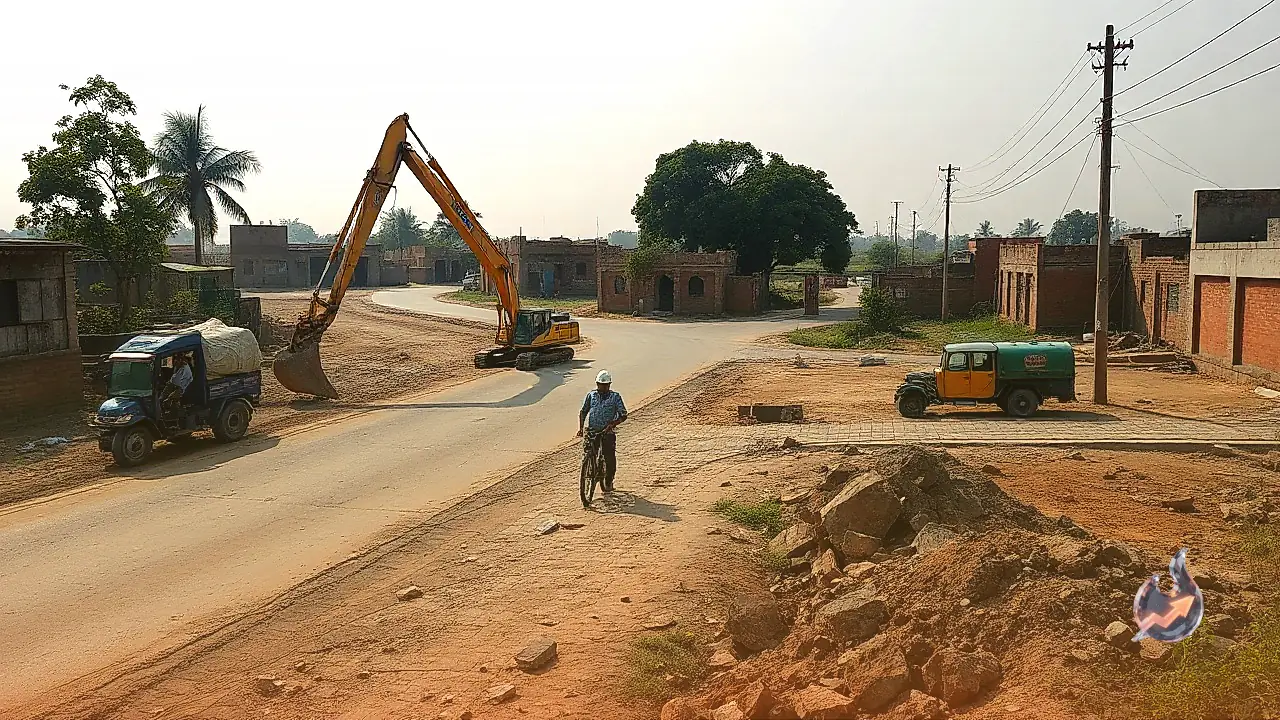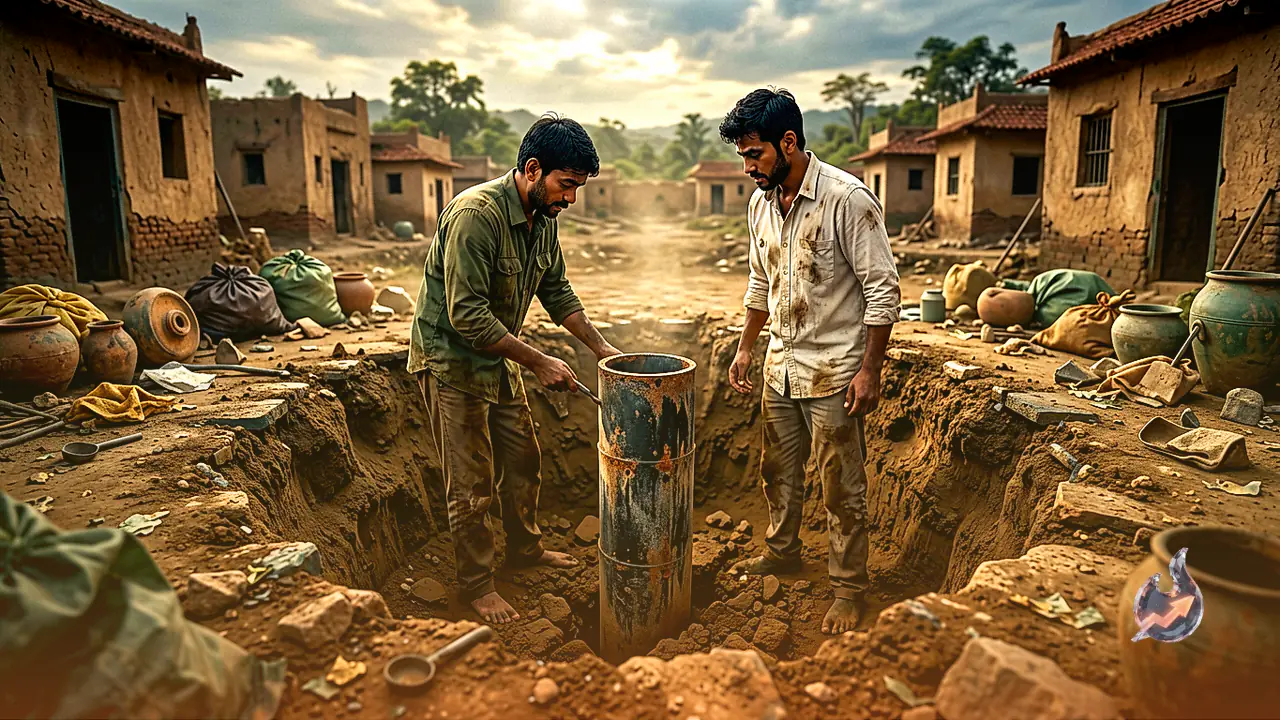















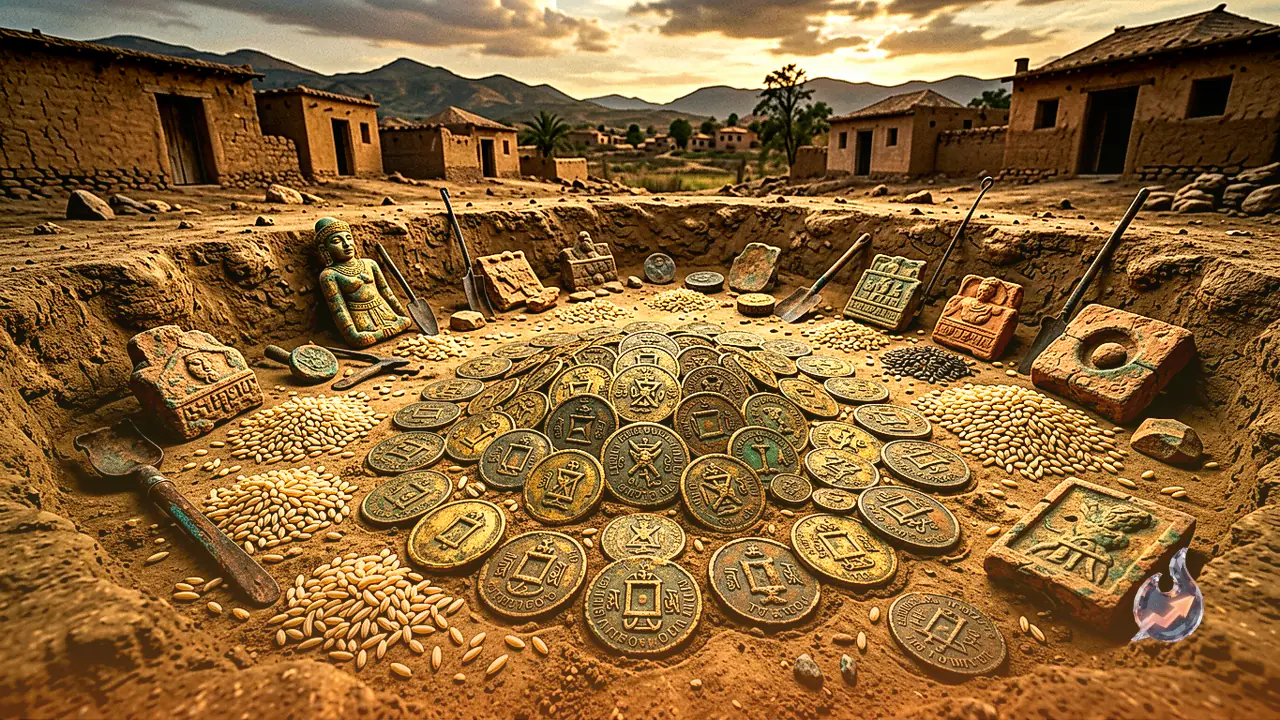

Archaeological excavations conducted by the Archaeology Department in Banarsiha village, located within the Laxmipur development block of Maharajganj district, Uttar Pradesh, have uncovered significant artifacts belonging to ancient Indian history. Based on the recovered antiquities, the department confirmed the presence of a well-developed urban settlement that flourished at this site during antiquity. While local traditions have long linked this location to the maternal home of Lord Buddha, known as Devdaha, archaeological authorities have clarified that the site cannot yet be officially certified as such.
Discovery of Kushan Copper Coins and 1400-Year-Old Rice Grains
During the multi-stage excavation drive at Banarsiha, researchers recovered approximately 30 kilograms of ancient copper coins. According to archaeological evaluations, these coins date back to the reigns of prominent rulers of the Kushan dynasty, including Vima Kadphises, Kanishka, and Huvishka. In addition to the numismatic finds, excavators unearthed carbonized rice grain remnants estimated to be around 1,400 years old, offering clear evidence of active agriculture and organized human habitation during that era.
The excavation site also yielded shards of Northern Black Polished Ware (NBPW), terracotta figurines, water vessels, clay beads, iron tools, copper utensils, and clay seals. These diverse items indicate a sophisticated lifestyle with established trade, craftsmanship, and civic organization across multiple historical periods.
Historical Timeline Spanning Mauryan to Gupta Dynasties
According to historian Dr. Brijesh Pandey, the Archaeology Department carried out systematic digging across four distinct phases at various ancient mounds scattered around the Banarsiha Kala region. The multi-phase excavation brought to light historical remnants spanning approximately 2,500 years, stretching from the Late Mauryan period through the Gupta era. The presence of artifacts across consecutive epochs indicates that the site remained a vibrant hub of population and activity for centuries.
Evaluation of Lord Buddha's Maternal Home Connection
Though regional folklore associates Banarsiha with Devdaha, the maternal ancestral place of Lord Buddha, historian Dr. Brijesh Pandey noted that the antiquities retrieved so far by the regional archaeology department do not validate this claim. Archaeological officials emphasized that while the findings conclusively establish Banarsiha Kala as an advanced ancient town, further evidence is required before linking it directly to Devdaha. Meanwhile, official conservation measures are actively underway to safeguard the historic site and its remaining structures.