
















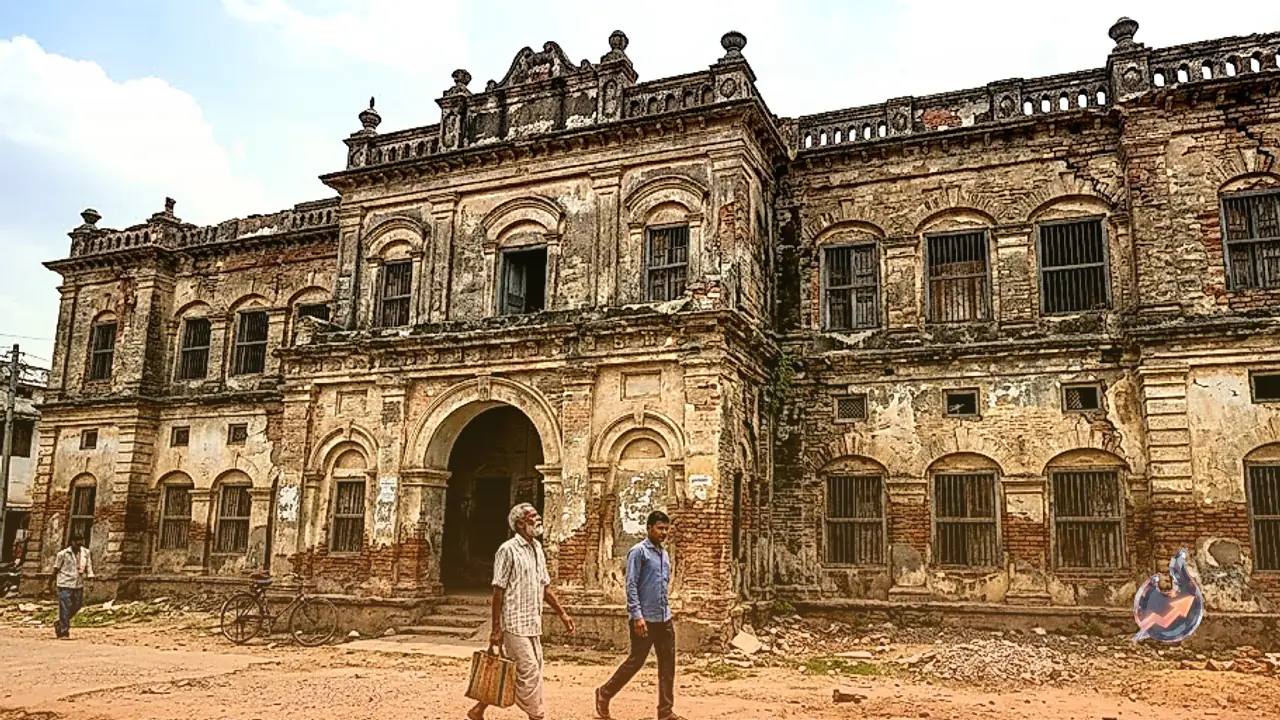

The old tehsil building located in Ballia Sadar, Uttar Pradesh, is not merely a government structure, but a living testament to the pages of history that time has failed to erase. Built during the era of British rule, this tehsil stands as a witness to the glorious past of Ballia. Tracing the early administrative developments, when the East India Company formed Ghazipur district in the year 1798, Ballia was granted the status of its tehsil. Furthermore, with subsequent administrative changes on November 01, 1879, Ballia was established as a separate district, bringing the tehsils of Ballia, Bansdih, and Rasra into existence.
Even today, this old tehsil of Sadar narrates tales of the past, as if its walls are proclaiming that they have witnessed changing eras firsthand. However, this historical heritage of Ballia is currently in a thoroughly dilapidated condition, though the building itself remains remarkably sturdy. Somewhere down the line, it has fallen victim to administrative neglect. Had this structure received some attention from the authorities, its condition might have improved, and this memorable historical landmark could have been restored to its original existence.
126 Year Old Historical Building And Its Legacy
Noted historian Dr. Shivkumar Singh Koushikey stated that the building in front of us is a historical structure. This building has witnessed the tales of slavery, the struggle for independence, and is now witnessing a free India. This is the old tehsil of Ballia Sadar, which is 126 years old. It was constructed by the British during the 19th century. If one observes the architecture, the entire Ballia tehsil used to operate from here, and the complete administration of the region was managed from this very spot. This tehsil is also considered a symbol of Ballia becoming a district. When the East India Company government made Ghazipur a district in 1798 AD, Ballia was designated as a tehsil.
When Ballia officially became a district on November 1, 1879, the Sadar tehsil was established right here. Upon closer inspection, one can find that a malkhana (treasory) was built here by the British, along with a prison cell or lockup known as havalat. During that era, those who delayed paying their land revenue were locked up right inside these cells. Even after the country gained independence, farmers who failed to pay their taxes were detained here. This is a historic tehsil of Ballia that has witnessed both slavery and freedom.
British Architecture And Ongoing Neglect
Although the building is no longer in active use, it remains structurally strong and serves as a unique specimen of British architecture. However, today it lies in a dilapidated state and remains locked. This historical heritage is suffering due to ongoing neglect. While other buildings constructed during that era are still in active use, this building is also quite sturdy and magnificent, yet it has failed to attract any attention or restoration efforts from the authorities.