


















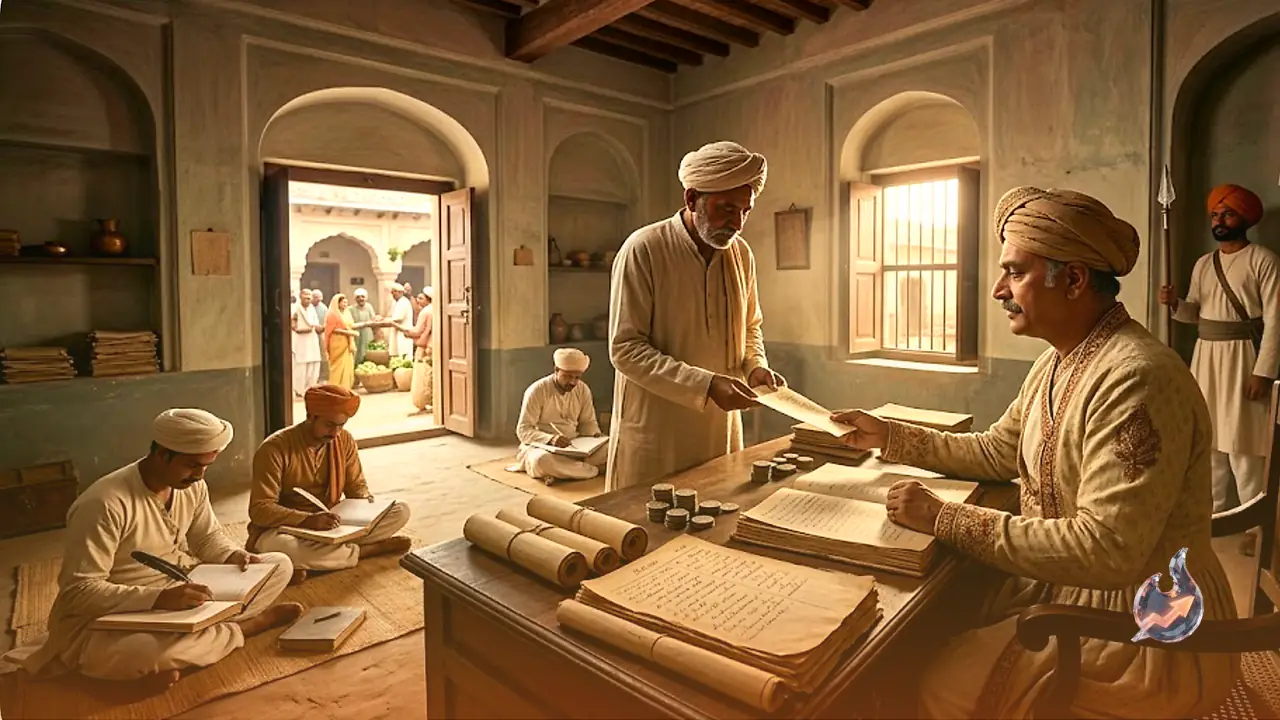

The administrative and economic frameworks established during the Mughal and Nawab eras left a lasting impact on India. Many of these structures persisted long after the Mughals, even surviving through the period of British rule. While terms like 'Pargana' remain in common usage within current district administration, the term 'Chakla' represents a fascinating aspect of medieval governance that is less commonly understood today.
Understanding the Structure of a Chakla
To manage their vast empire efficiently, the Mughals divided their territory into several administrative tiers. The largest administrative unit was the 'Suba', which was subdivided into 'Sarkar'. Each Sarkar comprised several 'Parganas', which were then composed of individual villages. As the administration evolved, a new layer was introduced between these units to streamline governance: the 'Chakla'.
The Role of the Chakladar
As per information shared with TrendKia by Vikram Brijendra Singh, a Chakla was essentially an administrative and revenue jurisdiction that grouped multiple Parganas together. The primary objective behind creating the Chakla was to simplify tax collection and maintain law and order more effectively. The official in charge of this unit was known as a 'Chakladar'. The duties of a Chakladar were extensive, ranging from collecting revenue and ensuring the implementation of imperial orders to overseeing the local administrative apparatus.
The Proliferation of Chakla in Awadh
Historian and journalist Rajeshwar Singh, in his book 'Sultanpur Itihas Ki Jhalak', notes that the Chakla system became significantly prevalent during the final stages of Mughal rule, particularly in regions like Awadh. Large Chaklas were established across the Awadh Suba, encompassing multiple Parganas, which allowed the administration to function with greater organization and local efficiency. Today, this term continues to appear in ancient government documents and historical records, providing researchers with a clearer view of the structural mechanisms of that era.